
What dune lots ask of Residential Concrete in Ogden Dunes
By late winter the snow has usually pulled back from the edges of a driveway or walk, and that’s when we first see how the slab spent the cold months. On Ogden Dunes lots we can see that earlier than we can farther inland. Wind strips the cover off the concrete, and moisture sits in the sand under the slab. Freeze-thaw off Lake Michigan keeps working those same edges. People walk the lot after a thaw and call us about a corner that dropped or a joint that opened.
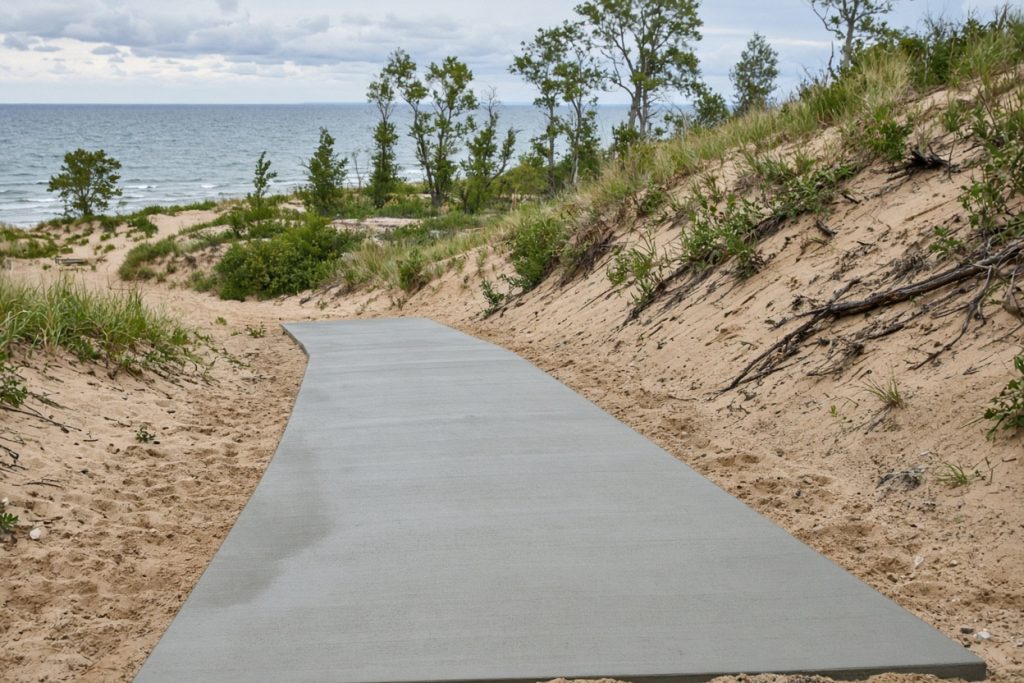
We’ve been family owned and operated since our doors opened in 2006, and a lot of the residential work we do in this town sits on ground that doesn’t behave like a flat subdivision yard. The sequence of the year decides when we can pour. You want the sand dry enough to hold a compacted base. A long enough window to form, pour, and finish matters too, because a hot afternoon on a slope can set the surface before you’re done. Year-round work here is a string of those windows. Early spring after melt and fall before the ground locks up are the cleanest windows. We also pour in summer when the sand isn’t blowing off the grade.
We’ve also poured in shoulder weeks when the forecast looked stable and the lot was still wet underneath. You can get settlement along the downhill edge once that sand finally drains, so we reschedule when we hit that.
Late winter checks on Residential Concrete in Ogden Dunes
After thaw we look at the same spots: the joint where the slab meets a garage apron, and the stretch where a walk drops with the grade. We look for hairline cracks that follow the slope and for surface spall where salt sat all season. We’ve pulled up pieces that looked fine from the house and were hollow underneath because sand had washed out from the downhill edge.
Residential Concrete in Ogden Dunes has to live with that washout and that movement, so the check after thaw is also when we start planning if a section has to come out. We write quotes out line by line for tear-out, base, forms, mix, and finish, so you can see what the slope and the sand actually add in labor, including the extra forming time.
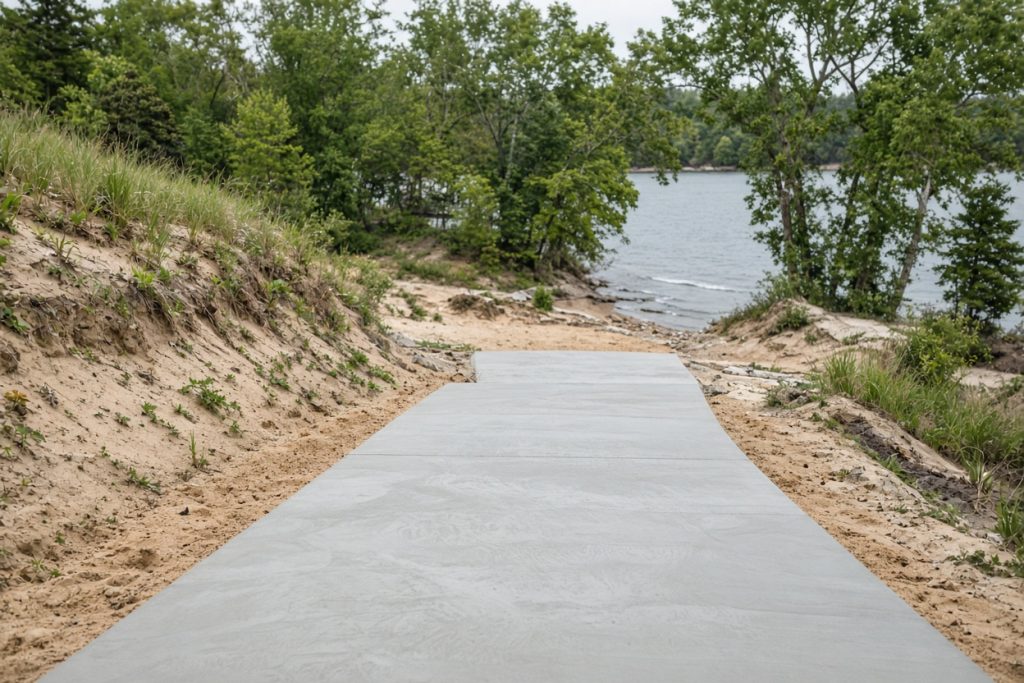
Get A FREE Proposal Today!
Residential Concrete in Ogden Dunes on sand and slope
Sand, slope, and the freeze-thaw off Lake Michigan are the conditions that send Ogden Dunes homeowners to a residential concrete contractor. A typical Indiana subdivision pour assumes a level, packed base you can screed in one plane. These lots give you sand that shifts when water runs under an edge, and a grade where the mix will run downhill if the forms are light.
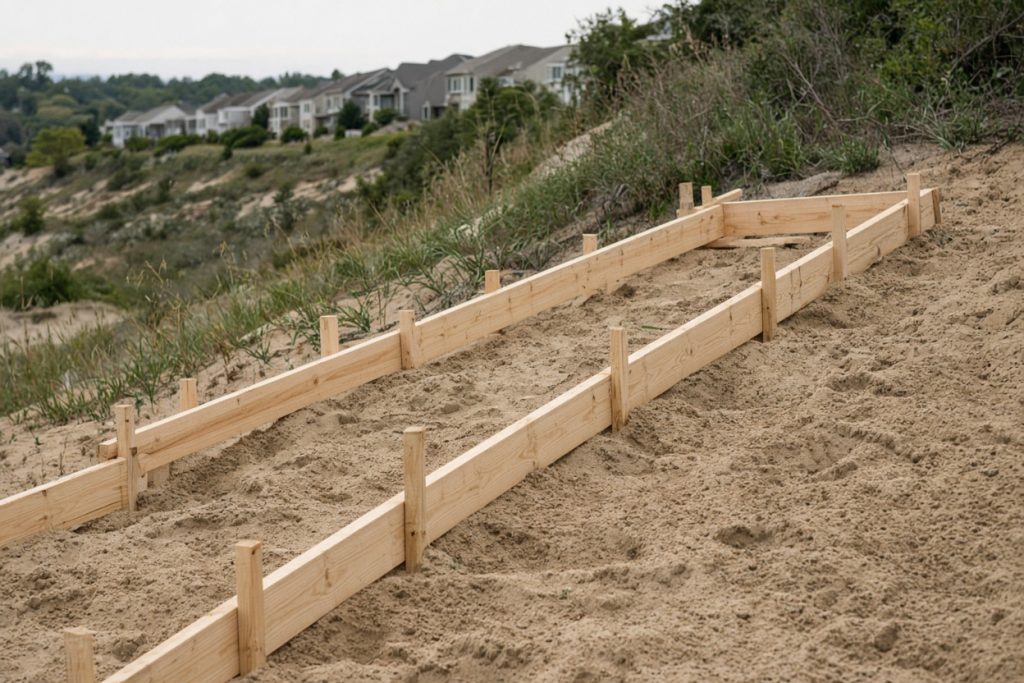
We’ve formed walks that step down a lot in short landings because one long slab on that pitch would have been a fight the whole pour. Base work takes longer in sand. You compact in lifts, then you watch the downhill edge while you do it. Water that cuts a channel under the form leaves the hollow we find after a thaw. Lake-effect freeze-thaw then works any gap that water opened. You see it as a corner that’s dropped or a joint that’s wider than it was.
Pour day with Residential Concrete in Ogden Dunes
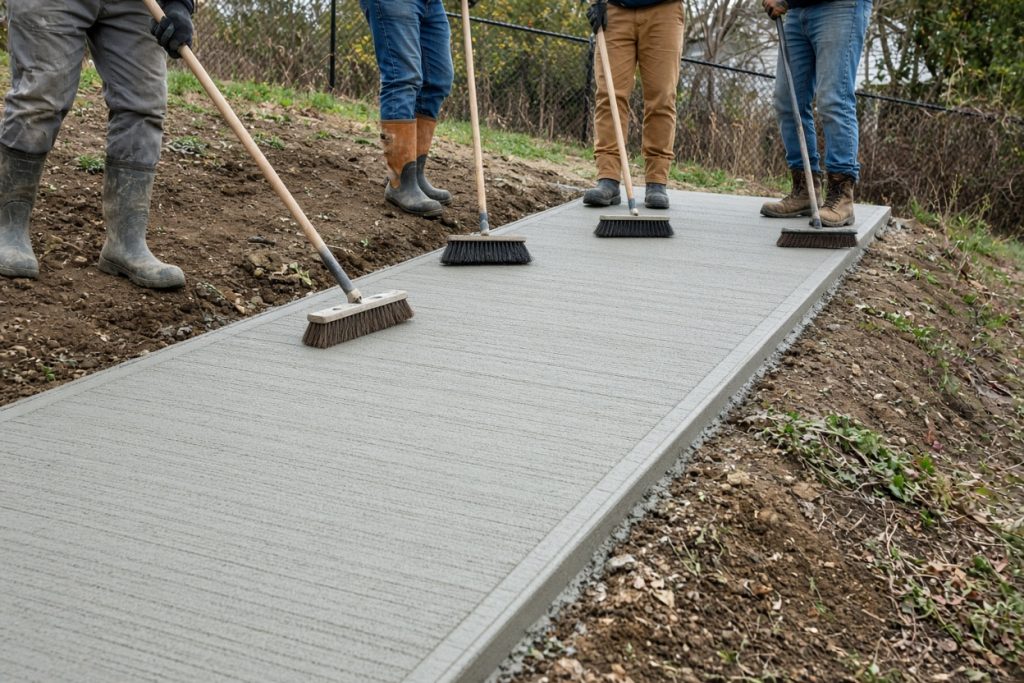
On pour day we keep the mix stiffer than we would on a dead-flat pad so it stays in the forms on the grade. Control joints go where the slab changes direction or where a landing meets the next run, because those are the places that open up. Finish work on a slope is slower. You work up from the low end so you aren’t kneeling in what you just floated. We cover and keep traffic off it while it gains strength, which on a windy lot means the blankets have to be weighted or they walk.
If you’re planning a driveway, garage apron, patio, or walk, our residential concrete work is the side of the company that handles those pours. Residential Concrete in Ogden Dunes on these lots is a sand-base and freeze-thaw problem. We do the finish after the base is in. We try to get in and out as quickly as we can and leave a slab that sheds water with the existing grade.
Decorative work such as stamped and colored finishes, and overlays, shows up on some of these lots because people want the walk to sit well with the house. That still sits on the same sand and grade. The stamp goes on after the base and forms are right. For Residential Concrete in Ogden Dunes the extra time goes into the base and the forms. When we come back after a thaw we start at the downhill edge of the base.