
When Concrete Removal in Porter Comes Before a New Slab
You’ve got an old slab holding water on a sandy lot in Porter, and you’re trying to decide if it stays or if it has to come out. Pouring over a pad that already traps water usually leaves you with the same wet spots, plus more concrete sitting in the same low place. Taking the slab up first is the work that has to happen before the ground can dry and a better pour can be planned.
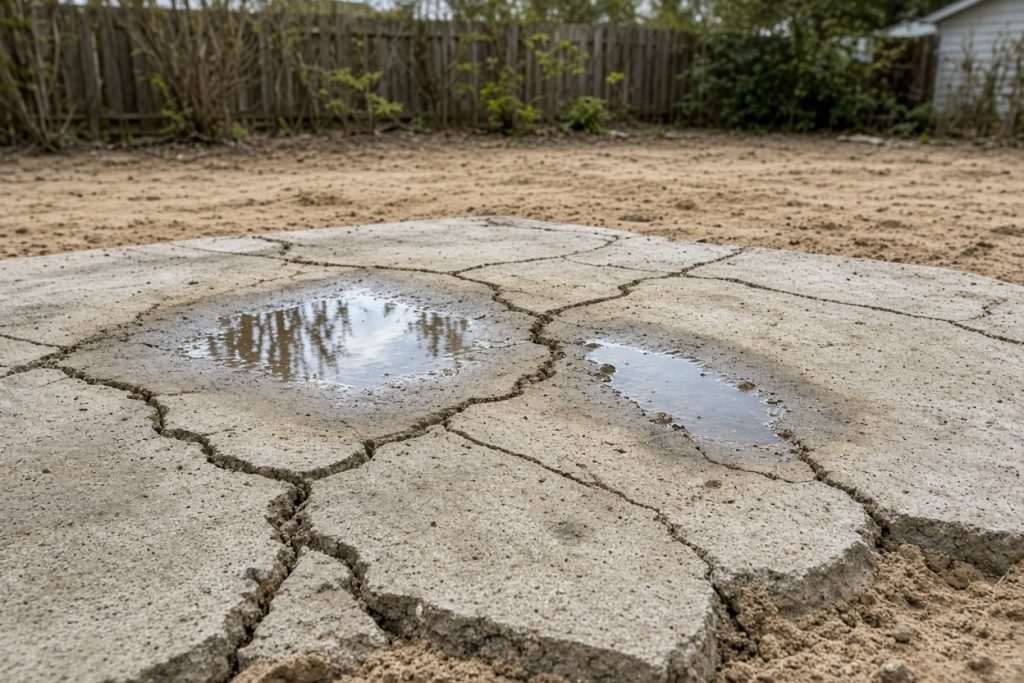
We work these lots across Porter, where plenty of yards sit on sand close to the dunes. Sand lets water move when nothing is sitting on it. An old patio, walk, or garage pad in the wrong spot blocks the path water would take across the yard, and the soil under the pad stays wet longer than the rest of the lot. That’s why Concrete Removal in Porter comes up before a new pour.
How Standing Water Points to Concrete Removal in Porter
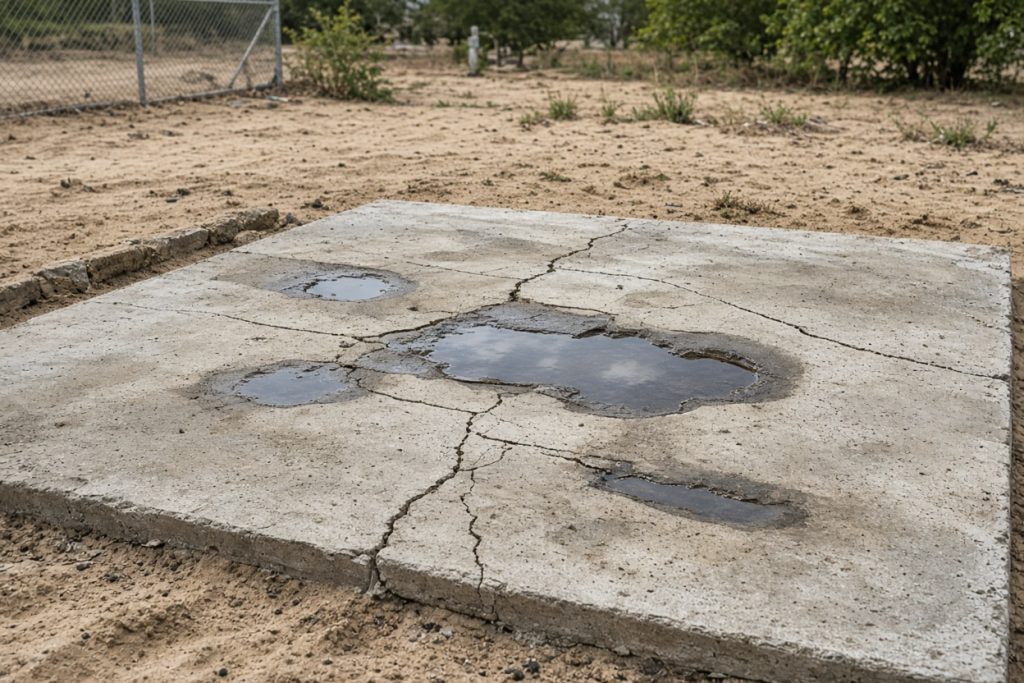
After rain, look at where the water goes. If it sheets across the slab and sits in a corner, or if it ponds along the house because the pad is higher than the soil on one side and lower on the other, the concrete is blocking it. We’ve broken out pads that looked fine until we lifted a piece and the sand under them was still dark and wet. The top can look dry on a sunny afternoon and the bottom is still holding moisture.
People call about a patio that stays slick. We also hear about walks with a dark stripe along one edge that never fades, and about garage pads where water sits against the foundation after a storm. The slab may have settled, or it may have been poured without a place for water to leave. We can see the pad is trapping it without turning the visit into a science project.
You can wait and watch it through a wet month. The ground around the slab still doesn’t get a full chance to dry, and a new pour next to wet edges starts behind. On a sandy Porter lot that stays wet at the surface, the old concrete is blocking drainage, so we take it out.
A lot of the pads we take up went in with older garages and rear patios, poured flatter than we would pour now. Water has no fall, so it sits. Through winter we see ice on those low edges and the surface starts to scale. The sand under the slab can still be wet when we pull the concrete up in milder weather.
Get A FREE Proposal Today!
Breaking Out Old Pads During Concrete Removal in Porter
The work is saw cutting along anything you want to keep, then breaking the slab and loading the pieces. We haul it off the lot the same day when we can. On sand the sides can slump once the pad isn’t there to hold them, so we watch the edges as we go. Under some slabs we find wet sand, and we’ve also hit old stone or a thin bed that never drained.
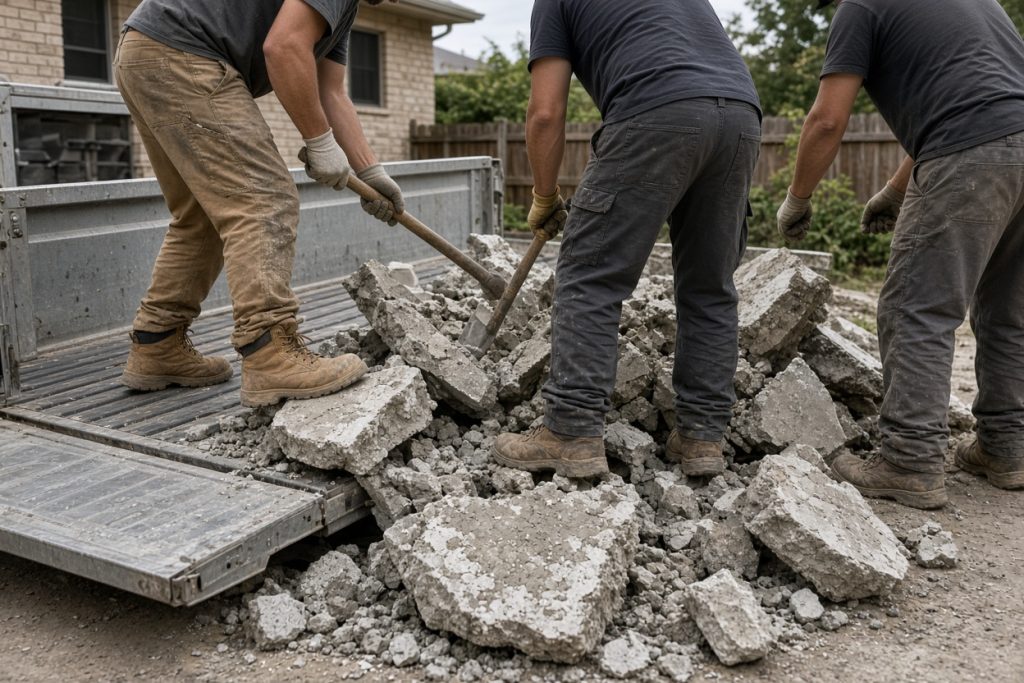
Cabe’s Concrete has been family owned and operated since 2006, and we work this part of Northwest Indiana. If a slab can stay, we say that in the quote, written out line by line so you can see the removal separate from any new work. When the pad is trapping water, concrete removal for sandy lots is the first piece, and it has to happen before we talk about grade and a new pour.
Concrete Removal in Porter on these lots is about getting the water moving again. Once the slab is gone, you can see the low spots the concrete was hiding.
Concrete Removal in Porter and Letting the Ground Dry
After we haul the pieces off, the sand can drain and the open ground can air out. We don’t put a number of days on that. Weather and how soaked it was underneath both matter. After Concrete Removal in Porter we leave the grade open so rain has a path and the sand can drain. What we look for later is that the area isn’t holding water the way it did when the slab was there.
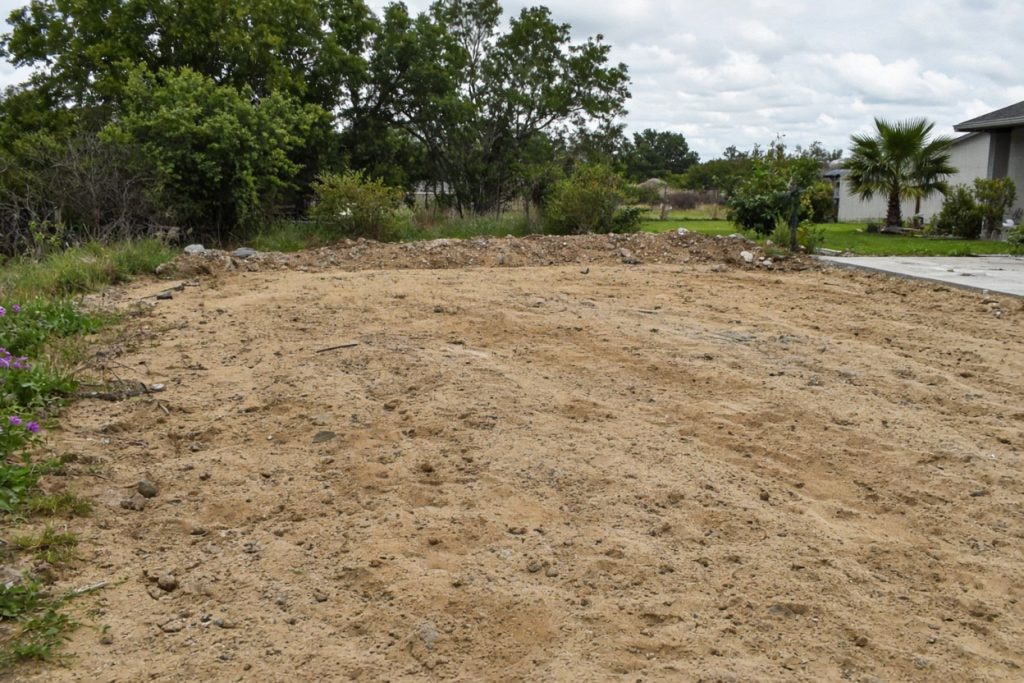
Then you can plan the next pour with a grade that sheds water. Porter yards near the dunes sit on sand and take a lot of wet weather through the year. An old slab that ponds after rain will keep ponding if it stays in place, including through freeze and thaw on that standing water.