
When an Old Garage Slab Needs Concrete Demolition in Valparaiso
Patching a garage floor that has already heaved at the overhead door and cracked through in a few places just buys time. On older houses in Valparaiso we see that a lot. The original slab went in when the garage did, and it has taken years of cars, salt tracked off the street, and water sitting in low spots. A bag of mix in the worst crack won’t lock those pieces back together.
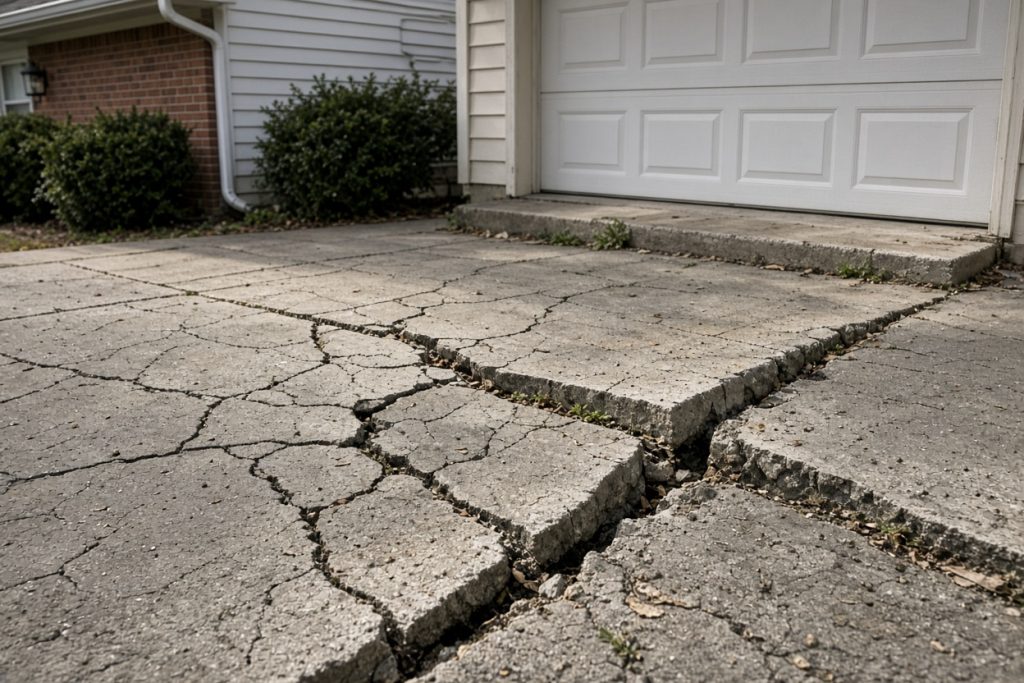
Patio slabs from the same era go the same way. You get a web of cracks and a corner that has dropped. Sometimes the surface is scaling and the top is coming off in sheets. People have called us after they already tried an overlay, or after a patch they put down the year before broke out again. Once the slab is moving underneath, anything on top moves with it.
Plenty of houses in the older parts of Valparaiso still have that first garage floor. Some of those pours were never meant for the weight of a modern truck. We have broken out floors with almost no stone under them, and others where the concrete had turned sandy along the edges so you could rake it apart with a boot. You can keep filling cracks for a while. Then the pieces start to rock and the door won’t sit.
What We Check Before Concrete Demolition in Valparaiso
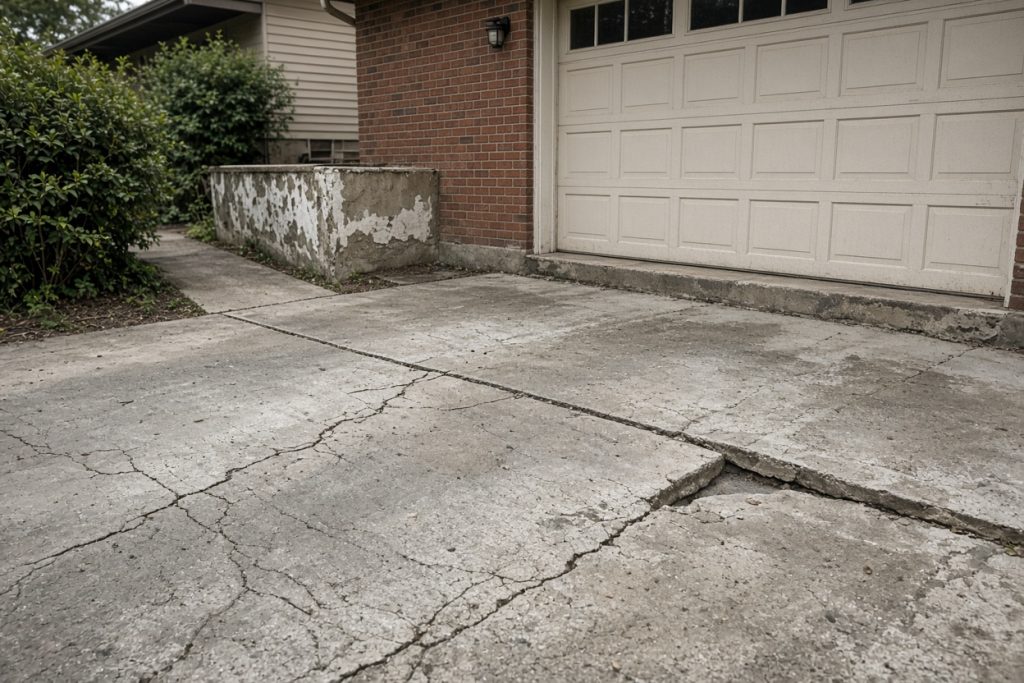
We look at ponding after a rain and at old patches that are already crumbling. A hollow sound underfoot means the slab has lost support. Along the overhead door we often find a lip where one section has lifted or sunk, so the door won’t seal and water runs in. Those are the slabs we tell people not to overlay.
Through a Valparaiso winter those cracks open up more, and by spring the edges have crumbled further. Salt from the apron and the street sits on the surface.
Original garage and patio slabs on older Valparaiso houses are often too far gone for another layer. Overlay needs a stable base. The old concrete is often broken into panels that rock. The edges have often wasted away until there is nothing to bond to. The new surface will follow that failure. That is when Concrete Demolition in Valparaiso has to come first.
Get A FREE Proposal Today!
Concrete Demolition in Valparaiso and What We Find Under the Slab
When we take on Concrete Demolition in Valparaiso at an attached garage, the saw cut along the walls keeps the house and the foundation from taking the beating. Then we go at it with hammers and bars, and we haul it out. What comes up is rarely just concrete. We pull mesh, leftover rebar, old expansion felt, and sometimes a second thin topping someone poured years ago that never tied into the slab below.
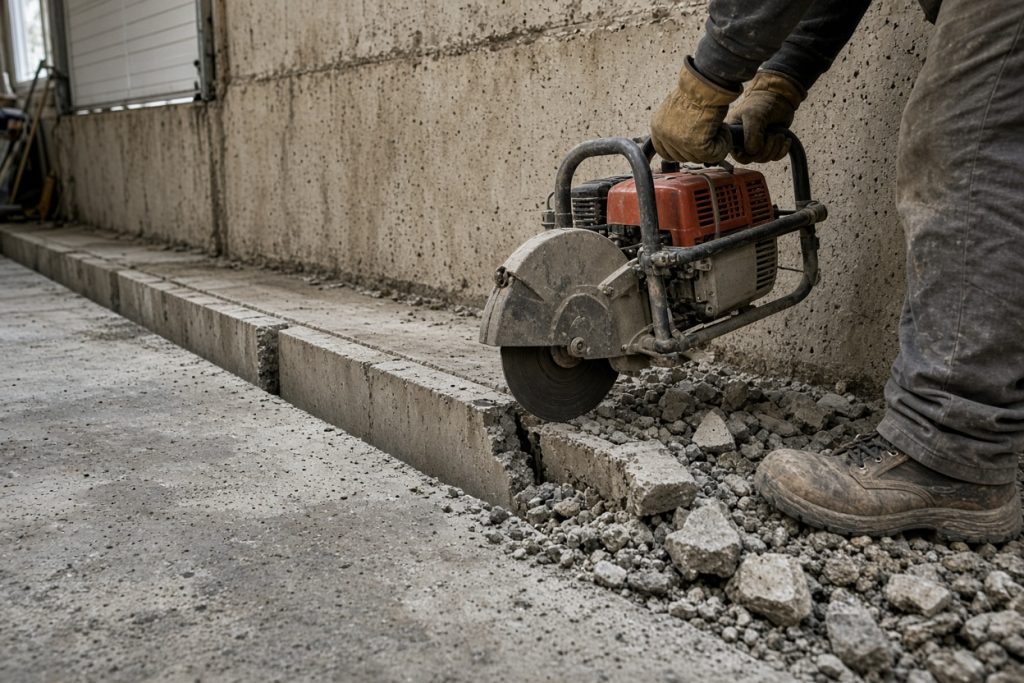
Oil that sat under a car for a long time soaks into the top. Thickness changes across the same floor. The middle might still be holding together. The edges are often shot. Patio slabs hide the same surprises next to the house, where water ran off the roof for years and the support under the slab went soft. We load the debris and get it off the lot so you are not living around a pile of rubble.
We’ve been family owned since 2006. Breaking out a failed floor is loud and dusty. We wet it down and we keep the chunks moving toward the truck.
Building the Replacement After Concrete Demolition in Valparaiso
Once the failed slab is gone you can see the dirt and the old stone. You can also see where water has been running. That is the point of doing Concrete Demolition in Valparaiso on these older floors. Grade can be fixed, and stone can go down the way it should. A new garage slab or patio can be poured at the thickness and pitch that actually drain.
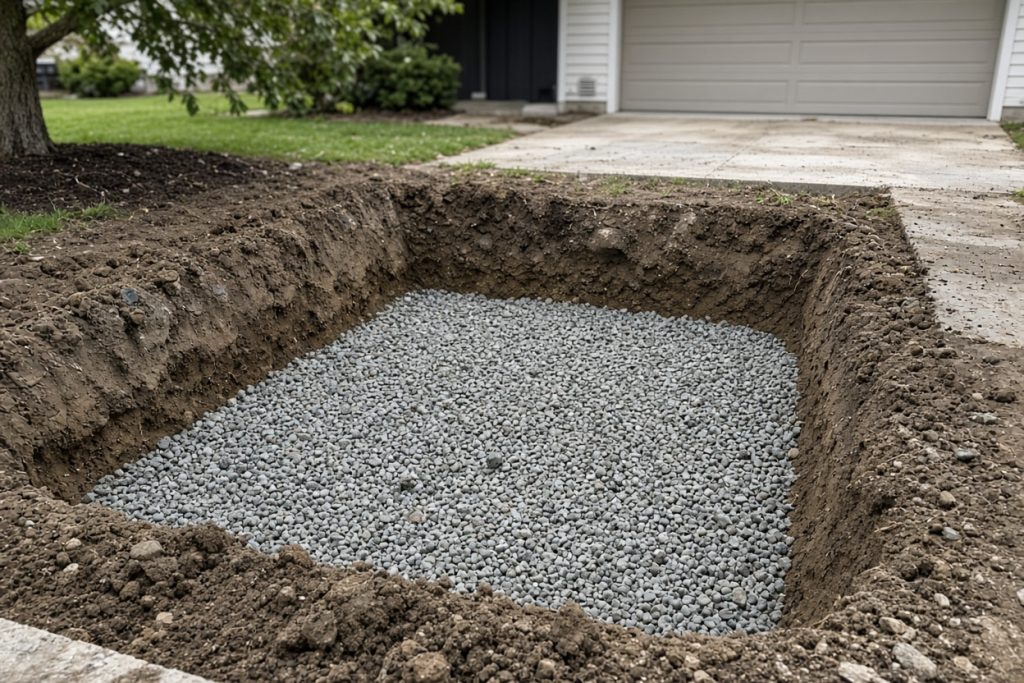
We break out the failed floor. Then we pour the replacement. If the house wants a stamped or colored patio after the old one comes out, we do that work too. Overlays and coatings need a slab that is still sound. A failed original floor needs residential concrete demolition before we can pour again.
If the patio is tied to steps or a stoop, those often come out with it so the new work lines up. A cracked garage approach at the floor joint usually comes out in the same visit.