
How Winter Opens Cracks in Residential Concrete in Chesterton
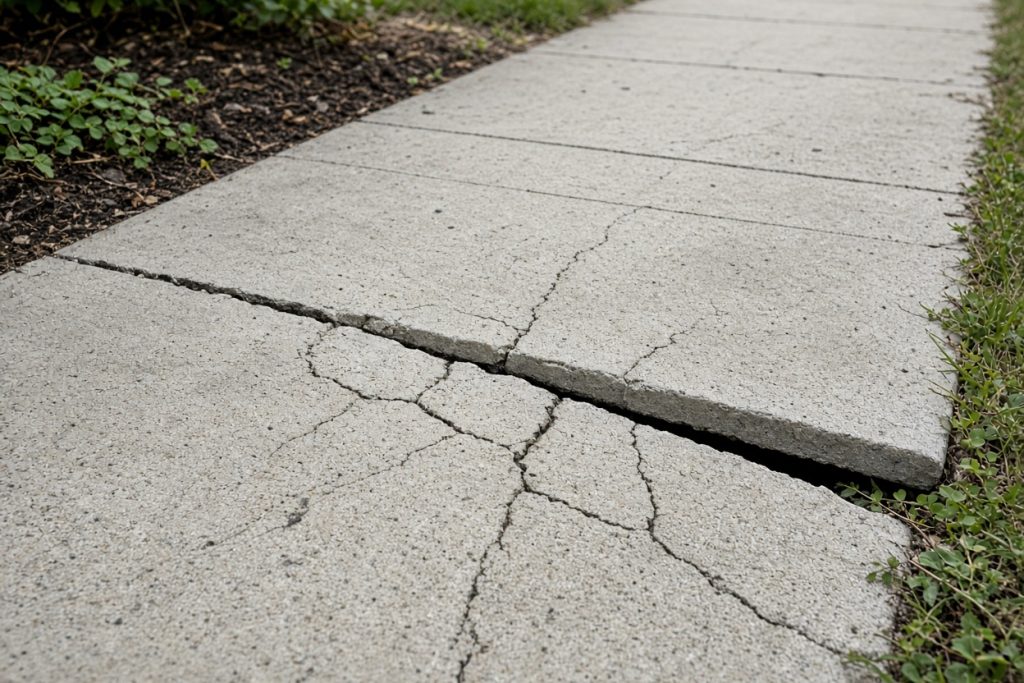
You’re looking at a crack in the sidewalk or the front stoop and trying to decide if it can wait. That’s the whole decision. In Chesterton, a line that barely showed in the fall often has a lip on it after a winter of freeze and thaw, and you can catch a toe on it.
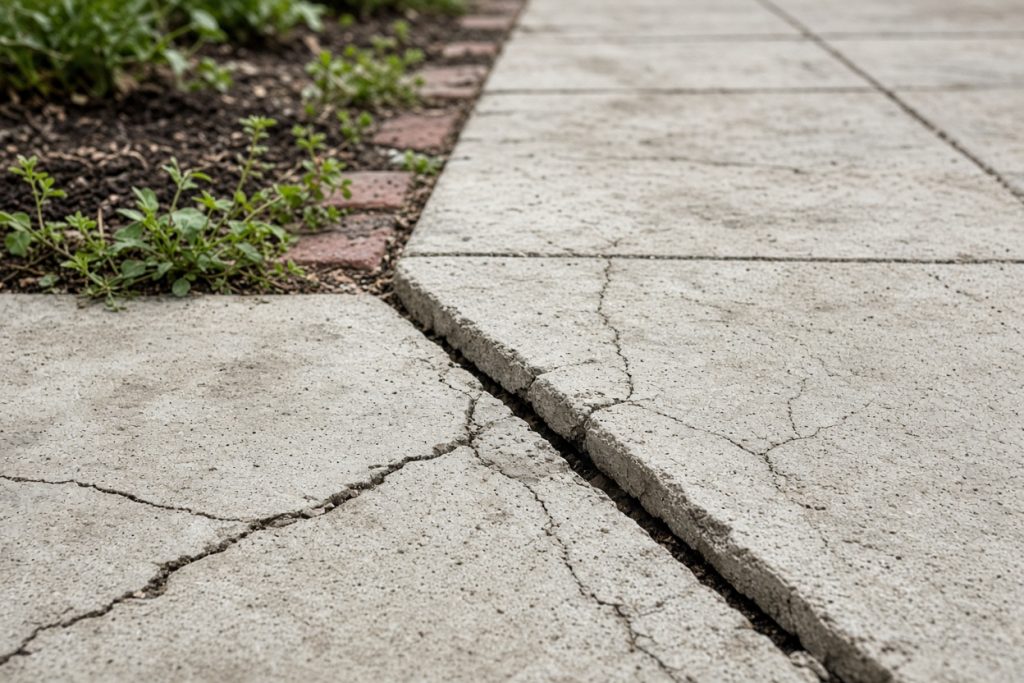
We get asked about this on in-town houses more than on newer lots toward the edges of town. The walks and stoops were poured with the house. Joints sit farther apart than we would cut them now, or the pour has no joints. Water finds the hairline and sits there long enough to freeze. Ice takes more space than water, so the crack widens a little. Then it melts, takes on more water, and the next freeze opens it again. We’ve pulled up slabs where the break follows that same wet path all the way through the pour. We’ve had people point at a crack they thought was only in the surface, and when we lifted the piece it had already split through.
What freeze-thaw does to Residential Concrete in Chesterton
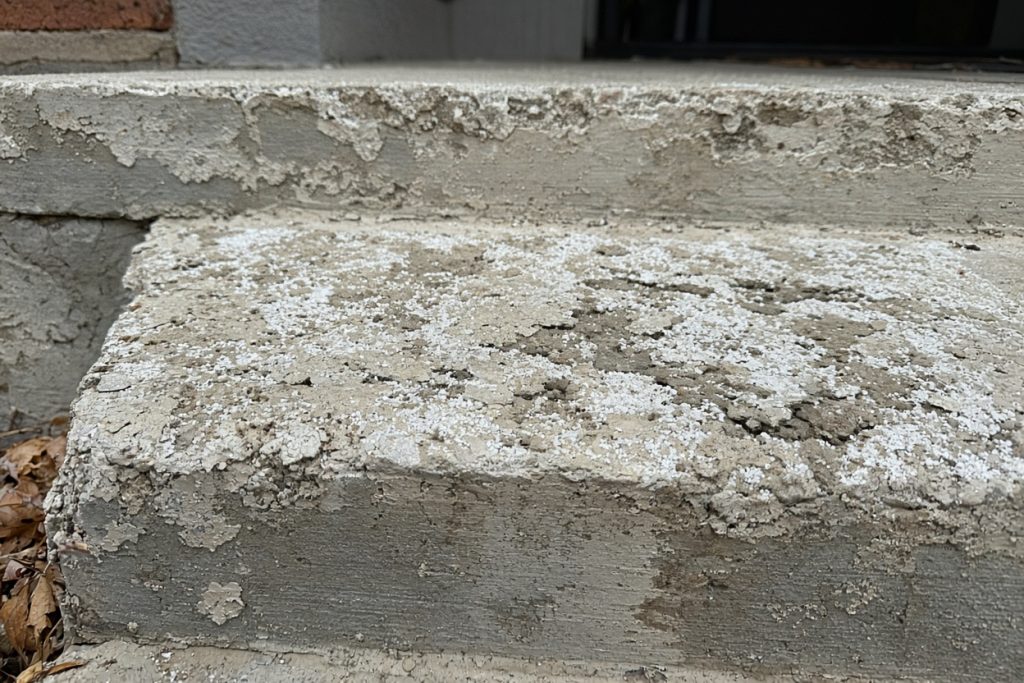
Lake-effect snow is ordinary winter weather here. Extra shoveling comes with it, and meltwater running over the walk and down the stoop into whatever opening already exists. People put down salt so they can get to the car. Even a normal amount of salt can scale the surface over repeated winters. We see the top of a slab start to flake even when the piece still looks flat from the street. Edges of control joints crumble. A stoop that met the threshold in a straight line now sits a little off, and the door sweep drags. On a lot of Chesterton stoops the first thing we notice is a crack that started at the corner of the landing and ran to the step. Corners take freeze-thaw hard because water sits there after you shovel.
Residential Concrete in Chesterton takes this wear because so much of the housing in town has outdoor slabs that have already been through a lot of those cycles. What we can tell you is what the slab is doing now. If water stands on it or one side has dropped, another season of freeze-thaw will keep working the same spots. Flaking on the surface is the other thing we look for.
Get A FREE Proposal Today!
Residential Concrete in Chesterton on in-town lots
Chesterton’s in-town blocks have older houses mixed with later infill. The concrete that fails first is usually the piece that stays wet. Walks that pitch toward the house hold melt, and stoops do the same against the foundation. Lake-effect freeze-thaw on that housing stock is why homeowners call us about residential concrete before a small crack becomes a trip hazard. We’ve been a family owned company here since 2006, and the calls we get are often after someone noticed the shift with a broom or a boot.
When we replace a walk or a stoop, we look at pitch and where the water will go after we leave. We want to get in and out as quickly as we can and leave a slab that sheds water. We source the mix so we know what is going in the forms. We don’t inflate the price of material to make a few extra dollars. We write the work down line by line, removal on one line and the new pour on another.
Replacing damaged slabs with Residential Concrete in Chesterton
Once a slab has already dropped, replacement holds up. A patch on a settled piece tends to move with it, and we’ve watched those come back. We saw-cut the broken section and lift it, then check the base before we pour. On a stoop we watch the door height and how the first step will sit. On a sidewalk we match the line of the house as close as the lot allows.
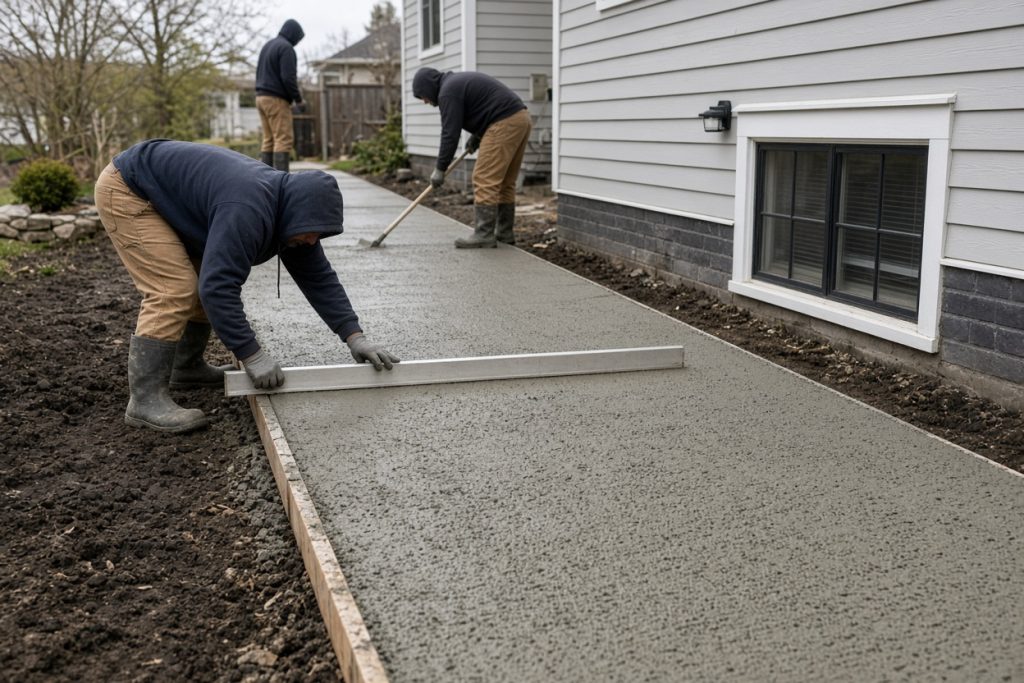
If you are choosing what to do with Residential Concrete in Chesterton, start with the slabs you walk in the dark. The front walk and the stoop matter first, and the path beside the garage if you use it at night. Those are the ones that turn into trips. Our residential concrete work covers those home slabs, from removal through the new pour. We work in Chesterton and across Northwest Indiana. A new walk will still live through freeze-thaw. We cut joints while the slab can still take them. Pitch gets set so melt runs off the walking surface.