
When Old Concrete Is Too Far Gone for Patching: Concrete Demolition in South Haven
Most old concrete around a South Haven house is past patching when the slab has failed through its thickness. A walk or garage apron with cracks that run all the way down, or hollow spots that sound dead when you tap them, is the kind we end up taking out.
Plenty of houses here went up in the middle of the last century, and the pads poured with them have taken decades of freeze-thaw. Water sits in the openings. Those openings take repeated freeze and thaw. Salt from the driveway sits on anything near the garage. People call us about those slabs after a patch from a couple of seasons back has opened up again, or after a corner has dropped and the garage door no longer clears it. Sections that rock under a step go the same way.
Signs We Check Before Concrete Demolition in South Haven
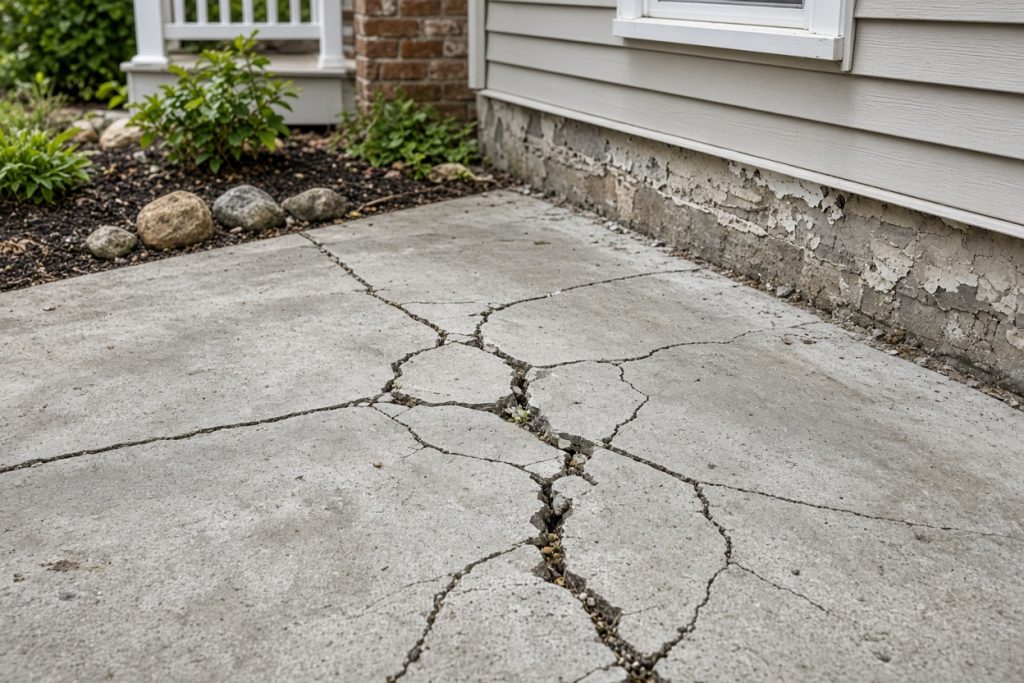
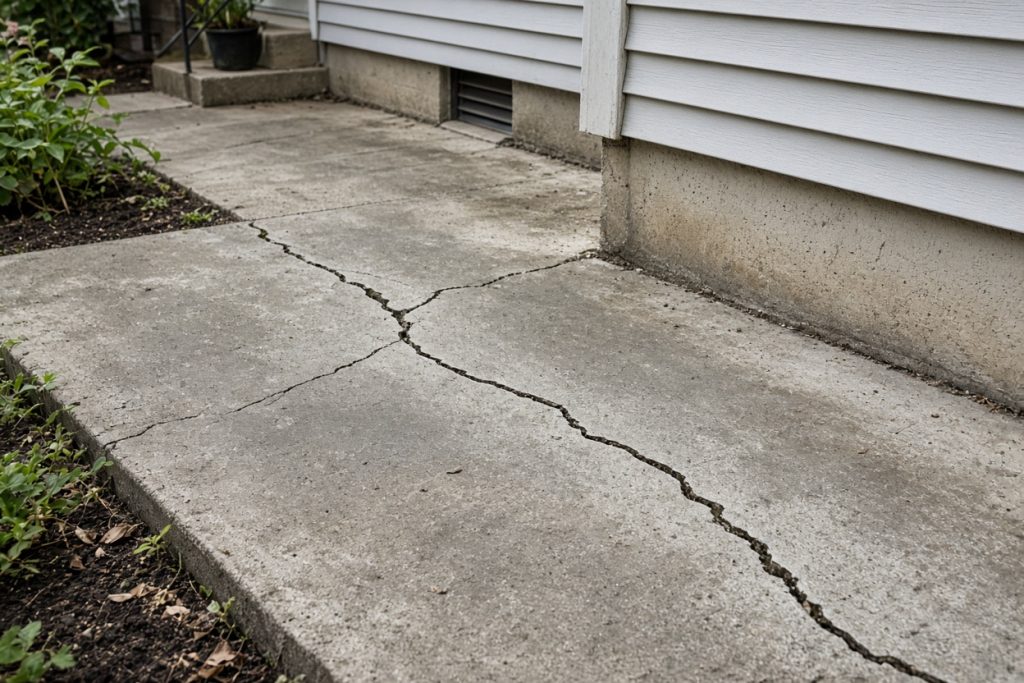
We start with a walkover. A hammer on the surface tells us a lot. Solid concrete rings. When the pad has failed, the hammer sounds dull, and sometimes the face of the slab moves. Spalling that goes deeper than the top cream shows up a lot on those mid-century pours. Joints that have widened into trenches do too.
On a garage apron we look at how the slab meets the floor inside. If the outside pad has sunk, water runs toward the overhead door. Pitch away from the house is the check on a patio. A slab that now leans toward the siding sends water at the wall. A skim coat leaves the grade where it is. That is usually when Concrete Demolition in South Haven becomes the work. The pad has to come out so we can set the next pour to drain.
Get A FREE Proposal Today!
Concrete Demolition in South Haven on Mid-Century House Pads
Mid-century pours around South Haven houses have lived through a long stretch of freeze-thaw, and taking the slab out is the step we take when it cannot be saved. We’ve pulled up walks sitting on wet clay, and garage aprons that had washed out along the edge so the remaining concrete was bridging over a void. Once a void is under there, the slab keeps breaking. A surface patch leaves that void in place.
Those older pads were often placed as one piece with nowhere for water to go once it got under them. You can see it after rain: a low corner holds a puddle. In a cold snap that puddle turns to ice. The corner has often lifted or crumbled once the weather breaks. We’ve seen overlays peel off that kind of base because they were stuck to concrete that was already moving.
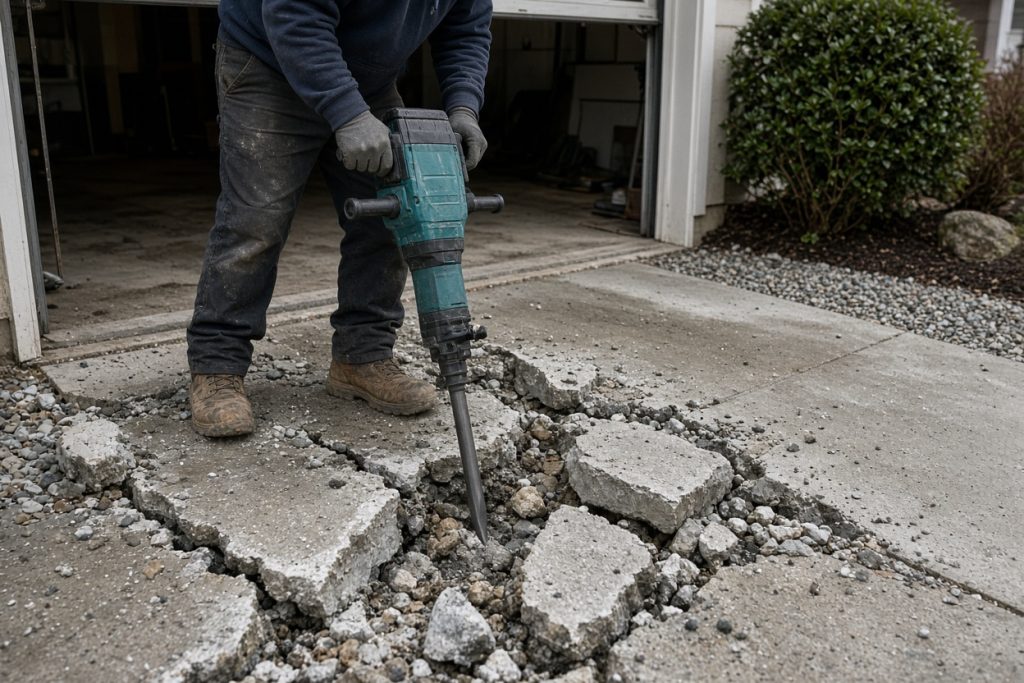
When we take a slab out, we cut a clean line where the old work meets anything we are leaving in place. That matters on a garage where only the apron is coming out, or on a walk that ties into a stoop you want to keep. Then we break it and load it for haul-off. Mid-century residential concrete can hide old mesh and leftover form boards. On a tight lot we take the slab out in smaller bites so a machine isn’t swinging next to a neighbor’s fence. We go slow next to the foundation and the siding.
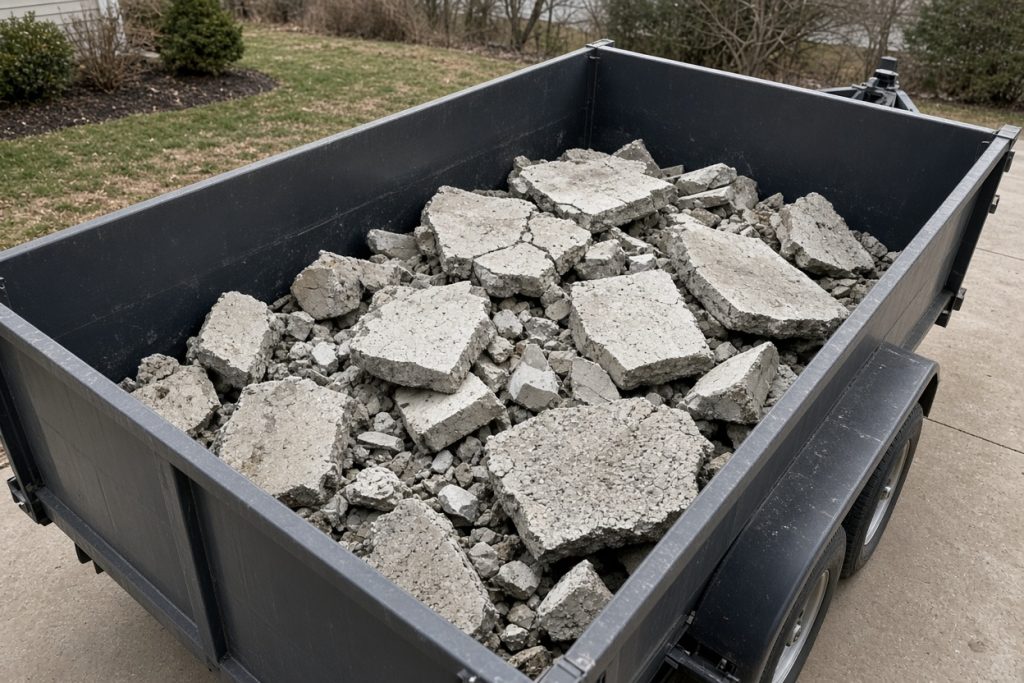
When the pieces are in the trailer you can read the old pour. A sandy break face means the mix was lean. Dark, tight pieces still failed because they were sitting on mud.
Cabe’s Concrete is family owned and operated, and we’ve been at this since our doors opened in 2006. We work South Haven with the rest of Northwest Indiana and the Tri-State area. On a removal job we write quotes out line by line so the breakout and haul are listed, and any new pour has its own line before we start.
The breakout is noisy. Our concrete demolition work covers the removal and the cleanup, plus getting the dirt right for whatever is coming back. People ask whether a section can stay. On these older pads the failure often runs through the whole pour, and a leftover strip of the original slab gives you a joint that moves later.
What We Remove During Concrete Demolition in South Haven
The rubble leaves in a trailer. We run boards for the equipment when the lawn is soft so we are not cutting ruts across the front yard. After the slab is gone you can see the dirt. Soft spots get cut out so the next pad is not sitting in the same dip.
Tree roots under a walk show up on older lots. Roots lift a corner and water follows that lift, so the rest of the slab splits along it. Taking the concrete off is how we get at the root and the mud. Replacement after Concrete Demolition in South Haven follows whatever the pad was doing, including the pitch on an apron so meltwater runs to the drive instead of under the overhead door.