
Concrete Patios in Valparaiso That Do Not Hold Water After Rain
A patio on a sloped Valparaiso lot has to be poured with pitch, or spring rain sits in the low spots and against the house. We set that fall in the forms before we place any concrete, so water leaves the slab instead of pooling on it.
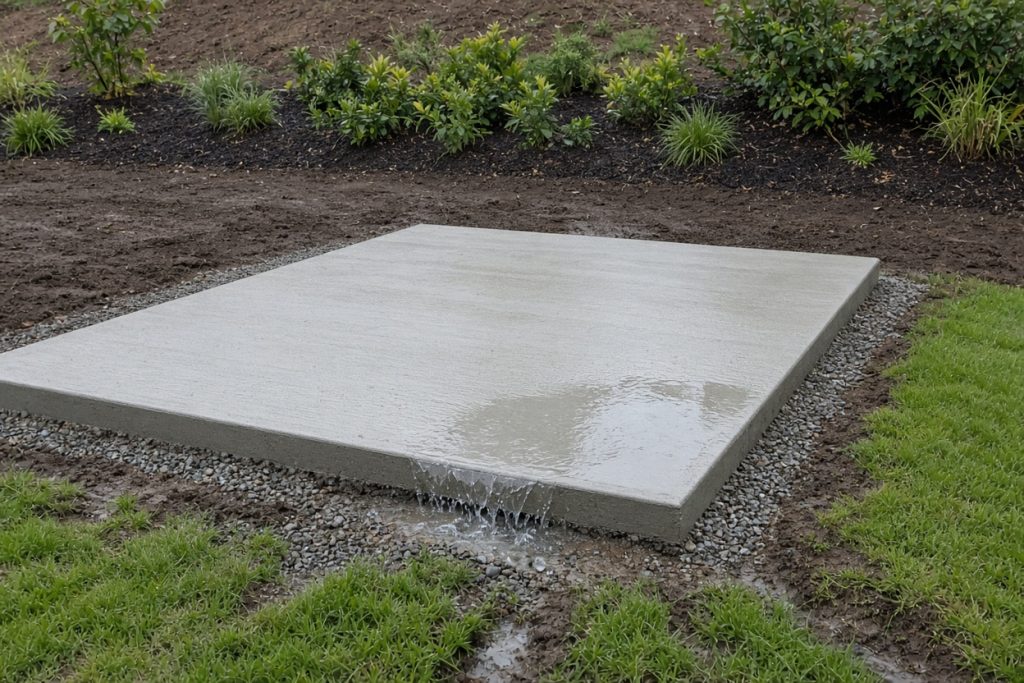
A lot of backyards here are not flat. The house sits on a rise, or the grade drops toward the foundation from the fence line. That’s common on the Valparaiso Moraine. If we treated the patio like a level floor, we’d leave a dish by the door or a back-pitch that holds water against the siding. We’ve been out after a wet week and seen chairs sitting in a puddle on a pad that was only a few years old, with the low point right at the slider.
What slope means for Concrete Patios in Valparaiso
We’ve pulled up pads that were thick enough and still wet at the house because nobody built fall into them. After rain, water found every low corner. On a lot that already pitches, it’s easy to follow the dirt and call it drainage. Following the dirt can send water at the foundation when the house sits in a small bowl. It can also drop the patio so hard that the step at the door is awkward. We shoot grade from the threshold and from the corners that matter, then we decide where the water is allowed to leave.
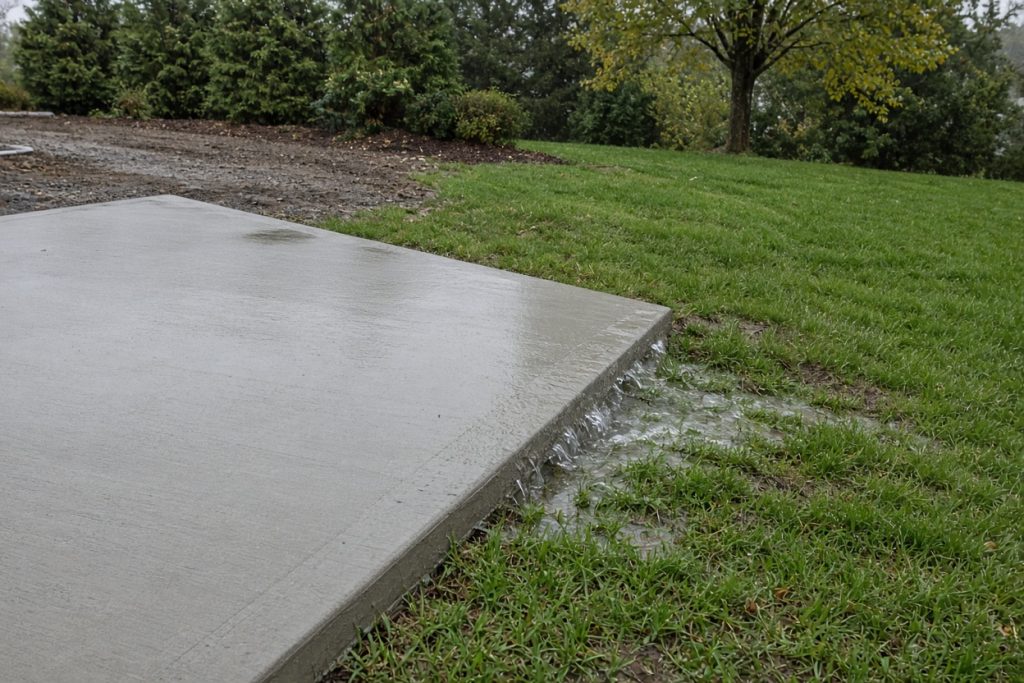
Yards that follow the Valparaiso Moraine need a patio poured with pitch so water does not sit against the house. Pitch is the fall we build into the slab. We carry it away from the siding and away from any door that dumps onto the patio. The basement wall gets the same treatment if the patio sits against it. If the lot falls the wrong way, we still protect the house first and we find an edge that can take the water once it leaves the concrete. We see water sit on Concrete Patios in Valparaiso when the pad was poured dead level. The low point at the wall soaks the siding.
Get A FREE Proposal Today!
How we form Concrete Patios in Valparaiso on a drop
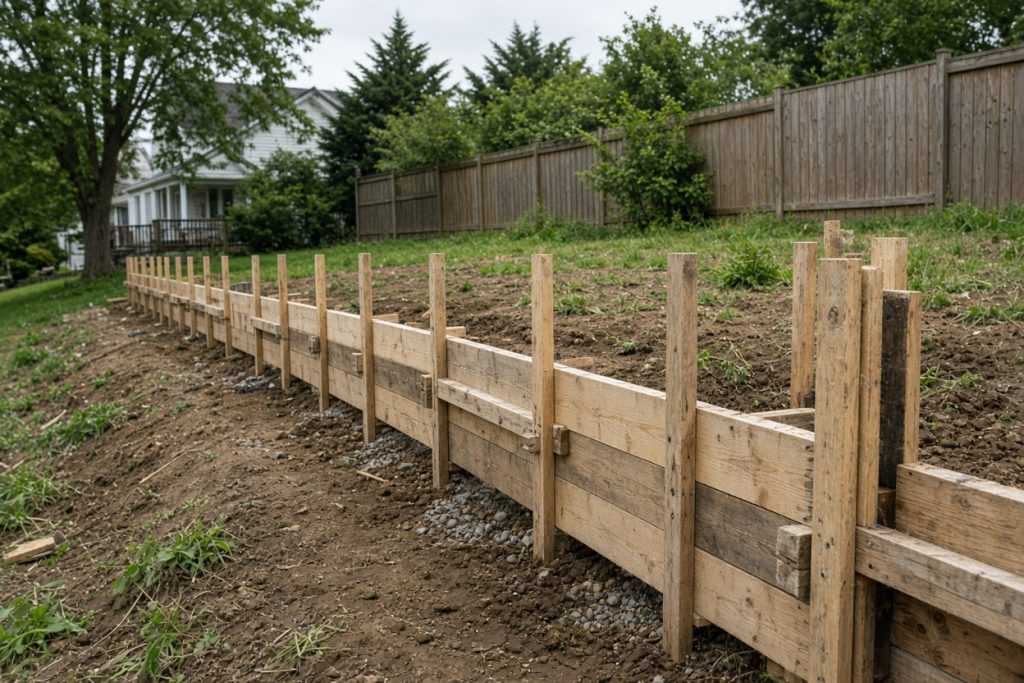
The slope shows up in the forms. Stakes on the low side sit taller. The high side is cut down so the top of the form is the finished surface. We check that line with a level and a string so the fall is even. A roll in the middle will hold a puddle even if the edges look right. Base still has to be compacted. On a cut we take soil off to get the pad down. Fill is different. We bring stone up in lifts and pack it so the slab is not sitting on loose dirt. We’ve seen the downhill edge settle and tilt a pad back toward the house when that fill was not packed.
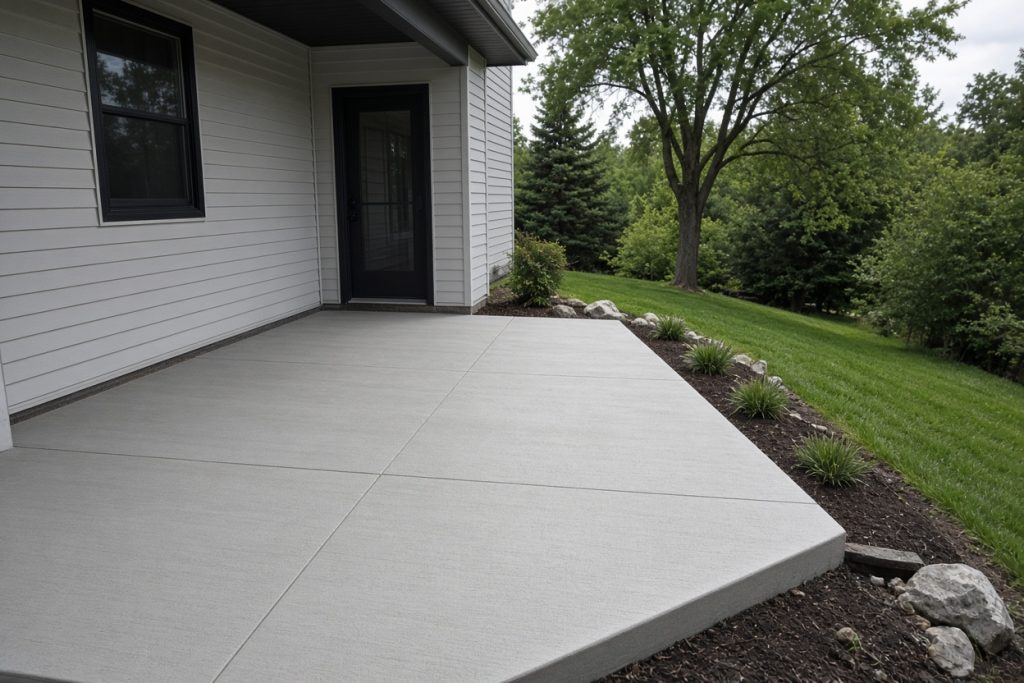
Where the patio meets the house we keep the concrete from burying the bottom of the wall in a new high point. A thick edge at the house that sits higher than the door threshold will push water inward. We leave a joint at that wall so the slab can move. We’ve replaced pads that were poured tight to the brick with no fall at all.
Spring rain in Valparaiso shows whether the pour was set right. Snowmelt and a cold rain in the same stretch will show every dip. If water cannot leave, you get ice on the pad and a wet streak on the siding. We broom the surface so it is not slick. Joints get cut so the slab can move without a random crack through a puddle line. For Concrete Patios in Valparaiso on a slope, those joints still follow the slab. Pitch still has to be in the pour.
Where water goes with Concrete Patios in Valparaiso
Once the water leaves the concrete it still needs somewhere to go. We look at the lawn and the side yard, plus whatever grade already exists around the house. Dumping a sheet of water at a neighbor’s fence is a problem we try to avoid. Sometimes the patio is a small piece of a bigger drainage picture, and we pour Concrete Patios in Valparaiso with that fall built in from the start. If the patio meets an existing walk, we line the fall up so water does not stall in the joint between them.
We’ve been pouring around Valparaiso since 2006. Sloped lots are a regular part of the work. If someone wants stamped or colored concrete, we can do that on a patio. The fall does not change because the surface is stamped. We spend that time on door height and the way the yard already sheds water before the truck arrives, because the grade is already locked in when the concrete starts coming off the chute.