
Kouts Front Walks That Split After Winters: Residential Concrete in Kouts
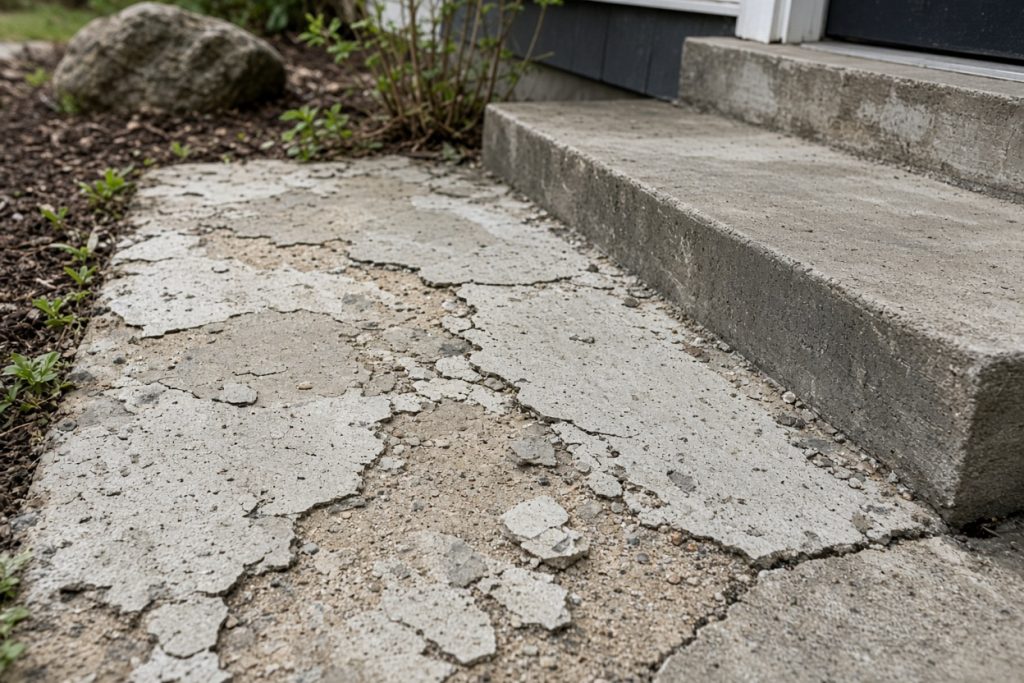
When a walk or stoop is handled badly, the failure is easy to see. The surface peels in thin sheets. You get a rough, pitted top that holds water. The nosing of the bottom step rounds off into loose stone. Edges along the house crumble. Salt stains sit in every open pore. We’ve pulled up Kouts slabs where that damaged skin was all that had given way, and the rest of the pour was still there underneath, gray and solid, which tells you the mix and the finish at the top didn’t belong in this climate.
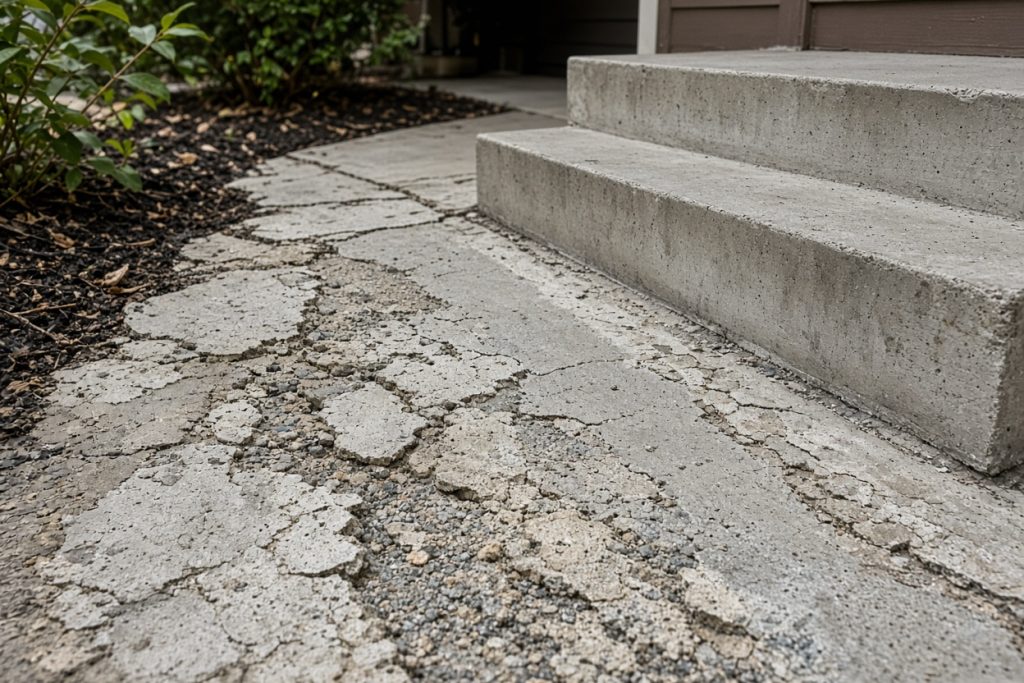
Kouts sits through freeze-thaw the way most of northwest Indiana does. Water gets into the cement paste that binds the stone. It freezes. Ice takes more space than water, so the surface pops. People salt the treads coming up with groceries, and that salt keeps moisture in the concrete longer. Front walks and stoops take that beating more than a slab that stays under a roof. Houses here still use that short run of flatwork from the public sidewalk to the stoop, and that run is what we get asked to replace. Residential Concrete in Kouts, on that path to the door, is the call we take after a few winters of freeze-thaw and salt.
What freeze-thaw does to Residential Concrete in Kouts
The first season after a poor pour, you might only see a dusty surface or a few popouts. After a few hard winters the map of damage is clearer. Scaling starts in the low spots where meltwater sat. Hairline cracks at the joints open up. A stoop poured as one mass with the walk will crack at the door because the stoop and the walk move on their own. We see corners that have lost their square. Treads dish in the middle where people stand.
Overworking the surface while it’s still bleeding is a common reason the top is weak. The finish looks glassy the day it’s poured, then that weak top layer comes off in the first hard freeze. A mix with too little air for exterior work fails faster. We leave lab numbers off the conversation unless we have checked that load. What we can say from the work is that exterior walks in this town need a mix and a finish meant to stay outside. A lot of the failed stoops we tear out didn’t get that.
Get A FREE Proposal Today!
Salt and thin pours on Residential Concrete in Kouts stoops
Thickness matters on a stoop because the edges are exposed on more than one face. A thin tread loses its nose. A walk poured short of a proper thickness will crack across the path, and those cracks hold water. Base prep matters too. If the ground under the slab stays wet, you get movement. We’ve taken out sections that had settled toward the lawn while the piece against the foundation stayed high. The joint between walk and stoop is where that shows up first.
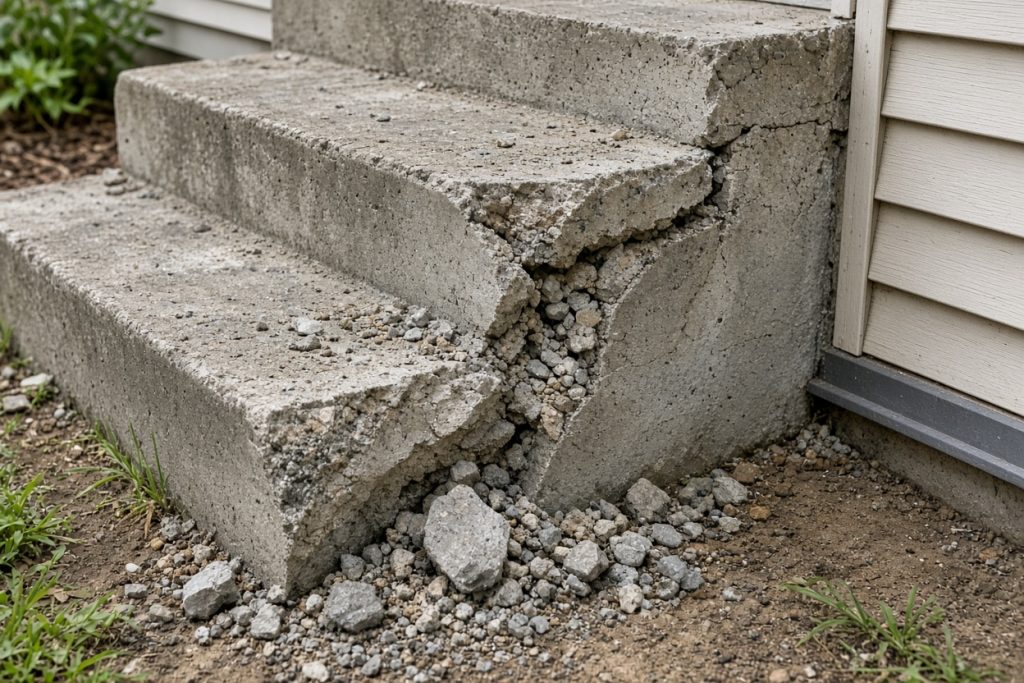
Deicers are part of winter in Kouts. People will keep salting the steps. New concrete still needs time before that salt hits it, and some products chew the surface more than others. If the slab is already scaled, more salt opens it further, and that is usually when people call us about the stoop. Bag-mix patches on a crumbling nosing last until the next freeze.
Residential Concrete in Kouts for walks and stoops we replace
When we replace a walk, we look at drainage off the stoop and where the downspout dumps. We also check how the new slab will meet the driveway or the public walk. Joints get placed so the slab can move without tearing itself. We source the mix so we know what is going in the forms. Cabe’s Concrete has been family owned and operated since our doors opened back in 2006. We write quotes out line by line so you can see labor and material before we set forms.
For Residential Concrete in Kouts, a broom finish is what we usually put on a walk. It sheds water and gives you traction in February. If you want the range of what we pour on houses, our residential concrete work lays out walks and the other exterior slabs. A stoop and a walk are small pours, which is why they get rushed when someone is trying to get a step patched before company comes. Rushing the finish is how you get that weak skin. We wait on bleed water and strip the forms when the edges can hold.
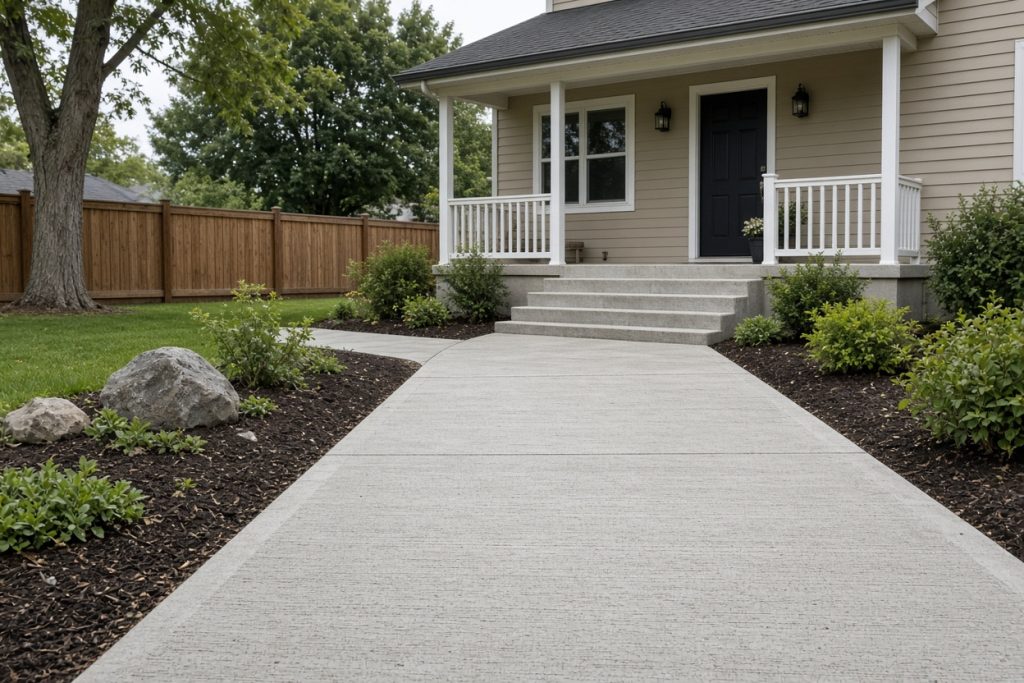
We’ve had people in Kouts come to us after they patched the same corner twice with bag mix and watched the patch come off after the next freeze. Replacing the walk and the stoop together usually gives a cleaner joint, because stitching new concrete to a slab that is already coming apart leaves the old damage in place. The new pour has to pitch away from the house so meltwater doesn’t sit against the siding or on the treads.