
Taking Out a Failed Driveway With Concrete Demolition in Portage
A lot of homeowners treat a concrete saw as a finishing tool. They have seen it score a clean edge on a new sidewalk, so they figure demolition is a different job with a hammer and a loader. We have run into that mix-up on failed Portage driveways. The saw is what lets us take the slab out when it is sitting against a house. A breaker alone will break the driveway. It also sends shock into whatever the driveway is touching.
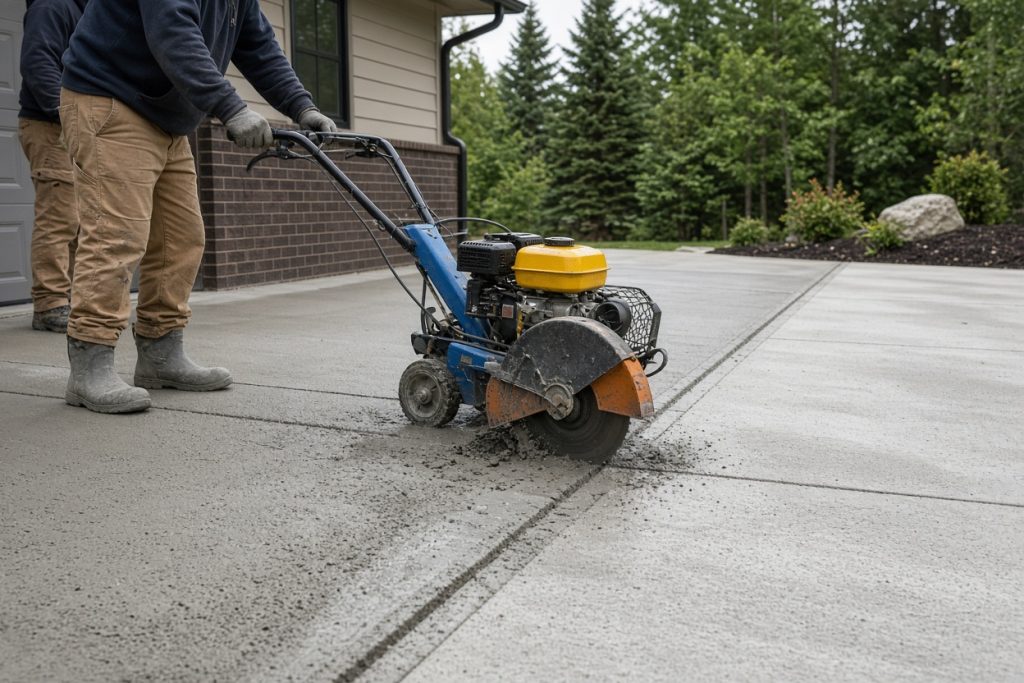
We have pulled up aprons that looked like one solid pour from the street to the overhead door. Once you start cutting, you find the garage slab was poured separately, or a later overlay glued the two together. If you chew from the street toward the house, the last two feet are still locked in. That is when a pry bar comes out. We have seen the crack show up in the garage floor on jobs where that bar was the last tool used. A short drive from the sidewalk to an attached garage leaves a work zone the width of the slab. Concrete Demolition in Portage has to fit that strip. We keep the saw in that lane. Heavy breaking stays away from the siding.
Saw Cuts We Use for Concrete Demolition in Portage
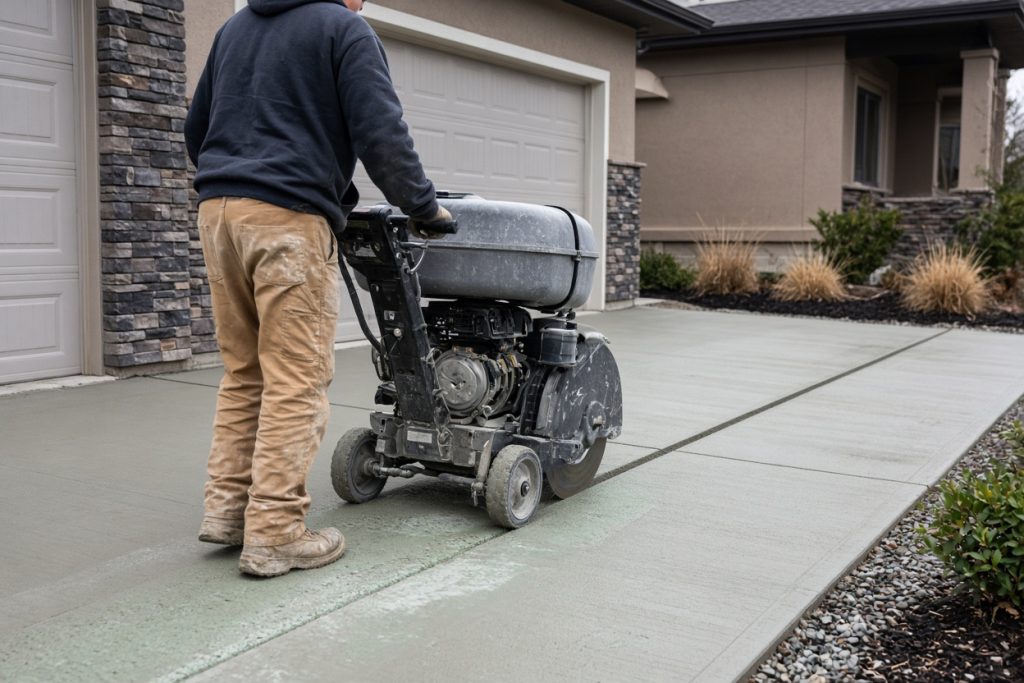
We set a walk-behind saw on the slab and run a light pass along the house so the blade track is visible before we go full depth. Then we cut down. The sound changes when the blade finds mesh or rebar. We have had it grab near an overhead door when the pour was thicker there. A patch can leave steel close to the surface too. You stop and recut and keep the blade in the line you already made.
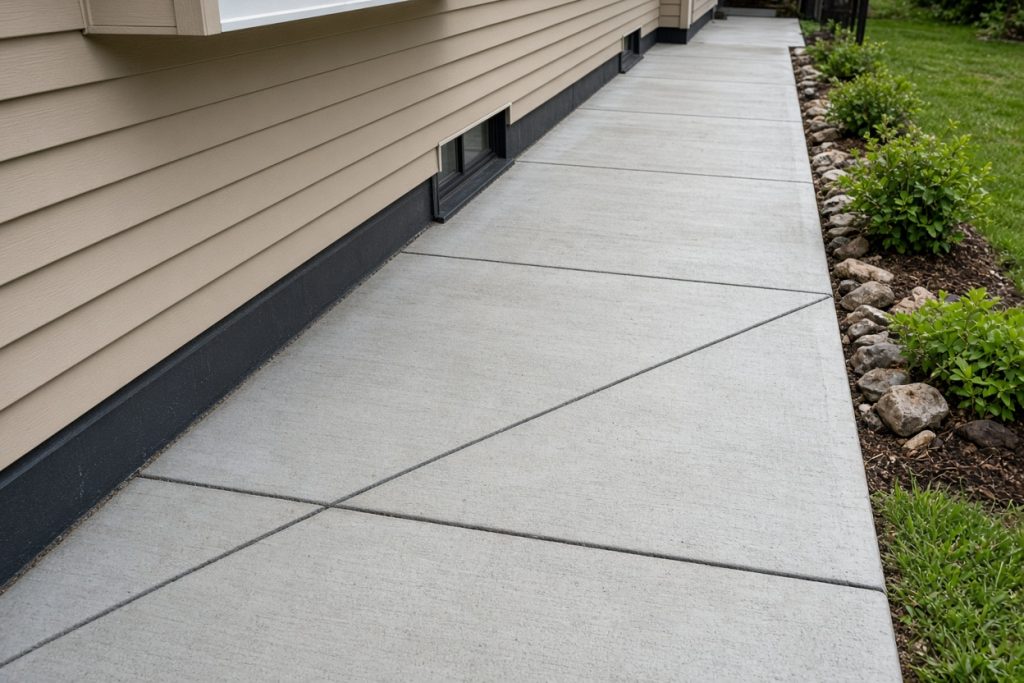
After that building line is in, we cut the rest into panels we can lift. Full-width sheets need a bar on the ground, and the bar needs something to push against. The garage lip is the nearest solid edge. We cut smaller panels, which means more trips to the truck, and those pieces lift without using the house as a fulcrum. We have opened driveways that only looked stained on top, and the break followed a crack that had already worked under the threshold. Freeze-thaw does that around here. Water sits in the joint and ice widens it. The slab keeps shifting through winter. Street salt wears the surface. The joint at the building is usually where the slab has already failed.
Get A FREE Proposal Today!
Concrete Demolition in Portage Tight Against House and Garage
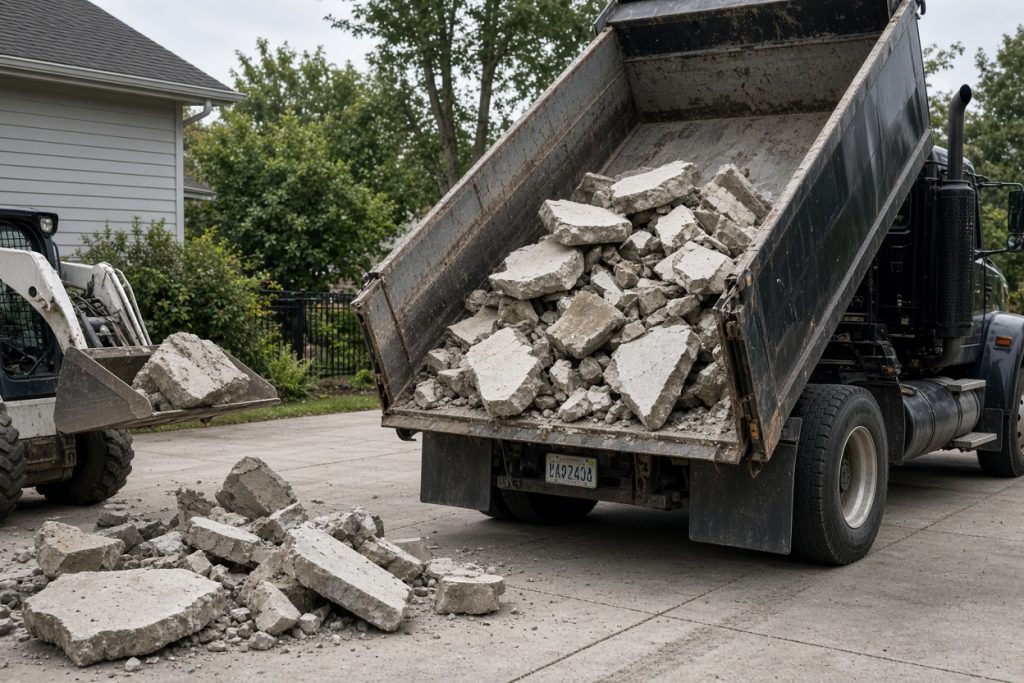
On tight Portage lots the old slab sits against the house and the garage. We stage the removal around that. We mark the cut along the building and the panel layout on the rest of the slab. The breaker stays inside those marks. Load-out starts at the street so debris walks away from the foundation.
We have had people rent a breaker for a weekend and stop when they got close to the garage. The middle of the drive was rubble and the last four feet were still bonded to the house. We cut that last band free so the breaker can finish without leaning on the building. If a walk or a stoop shares a line with the driveway, we cut those free too. Leaving a thin strip stuck to the house is how that strip cracks when the big slab moves.
What We Watch During Concrete Demolition in Portage
Garage door tracks sit right over the joint we care about, along with thresholds and the bottom of the siding. If a window well is next to the drive, saw water has to be kept out of it. We cover what we can before the blade starts. The saw throws slurry. On a still day it sits on the slab. We have had it run toward a neighbor’s pour when the drive pitches that way, so we stop and redirect it before we cut the next pass.
After the pieces are gone we look at the dirt and at the edge of whatever concrete stays. Old pours come out thicker than the surface suggested. Sometimes they were sitting on clay that held water. That close-in cut is what we mean by saw-cutting and concrete demolition when the slab is against a Portage garage. When we do Concrete Demolition in Portage on a lot like that, the sequence is a building-line cut, then panel cuts, then breaking inside the lines, then loading from the street. The building line and the panel cuts take the longest. We wait to talk about what goes back until we have seen that edge.