
Chesterton Front Walks Settling Away From the House: Concrete Replacement in Chesterton
A lot of folks around Chesterton assume the front walk dropped because the mix was weak or the finish went bad. We hear that when someone points at a slab that’s still in one piece and asks why it sits lower than it did. The pour on those walks is often still holding together, and the ground under it is what shifted. On older homes the dirt along the foundation was fill, and over the years that fill gives way. The walk and the stoop follow it down. The door sill stays at the original height, and you get a lip you have to step over to get inside.
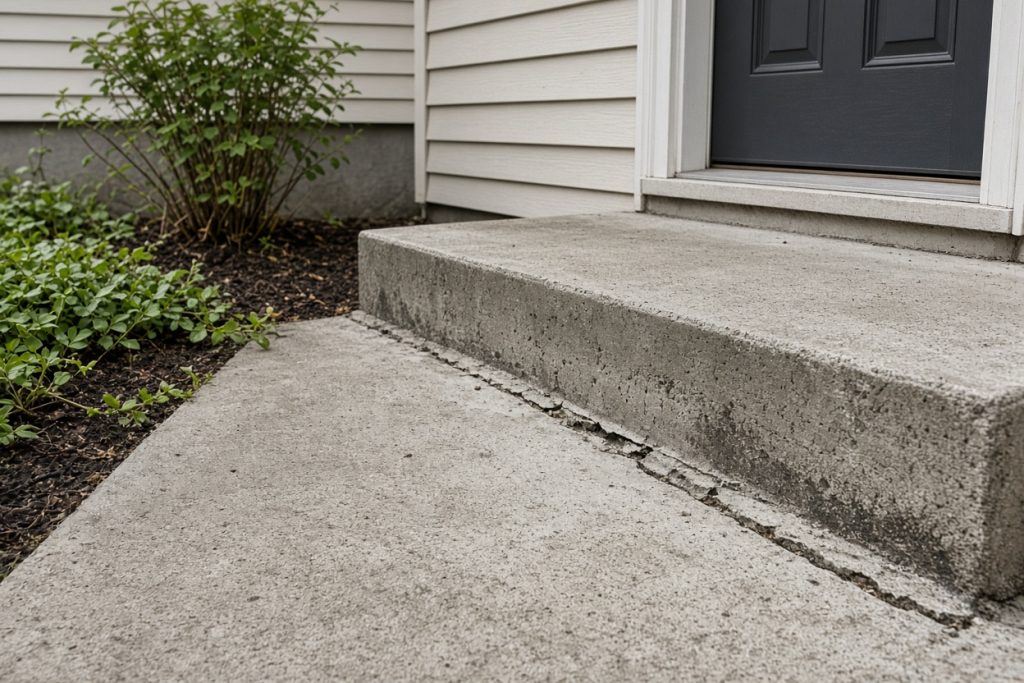
What Settling Looks Like Before Concrete Replacement in Chesterton
We’ve pulled up walks that looked fine from the curb and still had a hollow under them once a section came out. The piece right against the house is the one that usually dropped the most. Sometimes the whole run pitches so water ponds at the low end. People call us about the trip at the door. Stains and a little surface wear come up less. A settled stoop does it on a shorter run. You open the door and the first step is taller than it should be, or the landing has pulled off the wall and left a gap along the siding.
We can’t tell you how many Chesterton houses have this. We see it on older places where the original walk is still in service, and on stoops that went in with the house. Once the slab has broken into pieces, new concrete is already the conversation. A couple of big sections that have just dropped still need a new pour if the dirt under them is loose. On a narrow walk tight to a foundation we usually remove the old concrete and fix the base before we pour new. That’s Concrete Replacement in Chesterton for walks that have dropped and are still in large pieces.
Get A FREE Proposal Today!
Concrete Replacement in Chesterton on Older Front Walks and Stoops
On the older Chesterton homes we get called to, the original walk is often still out there. That matters because those walks were poured over whatever fill sat against the foundation after the basement or crawl went in. What we find when we demo is soft spots and empty space right at the wall, sometimes with old brick mixed in the dirt. Winters here freeze and thaw that ground. Downspouts that dump next to the stoop keep feeding water into the same strip. The low corner of a walk is where ice sits after a thaw, and that’s where we see more cracking after the slab has already dropped.
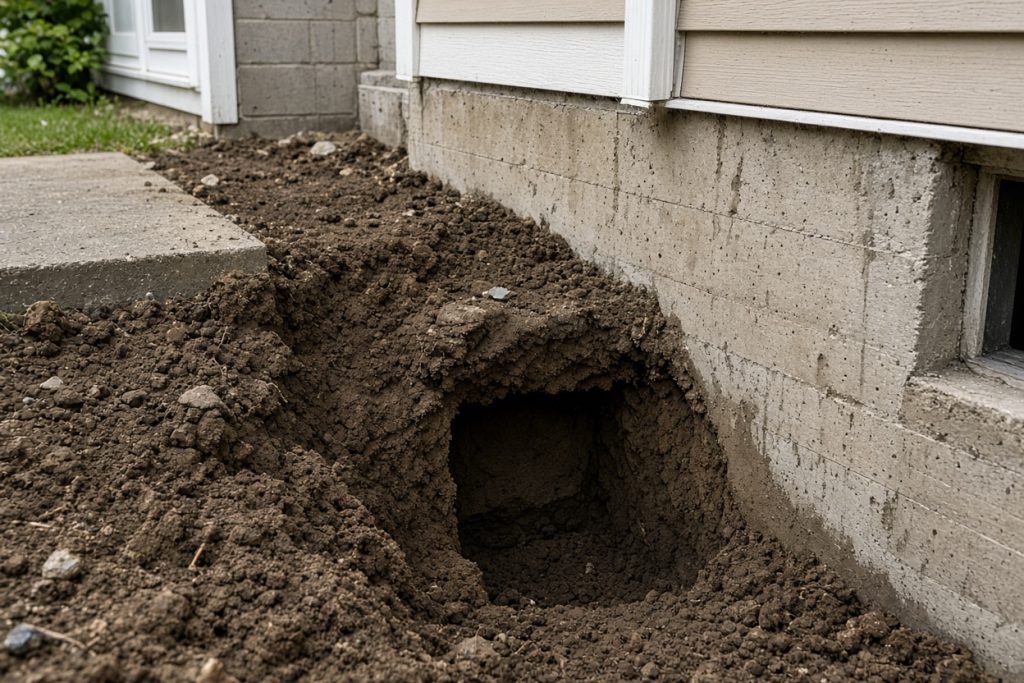
Once that lip shows up at the door, the walk is a trip step on a path people use every day. Settled walks and stoops on Chesterton’s older homes create that step, and Concrete Replacement in Chesterton is the work that puts a safe path back. We take the settled sections out and pack a base that can hold the new slab, then set the elevation to the threshold so the door and the walk meet again.
How We Form and Pour During Concrete Replacement in Chesterton
For Concrete Replacement in Chesterton on a front walk, we saw the old slab and haul it out. Forms go to the house and to the driveway or the public walk, whichever end we’re tying into. Base gets compacted in lifts so we’re not pouring on fluff. We source the mix from suppliers we already trust, because we want the slab to match what we told you it would be. Cabe’s Concrete is family owned and operated, and we’ve been on jobs like this since 2006. We write quotes out line by line so you can see demo and pour as separate items from the base work. We don’t inflate the price of material to make a few extra dollars. We try to get in and out on a schedule that doesn’t leave the front of the house torn up longer than the work needs.
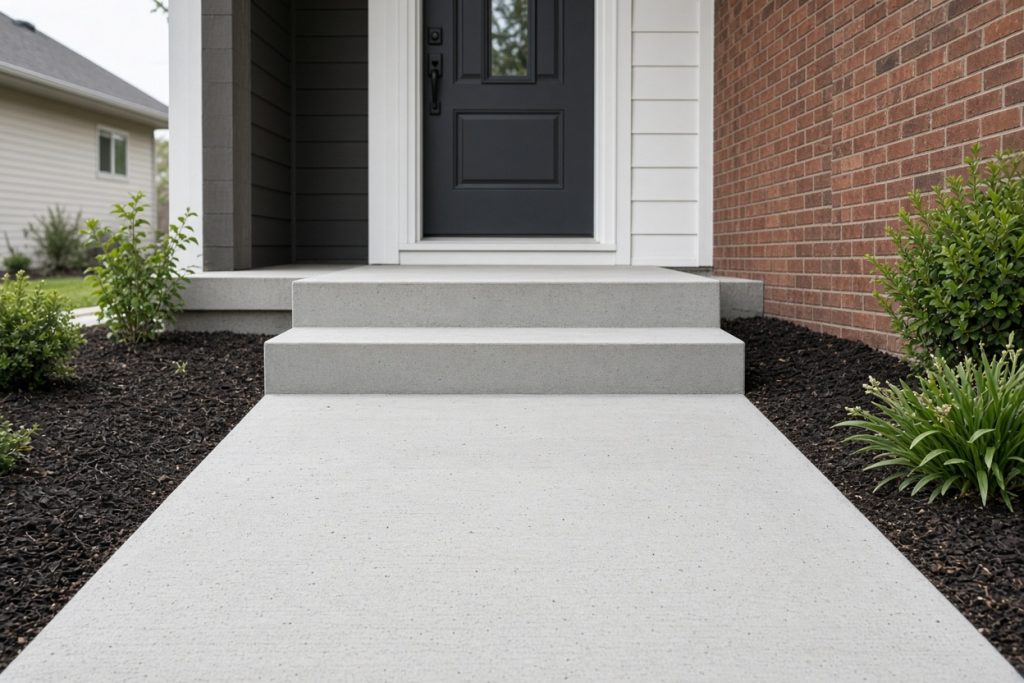
We pitch the new walk so water runs away from the house. If the slab tilts back, water sits against the foundation at the sill. Control joints go where the slab needs them so a crack doesn’t run across the treads. New concrete has to cure before you treat it like the old walk, and that timing depends on the weather the week we pour.