
Portage Indiana Concrete Slabs for Level Shed Floors
A shed slab stays level on sand when we compact the ground and pour on a built base. Loose fill under a new floor will settle, and the slab tips with it. People looking for Concrete Slabs in Portage usually call after a backyard shed rocked. After an addition floor sat high on one side, they call us too. So we start by checking the dirt under the pad.
Portage sits on sandy ground tied to the lake plain and the dunes north of town. After a builder or a homeowner spreads fill, they often leave it unpacked. When a shed or a room addition goes on that sand, the weight finds the soft spots. We’ve seen corners drop on pads that looked flat the day they were poured.
What Loose Sand Does Under Concrete Slabs in Portage
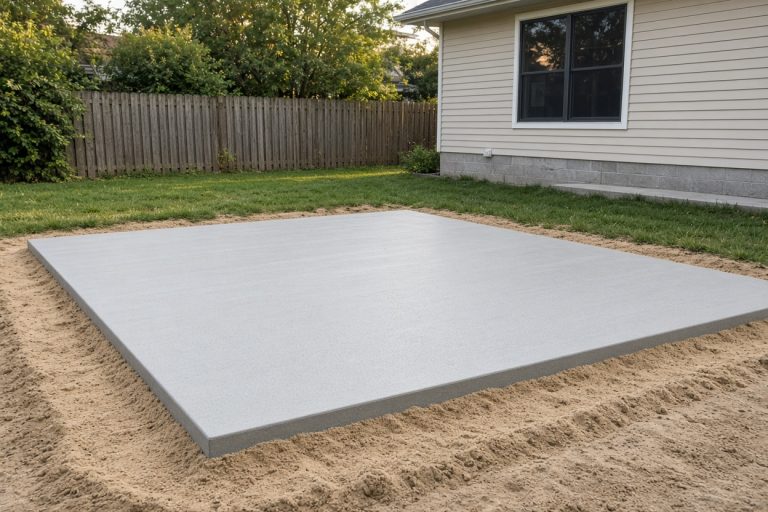
We’ve pulled shed pads in Portage that cracked through the middle after the sand under them settled. The pad looked fine the week of the pour. Then the corners dropped. Because nobody compacted the sand, the load from the shed pushed the soft spots down. Homeowners ask us about Concrete Slabs in Portage when a shed kit is on order. The yard is still loose sand at that point.
But room additions run into the same ground. The new floor has to meet the existing house. A dip at the joint shows up in the doorway. Sand along the foundation often came from the original dig. Then it sits looser than the soil under the old footings. So the addition slab needs its own base, packed in lifts, before we set forms. For example, a small mudroom can tip at the outer wall. That happens if the edge sits on fill someone raked level and left.
On the first walk we probe the sand with a bar. When it sinks under hand pressure, that spot won’t carry a shed. So we dig the soft layer out before we pour. Winter snow piles up in these yards, and meltwater runs to the low corner of a tipped pad. We get calls about doors that bind over a corner nobody packed.
Get A FREE Proposal Today!
A Built Base for Concrete Slabs in Portage
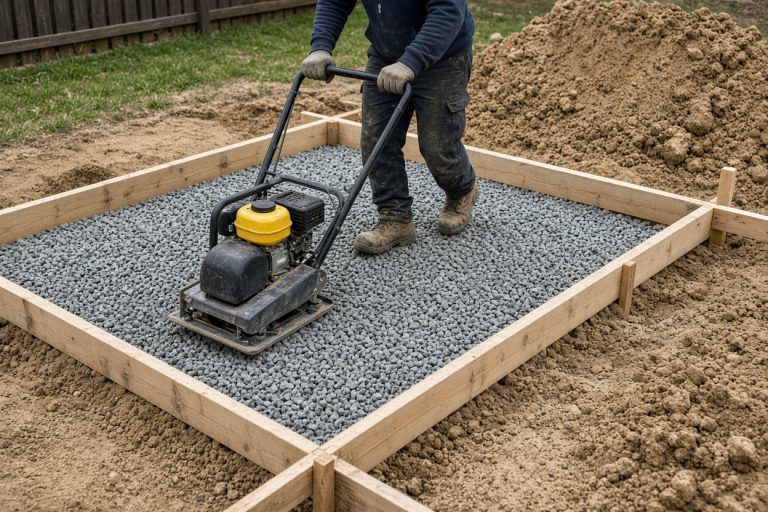
People often set backyard sheds and room additions in Portage on sand that nobody compacted. So a slab with a real base is the pour that keeps the new floor from tipping. We strip the loose sand first. Then we bring in base material from suppliers we know and compact it before any concrete shows up. That base is what Concrete Slabs in Portage need on native sand. The sand won’t hold a level line on its own.
After the base is tight, we set forms. We set them to the height the shed or the addition needs. Then we check the diagonals so the pad stays square. For a room addition, the slab has to meet the height of the existing floor. We work that height out with you before the truck is ordered. A wrong elevation costs more to fix after the pour. Residential work on an older Portage house often includes that joint. A service walk goes in if the new door needs a path out.
You can look through our photo gallery to see the kind of flatwork we pour. Our concrete slab services cover garage floors and room additions too. When an old shed pad already tipped, the same visit can cover a tear-out. We haul the broken concrete off before the new base goes in.
Pouring Shed and Addition Concrete Slabs in Portage
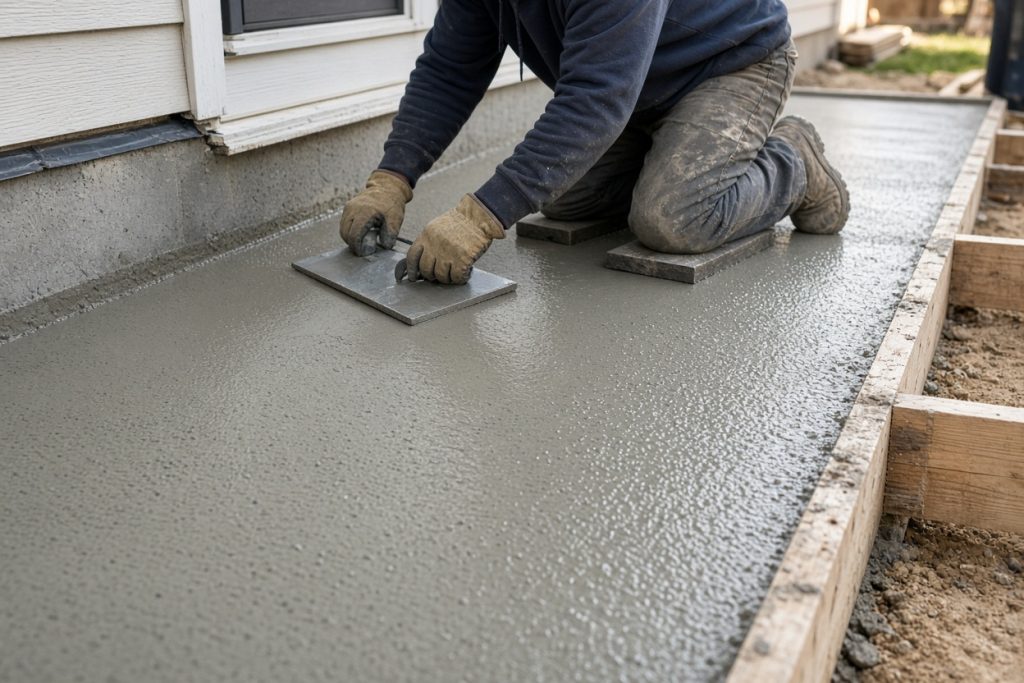
On pour day we place the concrete and strike it to the forms. Then we finish it for the use it will get. A shed floor can take a broom finish. But flooring over an addition needs a flatter pass. We talk that through before we start. Because our doors opened back in 2006, the crew has poured a lot of these small pads. Cabe’s Concrete is family owned and operated, and the same crew finishes the slab.
New construction for a pole barn on sand follows the same base work. So compacting takes longer on the bigger pad. Garage floors on these lots need that same packed base if nobody compacted the sand. We still plan the day so we can finish and leave once the slab is right. But we keep foot traffic off the fresh concrete until we clear it. We say when it can take the weight. That wait depends on the mix and the weather. We write the timing on the job notes before we go.