
Ogden Dunes Indiana Concrete Slabs for Shed Pads
You’re choosing where a new shed or equipment pad should go, and the ground under it is sand. Concrete Slabs in Ogden Dunes have to sit on a base built for that sand, or the pad moves after the shed goes up. So the sand has to carry the slab before the shed kit matters.
Ogden Dunes sits on lakeshore dunes. But the sand under a lawn can look packed until a shovel goes in. Then it shifts. We’ve opened yards where the top felt firm and the next few inches moved under a boot. A shed or a mower pad puts a steady load on a small area. When that load lands on loose sand, one side of the pad drops. The door sticks and the wall racks. So people have called us after that showed up.
A pad for a shed carries a building that stays in one place for years. A mower and winter gear add weight in a tight footprint. For example, an equipment pad for a generator does the same thing on a smaller square. Because the load stays in one spot, we build the base for that spot before we set a form.
What Concrete Slabs in Ogden Dunes Need Before the Pour
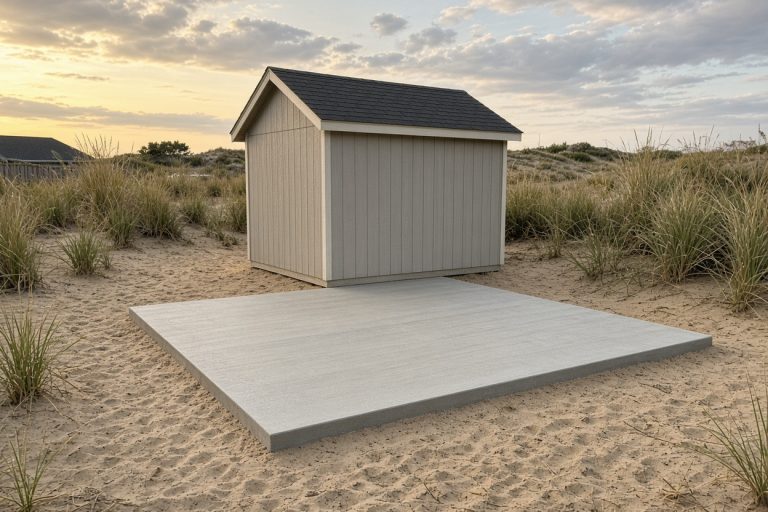
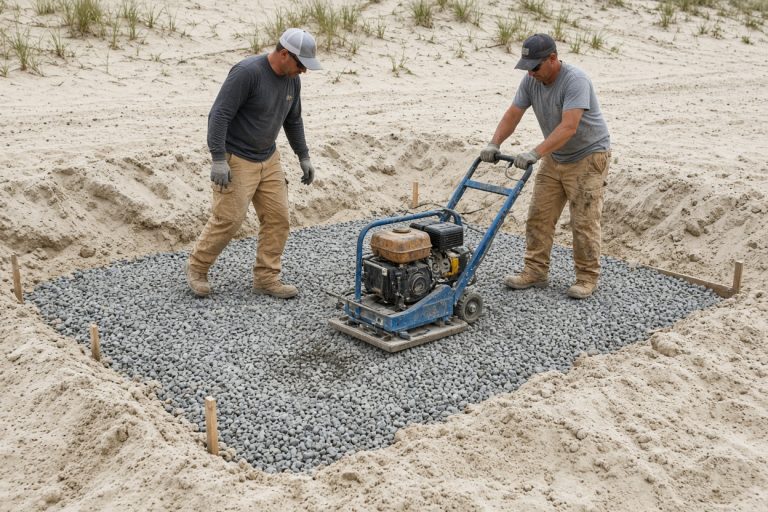
We start by stripping the loose sand down to material that will hold a base. So we pour on a base we built. That base lets Concrete Slabs in Ogden Dunes stay put under a shed. After the loose layer is out, we place crushed stone and compact it in lifts. Crushed stone packs into a stable layer under a plate compactor. Then we set a slight slope so water leaves the slab.
But people miss roof water on a lot of these pads. We’ve found voids along a drip line where runoff carried sand out from under a pad edge. Because of that, we set the slab a little above the surrounding grade. We also plan for where the shed roof will dump water. A short gravel strip at the drip line keeps the edge supported. When the old pad has already sunk, we can take it out first. Then the same visit covers concrete removal and a tear out and replace.
Get A FREE Proposal Today!
Building Concrete Slabs in Ogden Dunes for a Shed
The shed sits on a short square of concrete, and that square has to stay level or the walls show a drop. We size that square for the walls and the stored gear. So Concrete Slabs in Ogden Dunes for a shed get a base sized to that building. For example, an equipment pad gets the same kind of base on a smaller square. We form the pad and place the concrete for the use you named. Shed and equipment pads on this sand are their own slab job, distinct from a driveway or a patio.
Before we set forms, we walk the path from the street to the pad. When a ready-mix truck can’t get close, the carry has to be in the plan. A slow place on a hot day makes a rough finish. We match the slab to the load you described. That might be a light storage shed or a heavier piece of equipment. For a new shed, this is new construction of a small slab, and the base still comes first. We write that scope out line by line, and we list the base work on its own.
We’ve poured these pads next to older houses where the yard sand had no compaction for a building. After the forms come off, the pad should meet the shed sill without a stack of shims. When you also want a service walk from the house to that shed, we look at the grades first. If they work, we can pour the walk in the same visit. That walk is residential concrete, sized to foot traffic, and the two slabs meet at a planned joint.
Our concrete slabs work covers the pad from the sand work through the pour. Our photo gallery shows finished pads and other flatwork. Cabe’s Concrete is family owned and operated, and that same crew sets bases on lakeshore lots around Ogden Dunes.
On a sandy Ogden Dunes lot, the stone base should run a little past the forms. That shoulder stays in place after the forms come off. We backfill against it once the concrete can take the soil. The shed then sits on concrete with support at the edge. We have seen sand leave at that edge.