
Porter Indiana Concrete Slabs for Sheds on Sand
A thin shed pad poured straight on loose sand often ends up tipped. We have pulled up pads in Porter, Indiana where one corner had dropped and the door wouldn’t latch. The slab looked fine the first week. Then the sand moved under a light section and a crack opened along the door side. People call us after the mower ramp breaks off or the shed frame twists. That’s what happens when Concrete Slabs in Porter go down without a prepared base.
Porter sits on the dune side of Porter County, close to the lake. So many yards here carry loose sand under a thin layer of topsoil. Because nobody packed that sand, a yard shed has nothing solid to sit on. We have seen it on older places near the dunes and on newer lots where the builder left the sand loose behind the house. After a wet spring the low corner gets worse. For example, stored lumber starts to lean and the shed door scrapes the pad. Grass and a little topsoil cover the loose sand until you dig.
When a corner drops, the wall rack binds and the door frame goes out of square. People have shimmed the skids to hide the tilt. More sand shifts under the light side, and the crack gets wider. We have seen the same pattern on kit sheds and on small framed outbuildings.
Concrete Slabs in Porter Need a Packed Base
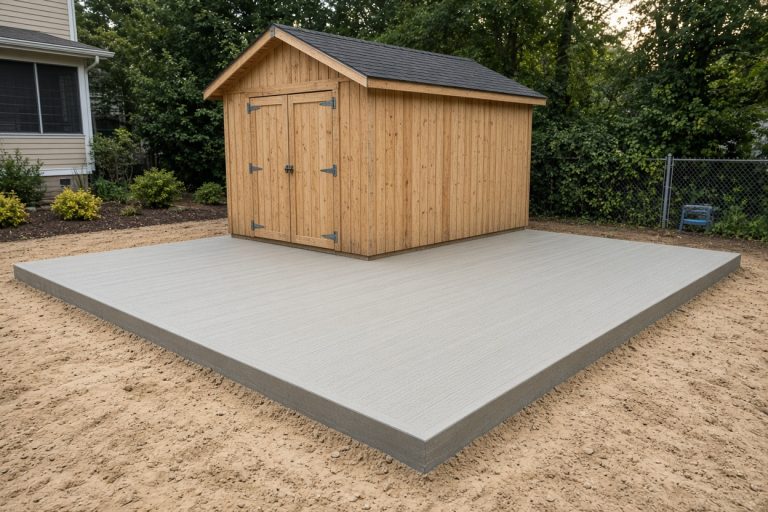
An outbuilding slab in Porter needs a prepared base because loose dune sand will let a thin pad settle. So we strip the soft top layer before we set a form. Then we pack the sand that stays, and we add stone and pack that too. Because a shed carries its weight around the walls, the edges need support that loose sand won’t give. When the base is loose, one side drops and the pad cracks. We have stood on corners that rocked because nobody packed the sand under them.
The stone gives the concrete something even to bear on. So the pad doesn’t chase every soft pocket in the dune sand. We form the slab square to the shed plan. We set the top so water runs off the door side. Then we pour, finish, and cut joints if the pad is large enough to need them. Concrete Slabs in Porter for a shed usually get a straight broom finish. You can look through our photo gallery if you want to see how those pads turn out.
Get A FREE Proposal Today!
We lay out a shed slab the same way we lay out any flatwork. The shed size and the door swing both go on the sketch. We also mark where you want the ramp. After that we tell you if the old pad has to come out first. Some yards already have a cracked pad from a kit shed that sank. Then the work includes concrete removal and a tear out and replace before the new pour. Concrete Slabs in Porter can include a small ramp. A short service walk back to the house can go in on the same visit.
How We Build Concrete Slabs in Porter
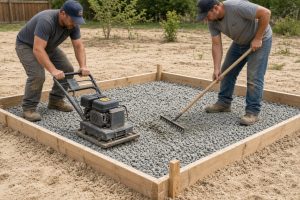
We pour once the base is packed and the forms are true. Because we’re family owned and operated, shed pads are familiar work for us. Our doors opened in 2006, and we still pour across North West Indiana. So we set the forms and make the pour. Our people walk the layout with you before the truck gets there. We also handle garage floors and pole barn pads through our concrete slab service.
Homeowners in Porter, Indiana put these pads under mower storage and a spot for beach gear. We have formed them beside older houses and behind newer ones closer to the dunes. The sand changes from lot to lot. So we check what is under the grass before we decide how much stone the pad needs. Concrete Slabs in Porter start with a look at the soil. We have found deeper loose sand on lots closer to the lake than on lots farther inland. But the same sandy ground shows up next door in Chesterton. We cover those yards on our Chesterton Indiana concrete contractor page. A thickened edge helps where the shed wall will sit. We slope the door side just enough to shed rain.