
Lowell Indiana Retaining Walls – Older Lot Grade
When you stand at the property line, you can see the problem before anyone points it out. Soil fans across the lower walk in a thin brown sheet. The grass on the high side ends in a bare lip. After a wet spring, that lip sits a little farther down than it did in the fall. We pour Retaining Walls in Lowell for that foot or two of drop between older neighboring lots.
Builders graded older lots in Lowell when the houses went in. So the yards didn’t come out level with each other. One side sits higher because the builder set the house to the street. Then the next lot took what fall was left. We have walked those lines and found the high side shedding soil onto the lower yard after winter. Mulch follows the same path. After that, a service walk or a patio edge starts holding dirt against the lower side.
Soil Creep and Retaining Walls in Lowell
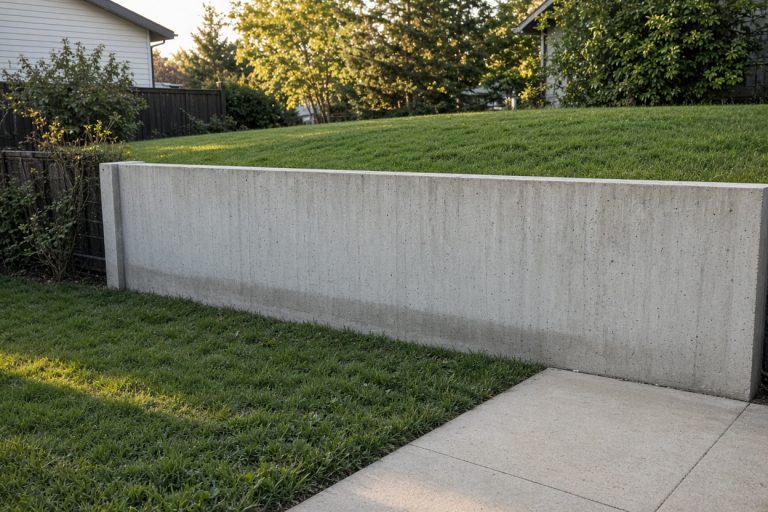
A foot or two doesn’t look like much when you stand on it. But water sits in that exposed face through a wet fall. When the ground freezes, that moisture expands in the soil. After the thaw, the loosened dirt moves downhill onto the lower yard. So mud from the high side ends up on the low walk. We have pulled grass back and found the sod line had crept away from where the yards used to meet.
So that creep keeps working on the lower walk and on whatever sits at the bottom of the slope. A concrete retaining wall holds the high grade so soil stays on the upper lot. For a drop of a foot or two, the wall stays short. We cast it to take the soil load. The lower side gets a clean edge against the walk.
People have called us about Retaining Walls in Lowell after mud showed up on the lower walk. We look at both yards before we talk about a wall. Water from the high yard has to move away from that house. The walk below still needs room to stay clear of mud. Because the lots are older, a fence or a shed can sit on the line we need.
Because soil stays wet behind a new wall, water needs a way out. We build that path in, because trapped water pushes on the wall. So we walk the grade on both sides before we set a form. A downspout dumping at the line changes where we start the wall. We also check whether the existing walk already pitches toward the low yard.
Get A FREE Proposal Today!
How We Build Retaining Walls in Lowell
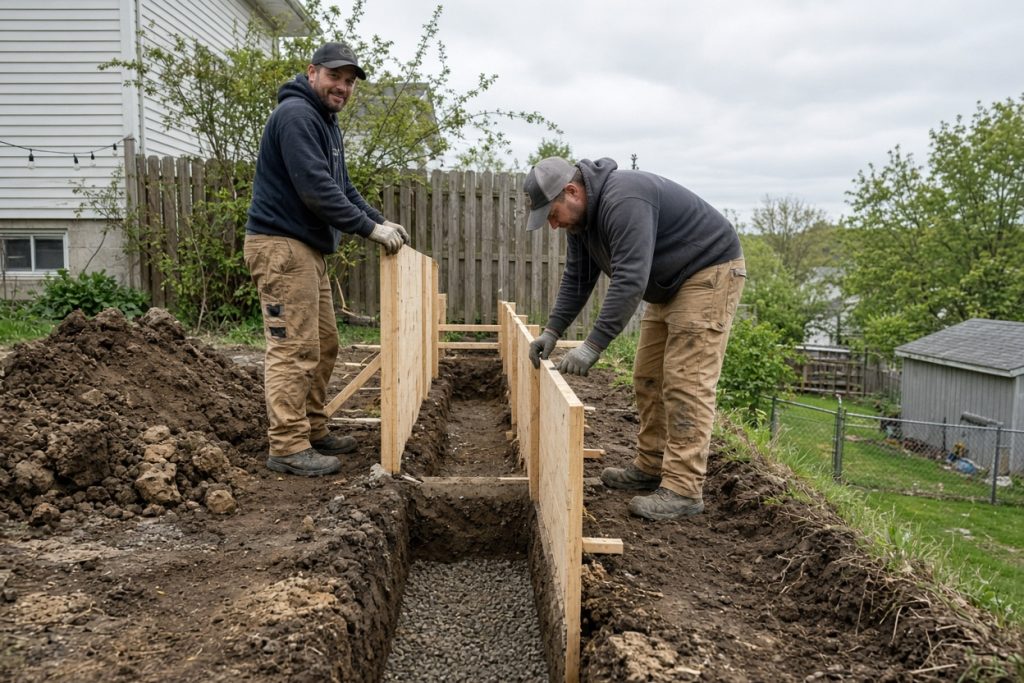
The job starts on the line between the yards. We measure the drop and see what the wall will bear on. Then we mark the footing and talk through how the top of the wall will meet the grass. Cabe’s Concrete is a family owned and operated company. Since our doors opened back in 2006, we have poured concrete across northwest Indiana. Lowell is in the area we cover.
People call us about Retaining Walls in Lowell before they put new grass on the high side. We set forms for a straight top and a face that can take the soil. Rebar goes in the footing and up into the wall. Then we pour, and we stay with the concrete while it sets so the top stays true. The top has to land where a mower can run without catching a lip.
On these older lots the wall often meets concrete that is already there. A service walk may need a new edge where dirt has piled against it. Sometimes the upper walk needs a joint at the top of the wall. When the slab below is cracked, we tear that section out and replace it on the same visit. House flatwork like that is on our residential concrete page.
Retaining Walls in Lowell have to tie into the walks and the grade around them. So we plan the wall and the flatwork together. The same crew pours our retaining wall work and the walks that tie into it. We backfill in lifts after the wall can take the load. Then we slope the top yard a little so water moves off the high side. We compact that fill so the top yard doesn’t settle into a trough along the wall.