
Kouts Indiana Retaining Walls for Higher Yards
A loose row of timbers at the ditch line looks fine until a wet spring. Then the ties roll and the soil behind them slumps into the swale. A strip of yard goes with that soil. We have pulled out stacked block that nobody pinned, and the grass behind it had already dropped. After the edge moved, people called us about Retaining Walls in Kouts. Dumping gravel on the bank does a poor job too. Rain cuts a groove through it, and the mower line moves back each year.
On the ditch-drained lots we have worked, the yard sits a little higher than the swale. That shows up around Kouts, Indiana. So from the porch the drop is easy to miss. It sits at the back line. After a hard rain that drop shows. Soil stains the ditch bottom, and mulch washes out with it. Because the bank is short, people plant along it and stop there. But runoff from the yard still reaches the ditch and takes soil with it.
Where Lots Need Retaining Walls in Kouts
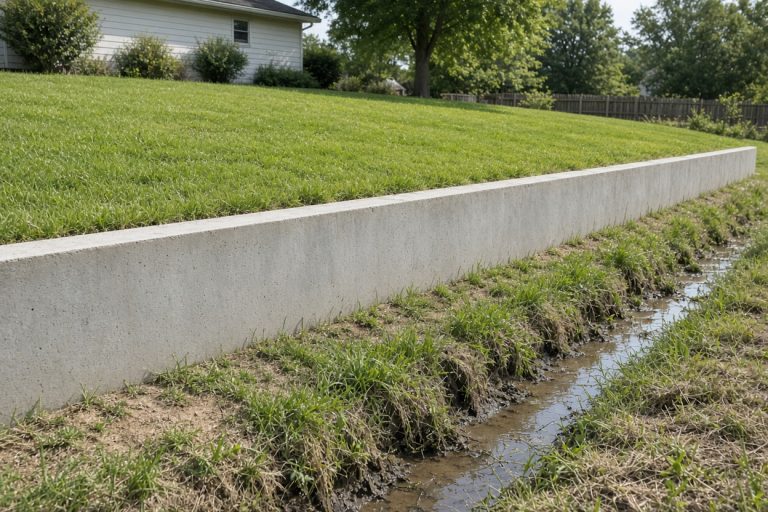
The trouble starts at that small drop. Spring rain sheets off the lawn and takes topsoil off the bare face. Then winter freeze and thaw loosen what is left in the bank. We see a scalloped grass line and a fan of sand in the ditch. For example, we have pulled landscape timbers that sat on the slope with nothing but their own weight. After two seasons those timbers had shifted downhill, and the soil had come down with them.
Seed on that face rarely gets a chance to root. Then the next rain moves it into the ditch with the loose soil. We have raked that mix out of swales before we could even set a string line.
A low wall sits at the change in grade and holds the yard soil on the high side. The ditch stays open so water can still move past the lot. So the swale keeps carrying runoff. When the drop is small, Retaining Walls in Kouts stay low. The yard above stays flat enough to mow. We leave a path for water behind the wall. Gravel backfill and a drain let that water out before it can push on the concrete.
Get A FREE Proposal Today!
How We Build Retaining Walls in Kouts
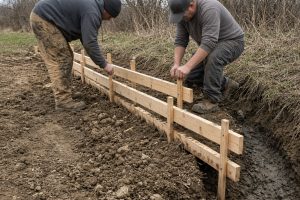
We start by looking at how far the yard has already moved on lots in Kouts, Indiana. Then we mark the wall line so the ditch still has room to carry water. After the old timbers or loose block come out, we cut a level footing. We set forms for a low wall once that base is cut. Because the drop is small, the pour is usually short. We still take time on the base. A wall on soft fill will tilt. We have reset walls where someone skipped the footing.
We also check downspouts on the ditch side. When a spout dumps on the bank, it cuts a channel even if the lawn above holds. So we move that water before we pour. We have seen a groove at the end of a wall where a spout still pointed at the bank.
The pour is straightforward once the base is right. We place the concrete and strip the forms when the wall can stand on its own. So we screed the top level for soil and seed behind the wall. On a ditch lot, Retaining Walls in Kouts also have to leave the swale clear. Then we keep the wall back from the flow line.
Same-Visit Work Beside Retaining Walls in Kouts
People have asked us to fix a walk that cracked where the grade fell. A service walk can come out in the same visit. So can a short upper walk when the slab broke at the ditch side. Tear out and replace covers the old edge when it is timber or loose block.
Residential concrete can go in on the same visit. That fits when a small slab meets the wall. We have poured those pads where a mower needed a flat spot above the ditch. Because we have done this work since 2006, the sequence is familiar to us. Cabe’s Concrete is a family owned and operated company. We source the concrete and the stone so we know what goes in the wall.
Our photo gallery shows finished walls and other flatwork from jobs we have done. The About Us page covers the family company and the way we run a job. Our concrete retaining walls page lists this work with the rest of the flatwork. We check the backfill gravel before we leave a wall. After the first wet week, a missed drain shows up as a wet spot at the base.