
Lowell Indiana Concrete Driveways – Salt Damage
A lot of people think rock salt only sits on the ice and then washes off. Salt brine soaks into the top of the slab, and that starts the pits. Concrete Driveways in Lowell see this every winter once plows and salt hit the street.
When the surface looks chewed up in spring, people blame a bad pour. We have pulled up slabs with a sound base and a wrecked top. So the winter did that damage through repeated freezes.
How salt wears Concrete Driveways in Lowell
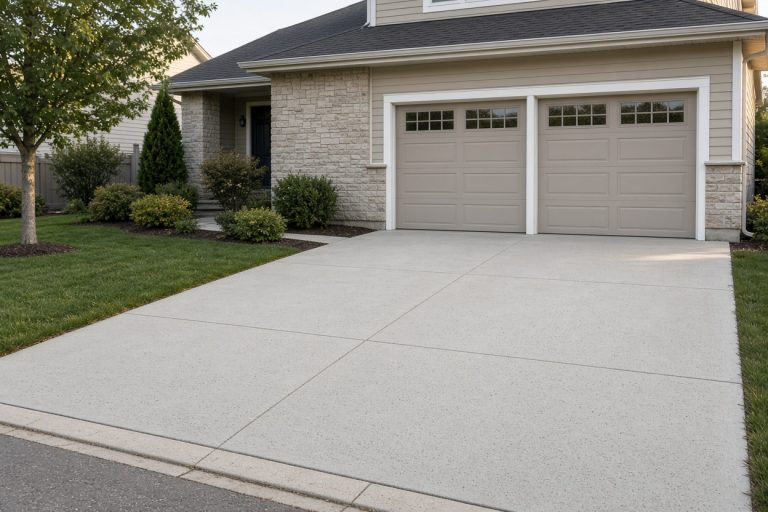
Salt lowers the freeze point of water. Because of that, meltwater sits in the pores and freezes again overnight. Each cycle pops a little paste off the stone. After enough cold nights, the surface pits and flakes.
We see the worst of it at the street end, where slush and road salt pile up. The apron takes the same hit. When someone spreads extra salt by the garage, that strip pits too. Then the middle of the drive can still look decent.
Calcium chloride and magnesium chloride do this too. Homeowners buy them in bags. Because they melt ice at a lower temperature, people reach for them on the coldest mornings in Lowell. The brine still soaks in.
A new driveway is easier to hurt in its first winter. Because the paste is still gaining strength, salt finds that softer top. We ask people to scrape snow first and use salt only where they need a path. Sand gives traction without feeding the pores.
Sealer helps a sound slab. It slows brine from getting into the pores. After the surface has already scaled, sealer sits on loose paste and does little. We look at the top before we talk about a coat of sealer.
Lowell winters stay cold long enough for the cycle to repeat. People head out while the drive is still frozen. Then plows come early. When the concrete is frozen, a blade scrapes harder than it does on a soft thaw. Salt and the blade work on the same spots, mostly near the street.
Get A FREE Proposal Today!
Concrete Driveways in Lowell under a plow blade
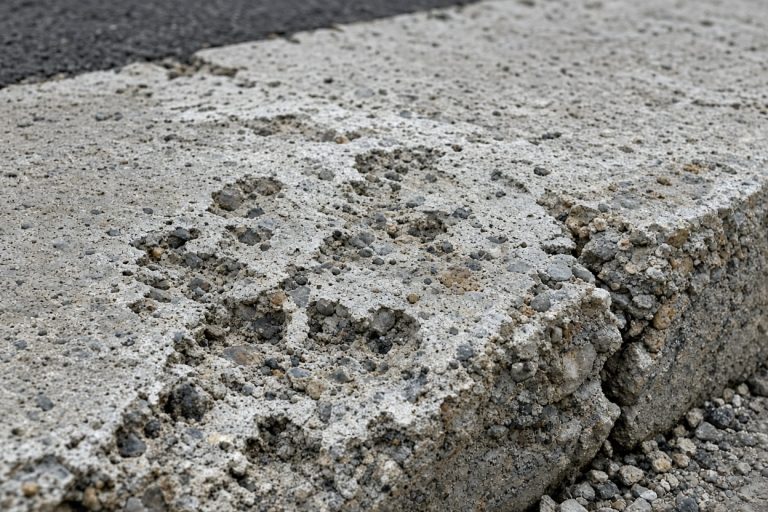
Crews set a plow blade to clear snow, and the blade rides the high spots. It scrapes the surface and catches the edge of a joint. After salt has loosened the top, the blade peels that weak layer off. We have seen scrape marks and chipped corners on drives that were smooth the fall before.
Snowblower skids do a smaller version of the same scraping. Because the slab is brittle when it is frozen, a hard knock pops a corner. For example, the outside corner by the public walk often chips first. But metal shovel blades leave the same kind of nick along the edges.
Every winter, plows and de-icing salt wear on Concrete Driveways in Lowell. People call us in spring about that surface damage, once the snow is gone and the pits show. So the repair starts with a look at the concrete under the flakes. We check whether the slab under those flakes is still tight.
Repairs we make on Concrete Driveways in Lowell
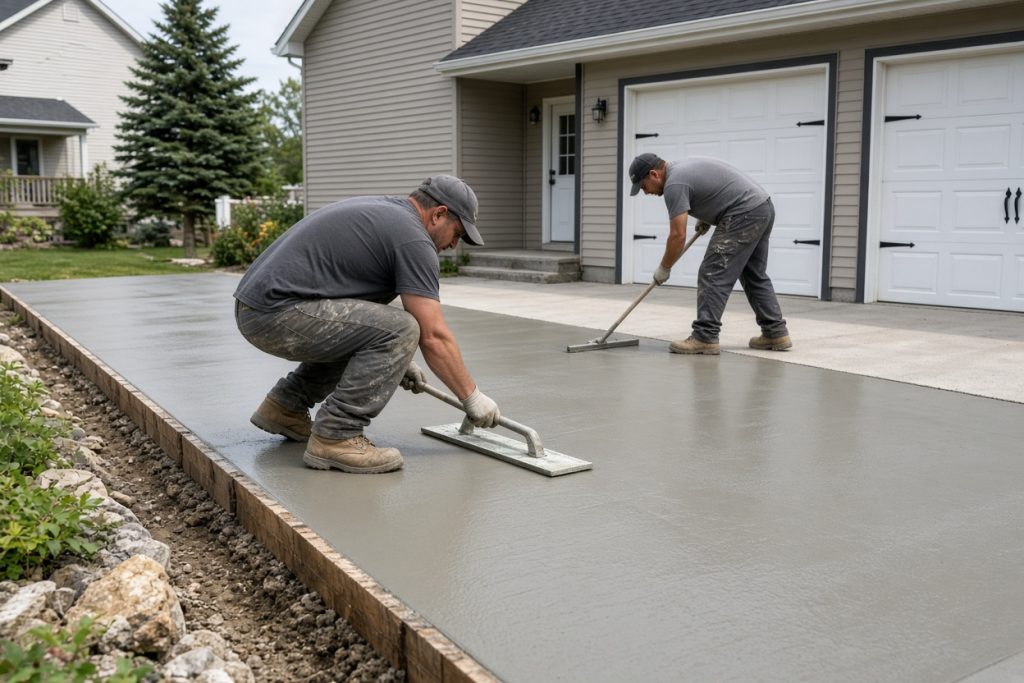
When the paste comes off in your hand, a skim coat will fail. We do the concrete removal and pour new concrete back. That job is tear out and replace, and it fits when scaling runs deep. Patch work fits when the damage is shallow and the slab below rings solid.
The same visit can cover a salt-scaled garage floor. After that, the visit can cover a service walk that meets the drive. For example, some jobs include the upper walk from the door down to the drive. We do small patch work, and we remove and replace whole slabs.
Our concrete driveway work covers these repairs for homes in Lowell. Driveways sit with the other residential concrete we pour, from garage floors to walks. We are a family owned and operated company, and we have worked in northwest Indiana since 2006. You can see who we are on the About Us page.
We use an air-entrained mix on exterior drives in this climate. Because that mix holds up better through freeze-thaw, it belongs on a Lowell driveway. We source products we know are fit for the job. Our crew has years on this flatwork, and they say what they see before the pour.
Concrete Driveways in Lowell should get an easy first winter after a new pour. Keep heavy salt off until the slab has cured and we have sealed it. A steel blade can chip the edge of a new pour. We tell people to use a plastic shovel while the paste is still young. Sand can cover slick spots in that first winter.
After the seal goes on, salt still needs a light hand. Rinse the drive on a mild day once the brine has sat for a while. Then that rinse keeps salt from sitting in the pores into spring.