
Ogden Dunes Indiana Concrete Patios – Lake Wind
You hear it before you look down. A chair leg scrapes, and sand grits under the metal. Then you see a pale drift across the slab, thicker toward the lake, packed into the joints. On Concrete Patios in Ogden Dunes, that film shows up after a windy day off Lake Michigan. So it sits there through the week. Sweeping moves most of it. But the fine stuff stays in the broom lines and along the edges.
Houses closer to the beach catch more of that sand than homes set farther back in Ogden Dunes. After a north wind off the water, people have called about a ridge on the lake side. Sand had filled the control joints. Because those joints held damp sand, water sat there instead of running off. We check that packing before we talk about a sealer or a new pour.
You can also find a dust line where the slider track meets the slab. Sand rides in on shoes and grinds in that track. When we look at a lakeshore patio, we check the track and the low corner where water collects. For example, a corner that stays dark after the rest of the slab has dried is holding water. We measure that corner against the house wall before we talk about a new surface.
Summer Traffic on Concrete Patios in Ogden Dunes
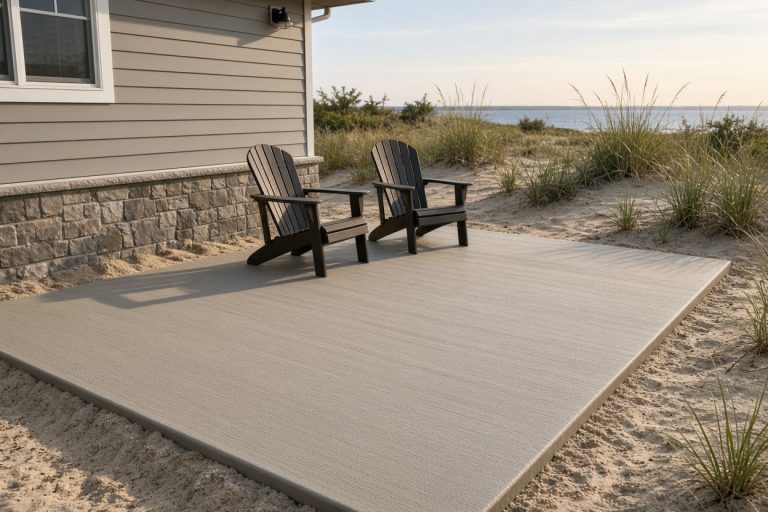
Summer is when the patio earns its keep. Chairs and a grill sit out for weeks. Wet feet track sand across the same path from the door to the yard. So the grit works under that traffic. But it dulls a smooth finish. Small pits open where the surface paste had worn thin.
That pattern shows up on Concrete Patios in Ogden Dunes that face the water. Over time, the lake side can look rougher than the side toward the house. We’ve pulled up slabs where people named that worn band as the complaint. The rest of the patio looked fine from the kitchen. Up close, the paste had come off in patches, and sand had worked into every low spot.
Get A FREE Proposal Today!
Winter Moisture and Concrete Patios in Ogden Dunes
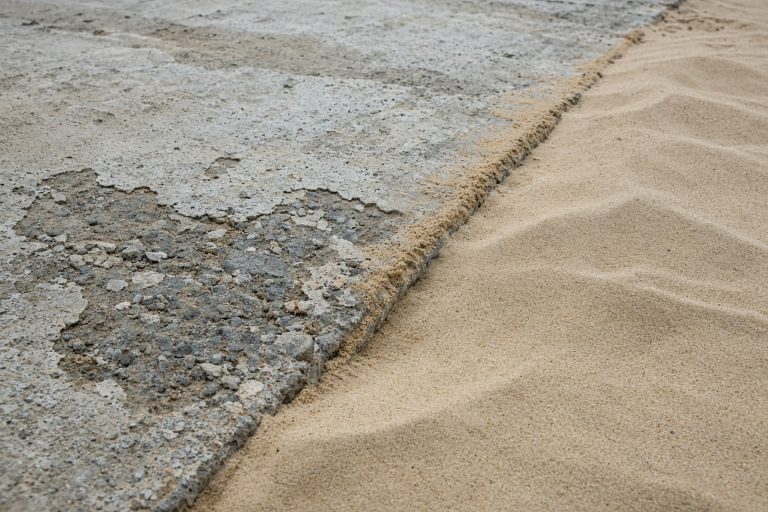
Patios built for lakeshore summers still sit in wind-driven sand and winter moisture. That’s the wear we write about when we walk a job in Ogden Dunes, Indiana. After the rain has passed, sand keeps the surface damp. When that water freezes, it pushes on the paste at the top of the slab. Then thin flakes come off. The spot turns rough, and a broom no longer makes it look even.
We plan Concrete Patios in Ogden Dunes for blown sand and for winter wet. So water and wet sand move off when we slope the slab away from the house. Joints go in so a crack can form in a straight line clear of the sitting area. After the forms come off, those joints are the spots to sweep when wind stacks sand on them.
Concrete Patios in Ogden Dunes: Tear-Out and New Finish
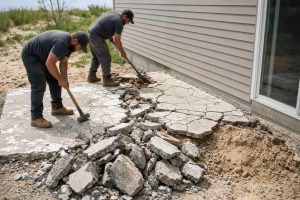
When an old slab is scaled through and rocks underfoot, a skim coat won’t hold on that base. Then we talk about concrete removal and a tear-out and replace. The same visit can take a service walk that tracks sand toward the door. Some jobs also pick up an upper walk where the yard drops toward the lake. For the new surface, a broom finish gives grip with a little sand on it.
If you want color in the mix, we go through that before we set forms. Because stamped lines can hold grit, we talk about where that texture will sit. So you’ll sweep that texture after windy days. Acid stain is an option when the concrete is sound enough to take it. We can color the new pour if that is the look you want. A small landing at the slider can go in with the patio so the heights match.
Broom work and decorative finishes are in our photo gallery. For the pour itself, our concrete patio services cover new residential slabs and replacements. Cabe’s Concrete is family owned, and we’ve poured across North West Indiana since 2006. The about us page covers how we run a job from the first look to the last broom pass. We write the scope out line by line so you can see what the visit includes. After the pour cures, sweeping the joints in windy months keeps sand from packing them solid. A packed joint holds water on the lake-facing edge, and that wet edge is where we see scaling start.