
Lake Station Indiana Concrete Driveways After Winter
A bad patch on a winter-damaged drive fails the next freeze. The new mortar pops out. Then the crack under it opens wider. The surface scales off around the old repair. We’ve pulled up skim coats that let go after one winter. Because the slab under them was still moving, the coating never held. We’ve seen that pattern on Concrete Driveways in Lake Station at older single-family houses.
Salt makes a thin repair worse. After road salt rides in on tires, it sits in the low spots by the street. When that brine freezes overnight, the patch takes another cycle. So a spot repair at the apron often looks rough again by March. For example, we’ve torn out bag-mix patches that crumbled while the concrete around them still held. But a hairline at a control joint can stay put. An open crack with one side dropped means we take the panel out.
Concrete Driveways in Lake Station After a Full Replacement
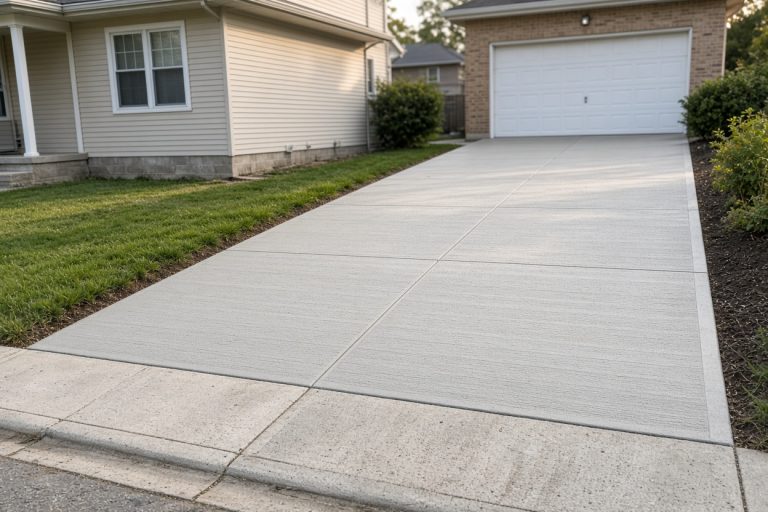
We tear the failed concrete out when the crack runs through the slab. Then we look at the stone under it. Because a soft base lets the new slab settle, we rebuild that base before we pour. After the base is solid, we set forms and place the concrete. Control joints give the slab a straight place to crack. A broom finish gives tires a grip on a wet morning. We also check the garage lip, because a high lip holds meltwater on the slab all day.
Surface scale starts as a rough, pitted top. We can sometimes patch a small spall if the slab below is solid and the pitch is right. When the panel has dropped or the crack is full depth, patch material has nothing stable to hold to. We’ve seen that on drives where someone filled the crack in the fall. By spring the fill was loose and the edges had chipped back further.
Owners of older houses have asked us for a new drive after a hard winter. The surface was breaking up, and the apron had settled. Lake-effect snow and road salt sit on these driveways between storms. After plows push salted slush up the apron, that mix stays in any dip. Meltwater ponds where the slab has tipped toward the garage. So snow and salt water stay on that stretch before the next freeze. That wear leads owners to ask about a new driveway. We look at the apron first on those calls, because it’s where tires drop the salt.
Get A FREE Proposal Today!
Salt and Snow on Concrete Driveways in Lake Station
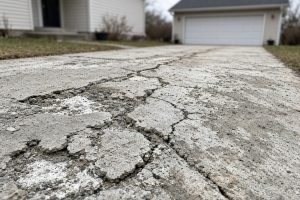
Lake-effect snow and road salt sit on these drives through winter. After a storm, brine stays in any low spot. When the night freeze hits that wet surface, the paste at the top flakes. We’ve pulled up slabs with a pitted top and a full-depth crack. So a sealer on that damage only covers it briefly. More water runs into the crack on the next thaw.
We saw the old slab into pieces and haul it off. The work covers concrete removal and a tear-out and replace on the same visit. After we regrade the stone, the new concrete has a firm place to sit. We order an air-entrained mix, because small air pockets give freezing water room to expand. We cut joints in a straight line so a crack follows the joint.
On a visit we start at the garage and walk to the street. When the apron sits low, salt water lingers there. So we set the new pour to pitch toward the street. We can tear out a failing service walk or curb and pour it with the drive. When the garage floor is pitted, we can add that concrete removal to the same plan. Upper walks stay unless they are cracked and holding water.
Our crew has poured Concrete Driveways in Lake Station since our doors opened in 2006. We’re a family owned and operated company. We write the quote out line by line. So you can see the tear-out and the pour as separate lines. You can look at our concrete driveways work for the kind of finish we leave. The photo gallery shows drives after the forms come off. The service area hub names the towns around Lake Station where we also pour. We strike the edges straight where the lawn meets the slab. In cold weather we wait longer before a car drives on the new slab.