
St. John Indiana Concrete Parking Lots – Winter Wear
Plow season in St. John, Indiana starts the night the lot goes white. The trucks roll before the shops open. Concrete Parking Lots in St. John sit under that traffic all winter. We pour these lots and we come back to fix them, so the sequence is familiar.
First the blade makes a pass across the aisles. Then a thaw lets water into the small cracks. After that, salt water sits in the joints until the next hard freeze. Then the piles melt, and the wear is already in the slab.
Shops and offices in St. John poured these lots so cars could park through the week. Winter adds plow blades and brine tracked in from the road. Because the plows run the same path all season, most of the wear shows up in the drive lanes.
Winter Damage on Concrete Parking Lots in St. John
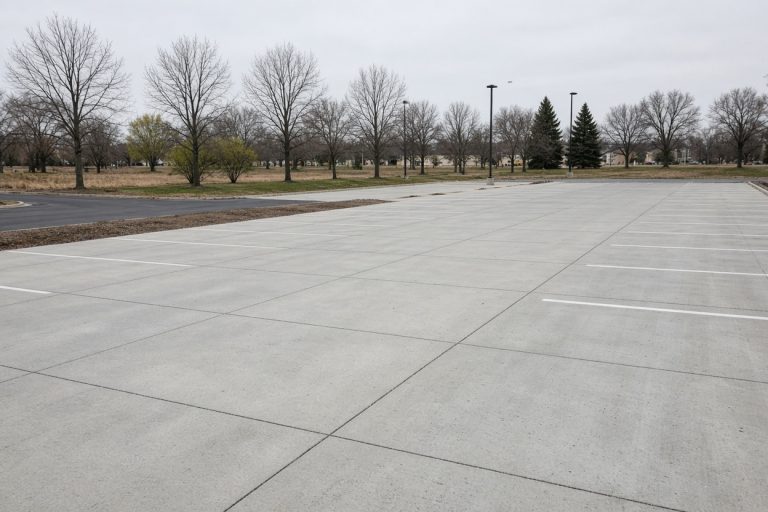
A steel blade rides the high spots and catches anything sitting up off the surface. When the joint filler has sunk below the slab, the plow catches the edge and chips it. After a heavy snow week, we’ve pulled joint material out of lots in long strips.
When water gets into a hairline crack and freezes, it pushes that crack wider. The next thaw lets more water in. So the flaking that shows up after the piles melt often started at the first hard freeze. We also see dusty white scale in the aisles, where trucks track the most brine.
People call us about Concrete Parking Lots in St. John once the stalls are clear. They have spotted a spall at a joint or a strip of scale where the plow turned around.
Shops and offices in St. John that poured concrete lots see this plow traffic and freeze-thaw every winter. That is the surface we build and repair. So in spring we walk the lot and write down each panel that needs work. A winter of plow traffic will show a joint left low, plus water stains in the aisle.
Get A FREE Proposal Today!
What We Look For on Concrete Parking Lots in St. John
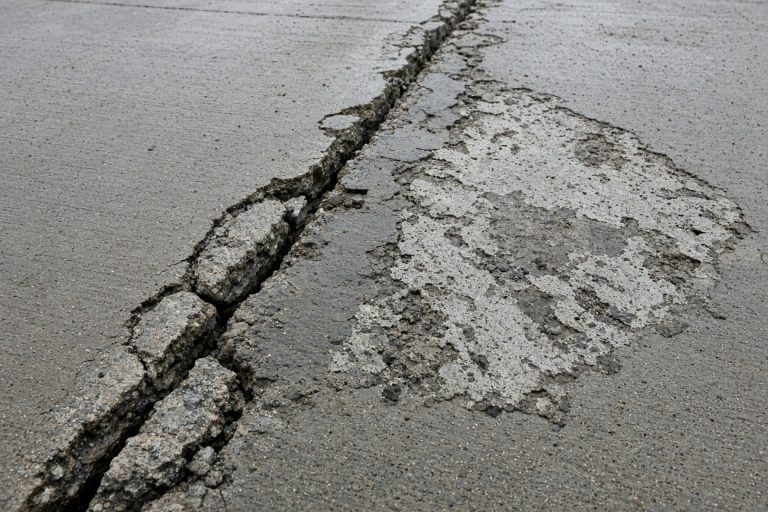
When we walk the aisles, we look before we talk about a fix. Joint edges that have chipped back past a small nick need a closer look. We check how far the crack has run. On a joint edge that is still sound, we use a saw cut and a partial-depth repair.
Plows chip curbs on the same nights. When a plow drifts off the aisle, it chips the face or knocks a section loose. Because the lot is already opened up, we can fold curb work into the same visit. Patch work takes care of the small breaks. Concrete removal and a new pour cover a bay that has failed.
Concrete Parking Lots in St. John When a Panel Comes Out
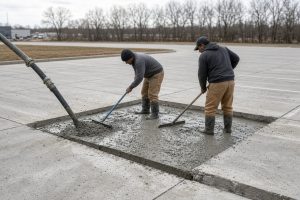
Tear out and replace is the plain name for the job when a panel has broken through. We saw the perimeter and lift the old concrete. Then we check the base before the new pour. When the stone has gone soft or washed out, we fix that base first. A new slab on a bad base will crack again under the same plow path.
Commercial concrete around a store or an office often includes the service walk at the door. When plow season has chipped that walk, we can take it on during the same visit. Concrete replacement on the driving surface stays the main job.
After plow season, people have called us about a spalled joint in the aisle. Concrete Parking Lots in St. John are the jobs we schedule once the ground is open for saw cutting. Because customers reach the door across that lot, the aisle matters to shops in St. John.
We are a family owned and operated company, and we’ve been doing this work since 2006 across northwest Indiana. We handle that under our concrete parking lots work, from the first pour through later repair. Finished lots are on our photo gallery. More about the crew is on our About Us page.
Because we source the mix, we know what is going in the ground. We also write the quote out line by line. So the tear-out and the pour show up as separate lines. Staff on site have spent years on this work. They’ll say when a panel should come out.
Joint filler goes back in after the new concrete can hold it. We will tell you when cars can drive on the new concrete.