
St. John Indiana Barn Concrete Slabs – How
A lot of people think a barn floor can be thinner than a driveway, because nobody lives on it. Barn concrete slabs in St. John still carry tractor weight and rows of stored gear. So the floor has to stay flat when the ground freezes and then thaws.
Lots on the rural edge of St. John, Indiana still hold barns and equipment sheds. After the snow melts, those bays fill with trucks and mowers that sit until spring work starts. When the same tires sit in one spot, you feel a dip as you roll in.
We have had calls about floors that scaled near the big door. The top flakes off after a thaw, where melt water sat and froze. But the middle of the bay can look fine until a tire catches the rough patch.
A jack stand under a trailer tongue is another problem owners have described. Then the concrete around that small foot cracks, because the load never spreads out. For example, we’ve pulled up a section poured over loose fill.
St. John, Indiana gets hard freezes in winter, and an unheated shed stays near the outside temperature. We’ve walked barns after a cold week where the floor edge at the threshold had shifted. When the base held water, we saw the trouble at that edge first.
Barn concrete slabs in St. John under stored gear
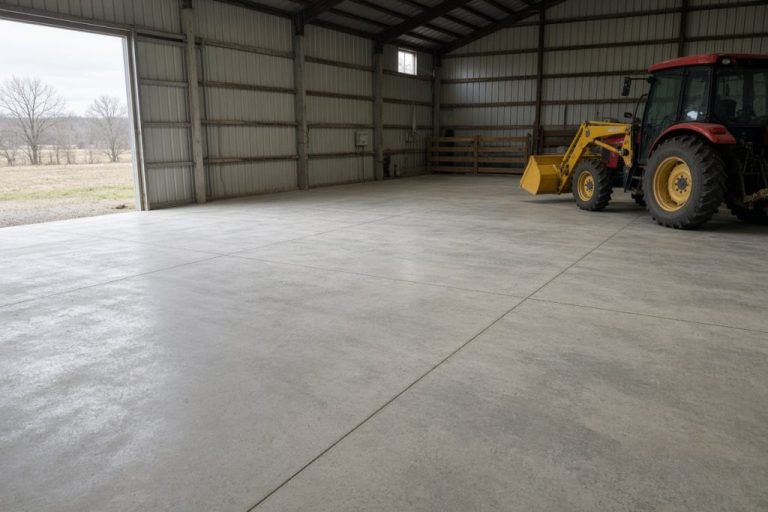
Stored gear puts force on a small patch of floor. A loaded pallet and a tractor tire both land hard on one spot. So we ask what will park there before we plan the pour.
People have told us the old floor would do for a barn. The crack from a post bracket reached the door after a few seasons. When we cut that section out, we found barely a skim coat of gravel underneath.
Rural-edge lots in St. John still keep barns and equipment sheds. The floor has to stay flat under stored gear and a parked truck. The slab goes through freeze and thaw all winter. You come in with mud on the tires. Then you want that water to run toward the opening.
Get A FREE Proposal Today!
Base work for barn concrete slabs in St. John
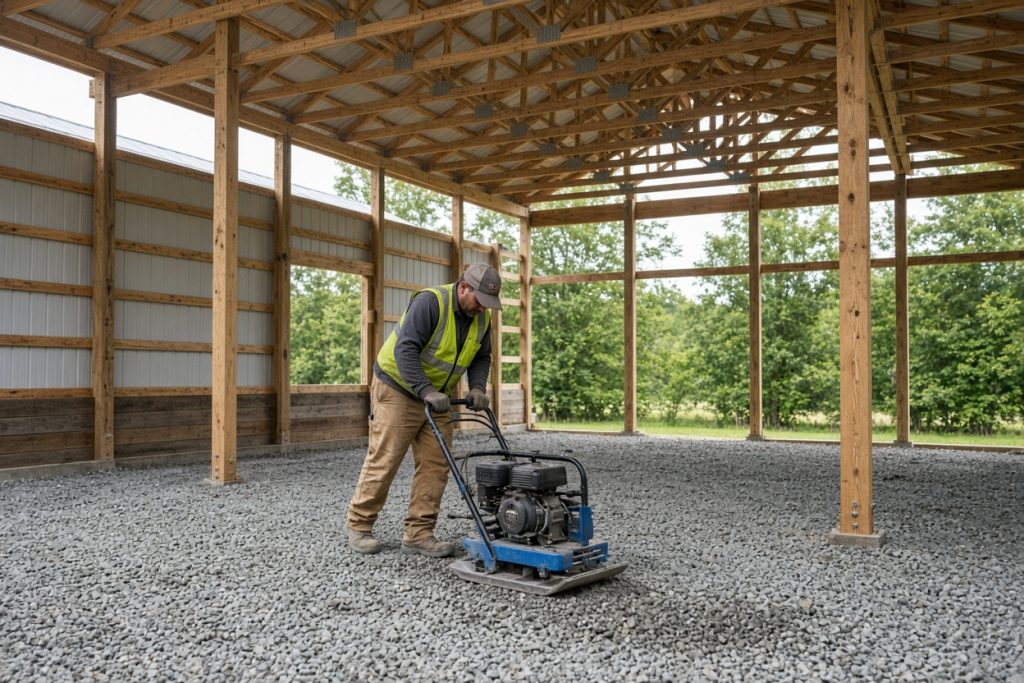
The pour is the part people watch. Because the base carries the load, we spend the time there first. We strip out soft soil and place stone in lifts. We compact each lift until the plate stops sinking.
Barn concrete slabs in St. John need that base on rural-edge ground that can stay wet after a thaw. So we look at how water leaves the site before we set forms. When the yard sheds water toward the building, we talk through grade before we set the door elevation.
Joints go where the slab will crack. We cut those lines once the concrete has set, so a crack has a place to go. For example, a long bay needs joints that follow the wheel path.
Replacement work on barn concrete slabs in St. John
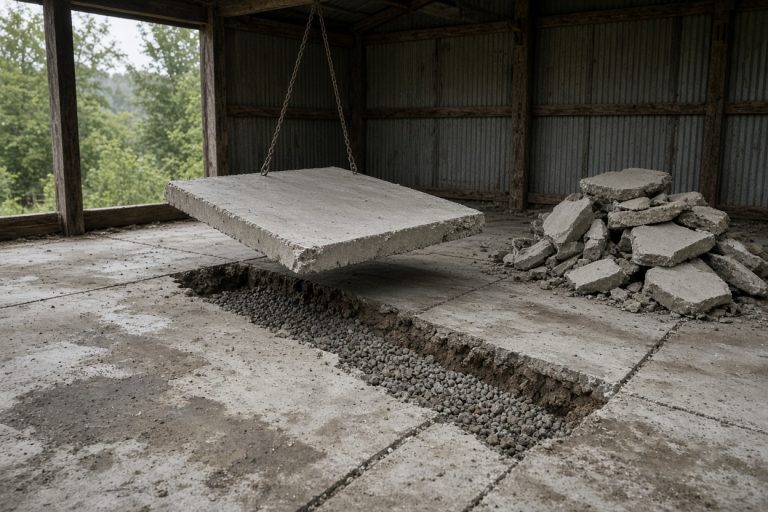
Some barns already have a slab, and it’s failed in the traffic lane. We tear out the bad section and pour it back. A lot of acreage owners have asked for that on the same visit. Because we also handle concrete removal, we haul the old floor off.
When new construction starts on a St. John acreage, we plan the pole barn floor with the building. A wrong grade gets harder to fix once the posts are set. So we set elevations while the site is still open.
Our barn concrete slab services cover that pour. A service walk from the shed to the house can go in too. We also pour garage floors when the house bay needs a new slab.
We have replaced barn concrete slabs in St. John that sat as a thin cap over dirt. After we cut it out, the new base got stone and compaction before any concrete showed up. Then the truck sits on stone we compacted.
Cabe’s Concrete is family owned, and our doors opened back in 2006. We source the concrete so we know what is going in the floor. And we write the work out so you’ll see what the visit covers before we start. You can read more on our about us page.
Finished barn concrete slabs in St. John should read as one flat plane. That plane runs from the door to the back wall. We keep the edges straight where they meet gravel. And we leave the site picked up when we pull out. Photos of floors we have poured sit in our photo gallery.
A broom finish at the door gives wet boots a grip. Inside the bay, hay dust and feed sit on that same broom texture.