
South Haven Indiana Concrete Basements – Spring Thaw
People often blame the original pour when they see a crack. We hear that about Concrete Basements in South Haven every spring. We have checked walls where the concrete was still sound. The crack showed up at the wall and at the floor joint, once the ground turned wet and soft. So a spring crack is often a thaw problem.
Winters in South Haven, Indiana freeze the ground. When the thaw comes, meltwater can sit against a foundation for days. A lot of the houses we have worked on here have basements. So the meltwater meets a foundation wall. People have called after the first warm stretch, once the floor looked damp.
Concrete Basements in South Haven after a hard winter
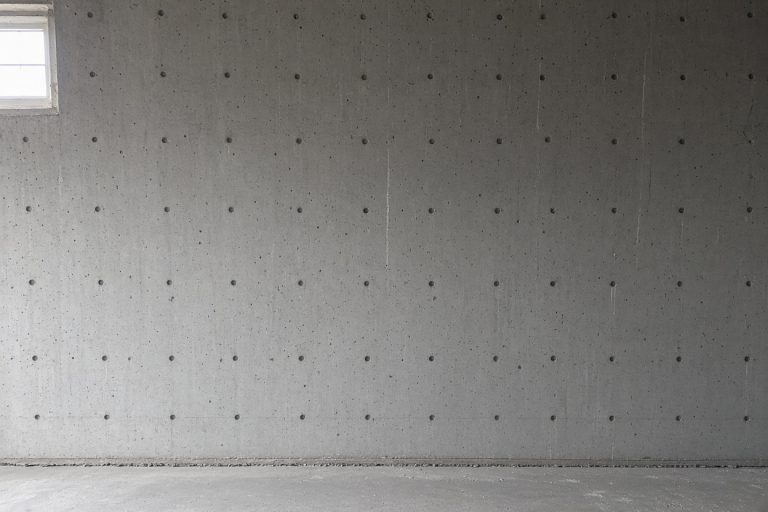
After a hard freeze, we walk the basement before we talk about a fix. We look for a horizontal crack or a stair-step in block. Then we check the cove where the wall meets the slab. Damp along that line, or a white crust, means water sat there.
Because the north side of a house stays colder, that wall often shows the mark first. We have pulled back carpet and found the stain only at the joint. The rest of the wall was dry. When the wall is still straight, we can plan a joint repair. A bowed wall means a different repair. We say which it is while we are still down there.
Both block walls and poured walls show up in South Haven basements. On block, we have followed a stair-step along the mortar to see how far it ran. Because the repair follows the wall type, we’ll write that down before we leave.
People have waited until the carpet smelled wet before they called. By then the joint had been damp for a while. We have marked cracks more easily when the call came early. We measured the wall on those early calls, before any more movement showed up.
Get A FREE Proposal Today!
Floor joint load on Concrete Basements in South Haven
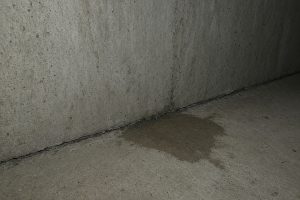
South Haven homes are built with basements. After a hard winter, the wet thaw pushes on those walls and the floor joint. We have seen that pattern on call after call in South Haven, Indiana. So water shows up at the joint after the wall takes that side pressure.
On Concrete Basements in South Haven, we mark the crack with a pencil before we leave. Then we ask the owner to watch it through the next wet week. When the mark grows, or when the wall bows, the job changes. A hairline that stays put can wait for a planned repair.
When the wall is still plumb, we can often repair the joint and the crack. We skip a full tear-out on that kind of wall. We cut out the failed concrete and clean the edges. Then we pour back so the new mix ties into the old. After that, we drill and set dowels so the new concrete locks to the old wall. For a wall that has already bowed, a patch won’t hold. Then we talk about concrete removal and a new wall. Because it’s a tear-out and replace, we say so before any patch work starts.
We also look at a heaved service walk if it belongs to the same visit. Upper walks crack after the same winters. So we can fold that into the job when you want it done. A curb at the driveway can heave too. We don’t add that work unless you ask for it.
Repair steps for Concrete Basements in South Haven
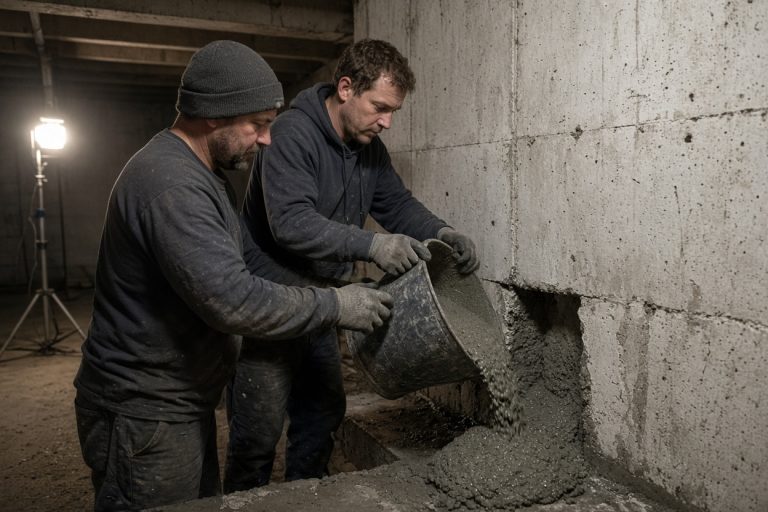
Our crew has done this kind of work since we opened in 2006. Our family runs Cabe’s Concrete. The same people who look at the wall are the ones who pour it. Because we source the mix, we know what is going in the forms. After the pour, we stay until the joint is tooled and the floor is cleared.
You can see finished walls in the photo gallery. You can also read the About Us page if you want the longer background. For the basement scope, our concrete basements work covers patch work and pour back. It also covers full replacement when the wall has to come out. When a room addition needs a new foundation wall, we pour that residential concrete. It ties into the old wall.
People track road salt down the stairs into Concrete Basements in South Haven. That salt breaks down the surface near the landing. We have ground those spots back. Then we placed a bonded overlay when the wall work was already open. Colored concrete is an option if you want the floor finished while we are there. An epoxy floor is another option, and we’ll work from your ideas on the look.
Drainage at the footing matters on the next thaw. So we look at where the downspouts land. If they empty against the wall, the joint gets the same water again. We can add a short concrete run to move that water off the foundation. We do the same kind of pour on service walks. After we set the slope, water runs away from the wall. That short run is part of the work on Concrete Basements in South Haven. The downspout should land out in the yard, on a splash block we can pour.