
Hobart Indiana Retaining Walls – Wet Spring Clay
The cap no longer runs level. You set a straightedge on the top and watch a gap open in the middle. Then you find a belly in the face and soil slumped over the back. Behind that bulge, the clay is still dark and slick. Retaining Walls in Hobart show this after a wet spring, because the yard wall could not drain.
After the snow melts, Hobart clay does not dry out fast. We have opened ground behind bowed walls and found it still sticky. So the soil stays heavy. When a wall has no drain behind it, that weight bears on the concrete. People have called us after they noticed the lean from the house.
A bowed wall moves the things tied to it. We have seen a gate drag and a walk pull off the end. For example, the joint at the end opens and lets more water in behind the face. After that, you notice the lean when you stand off to the side.
Drainage Behind Retaining Walls in Hobart
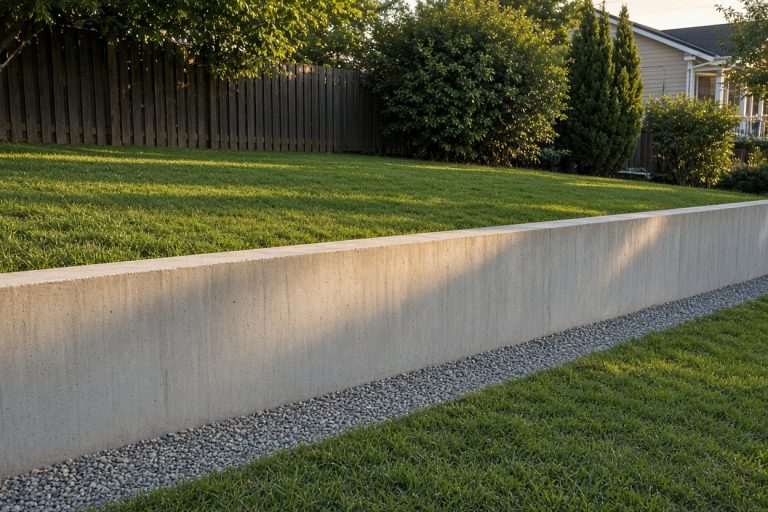
We want the water out of the clay before it loads the wall. We leave a straight face and a level cap. Because water needs a path, we set clean stone and a pipe behind the wall before we pour. Then the pipe runs to daylight or to a lower spot on the lot.
We build that drainage into Retaining Walls in Hobart when the old wall has already bowed. After rain, you can still see damp clay on the high side. But the face should stay put if the pipe and stone are in place. We have pulled failed walls and found clay packed on the back, with no stone.
Get A FREE Proposal Today!
Retaining Walls in Hobart During a Full Rebuild
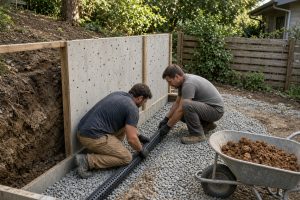
Once the wall has moved, we tear it out and pour a new one. Retaining Walls in Hobart need stone and a pipe here, because this clay holds water through a wet spring. The job starts with concrete removal of the old face and the wet clay behind it. Then we cut a trench for the footing and the drain. So the new wall sits on firm ground. We haul the mud out of the hole before we set anything. When the clay is slick, we slow down on the base. A rushed footing shows up later as another lean.
After the stone and pipe are in, we set forms and pour the wall. We have poured plain gray walls on these jobs. A rubbed face works where the yard sits close to a patio. Because the mix matters, we source it so we know what goes in the forms. Then we work the face and set the cap while the concrete is still fresh. When you want a certain finish, we talk that through before the truck shows up.
Cabe’s Concrete is a family owned and operated company, and we have done this work since 2006. You can read more on our About Us page. We write the rebuild out line by line so you can see what the hours cover.
Spring rain in Hobart, Indiana keeps that clay soft while we dig. We have stood in holes where the shovel came up in heavy slices. So we do not guess at the bottom. We keep digging until the footing sits on ground that holds, then we place the stone. After the pour, we backfill in lifts so the pipe does not float up.
A Lower Outlet for Retaining Walls in Hobart
The same visit can cover a service walk if the wall meets one. We also handle tear out and replace on a cracked slab beside the wall. Finished jobs sit in our photo gallery. For the wall itself, see our retaining wall work.
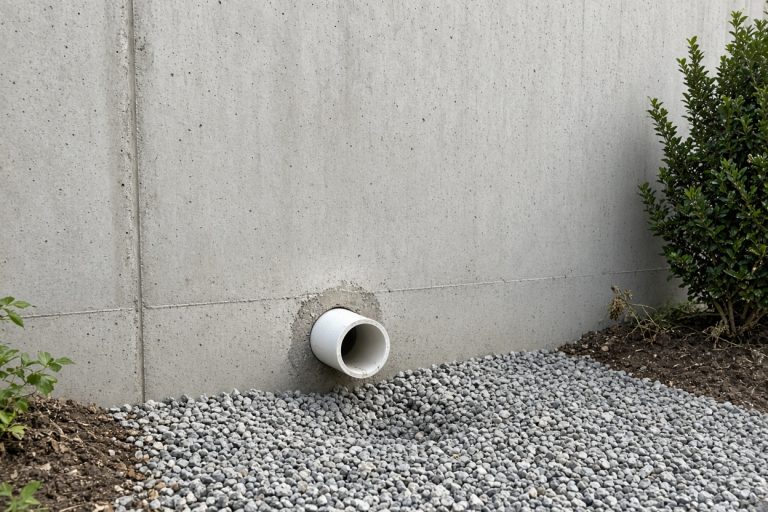
On a lot with little fall, the pipe still needs a lower outlet. Otherwise the stone fills, and the same pressure bears on the new wall. We have tied that outlet to a lower corner of the yard when the grade allowed it. After the backfill settles, we check that the pipe end is still open.