
South Haven Indiana Epoxy Flooring – Handles Winter Salt
A South Haven, Indiana garage coating has to handle road salt through a whole winter. Epoxy Flooring in South Haven, Indiana peels when salt and meltwater sit on a film that never bonded. People call us after a shiny floor turns cloudy and lifts near the door. So the first thing we ask is what the car brings in each night.
Because the car parks wet, the slab by the threshold stays damp longer than the back wall. After a cold week, we have seen white salt crust along the tire path. A dark band shows where snow melted off the car. When that water works into open pores, the top of the concrete gets weak. Then the coating is sitting on paste that will not hold it.
Finished Floors From Epoxy Flooring in South Haven, Indiana
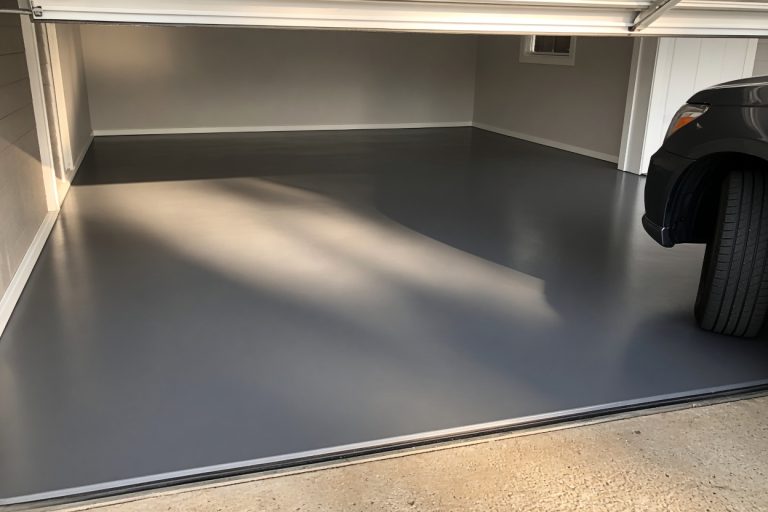
We coat garage floors so salt sits on a hard film. Bare paste soaks that brine up. A sound epoxy floor wipes clean after the car drips. So the gray film stays even through the cold months. For a house in South Haven, Indiana, the coat has to do that job. You get an even color when the bond holds after winter.
We have pulled up coatings that looked fine in a sample photo and failed at the door track. The film was shiny, and under it the concrete was dusty and full of salt. Because nobody ground that dust off, the epoxy bonded to the dust and released from the slab. After one winter of wet tires, the sheets came up with a broom.
Epoxy Flooring in South Haven, Indiana and Slab Moisture
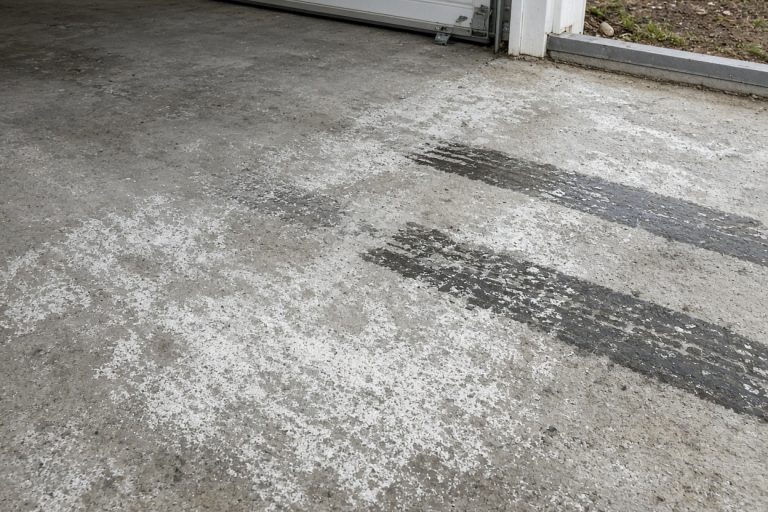
Epoxy is the coating we pick for these garages because salt and moisture come in with the car. If the coating goes down without a plan for that moisture, it peels. So we don’t roll product over a slab that still reads wet. When we walk a South Haven, Indiana garage, we look for dark patches. Those patches stay damp after the rest of the floor has dried. Then we check whether an old sealer is still on the surface. Because sealer under new epoxy is a common reason for peel.
Salt holds dampness on the surface. Meltwater from the wheel wells adds more. But moisture can also move up through an older slab. So a tight film will blister when vapor pressure builds under it. For example, we have found blisters in a line over a crack that was letting ground damp up. We stop and talk about a moisture-tolerant primer. Sometimes we wait until the slab is dry enough to coat.
Get A FREE Proposal Today!
Prep Steps for Epoxy Flooring in South Haven, Indiana
We spend most of the day on the grind and the cleanup. The grind takes the paste off until the stone shows a little. Then we vacuum the dust, because leftover dust becomes a slip layer. After the grind, we look again at cracks and the soft band by the door, plus any oil spots. Oil has to come out. Otherwise the epoxy beads up and leaves bare spots. That prep is what Epoxy Flooring in South Haven, Indiana needs before any color goes down.
When the slab is too far gone, we leave the coating off. After we see wide spalls and a heaved section, the slab itself is done. Concrete that sands away under a foot is in the same place. So we talk about concrete removal and a new pour before any film goes down. Tear out and replace belongs on the same visit when the garage floor can’t hold a coating. Our epoxy flooring work covers a coat on a sound slab and a full garage floor replacement.
We’re a family owned company, Cabe’s Concrete, and we’ve been at this since 2006. You can read more about our crew if you want to know who shows up. We also keep a photo gallery of floors we have finished, including garage work. Staff on the job are courteous, and they walk the slab with you before we mix anything.
Decorative concrete sits beside this work when you want color or a flake blend in the garage. We will work with you on the look, and we source products we trust on a wet, salty floor. On the same trip, we can fix the apron when winter salt and ice have broken it up. People have asked us to patch those aprons, and we have replaced them when a patch would not hold.
Flake and solid-color systems both need the same dry, profiled slab. The flake hides small tire scratches better, which helps on a floor that takes in salt and grit. We lay out the steps on the quote, line by line, so grind time sits separate from material. We’ve been called back to pull up coats that went down while the slab was still damp.