
Lake Station Indiana Concrete Foundations – How Frost Hits
You’re deciding whether a winter crack can wait, or whether the footing needs a look before the next hard freeze. Older houses in Lake Station, Indiana sit on lake-plain ground. That ground shifts when wet soil freezes and then thaws. Concrete Foundations in Lake Station carry that movement at the footing. A shallow older wall has less room to give.
So start with the footing. After a deep freeze, patching the drywall only hides the clue. Then you’ll still need to know if the footing moved. People call us when a door sticks in February. They call about a gap at the sill too. A stair-step crack in the block often shows up after the coldest week.
Concrete Foundations in Lake Station and a Hard Freeze
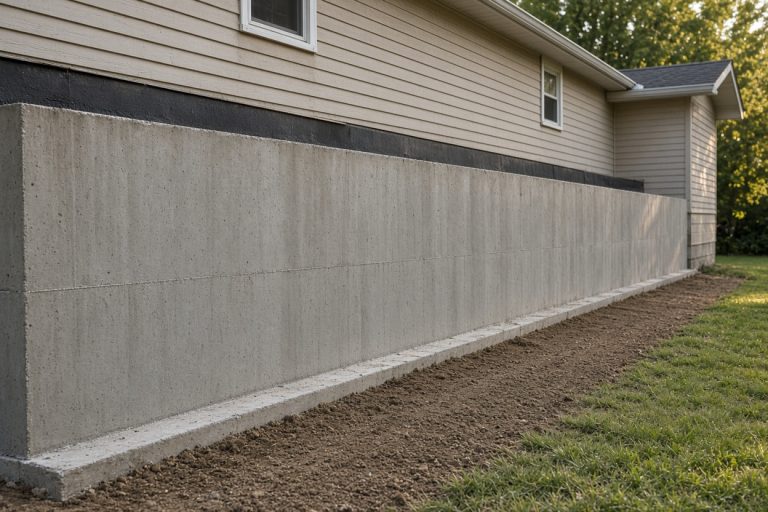
When the ground freezes, water in the soil turns to ice and takes up more space. That push can lift soil in the freeze zone. It can lift a footing that sits too high. After the thaw, that soil softens. Support under the wall can drop in one spot and hold in another.
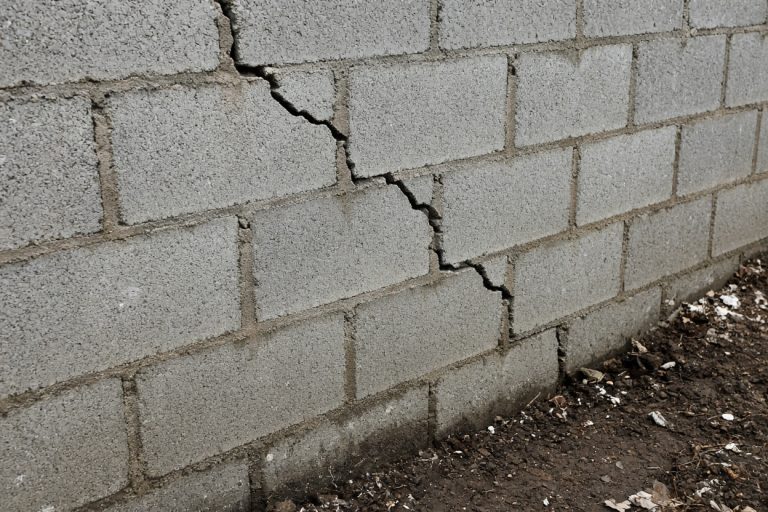
Because we place new footings deeper than a lot of older walls we’ve seen, we check depth first. On a block wall, we look for mortar joints that opened over winter. For example, a failed parge coat lets water into the face of the wall. Then a freeze breaks that wet face loose. The soil can also lift the whole footing on its own.
A hairline in old parging can be surface wear. A crack through the block needs a closer look. When the crack widens at one end, we treat it as movement. A stuck door on that same wall belongs in the same note. So we measure the gap and we watch the grade. We also ask what the wall did last winter.
Get A FREE Proposal Today!
What We Check on Concrete Foundations in Lake Station
We start outside at the grade. The walk along the wall shows where water sits after a rain. Soil piled against the siding goes in the notes too. When grade slopes back toward the house, meltwater feeds the soil that freezes against the footing. So drainage belongs in the visit, even when the concrete is the main job. Downspouts matter on Concrete Foundations in Lake Station. A spout that dumps at the wall feeds the soil that freezes there.
Then we look inside if you can show us the basement or the crawl space. A horizontal crack near mid-wall can come from soil pressing the wall inward. Saturated ground and frozen ground both add that pressure. We want to see both faces of the wall when access allows.
Repair Choices for Concrete Foundations in Lake Station
Our foundation visits cover the footing and the wall above it. We patch spalled faces and tuck mortar where the block is still sound. When the wall has bowed or the footing has broken up, the work turns to concrete removal and a new pour of that run.
Because the dig often meets other flatwork, we can reset a service walk that pulled away from the wall. A heaved run by the stoop can come out in the same concrete removal. Residential concrete at the entry can go in the same week if the frost already broke that slab.
After we agree on the scope, we write the quote out line by line so labor and material sit apart. Cabe’s Concrete has been a family owned crew since 2006. You can see who does the work on our About Us page. We handle that pour under our concrete foundations work.
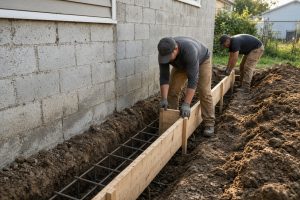
When the wall needs more than a patch, we form the new section and place the concrete. We strip the forms once the wall can hold its shape. Then we backfill and set grade so water moves away from the house. Our Photo Gallery shows finished walls and flatwork.
A bowed block run often calls for tear out and replace. We remove the failed section and pour a footing below the freeze zone. Then we bring a new wall up to the sill. Concrete Foundations in Lake Station on an addition get the same depth check as a repair pour.
So we talk through timing before we dig, because a freeze on fresh concrete ruins the pour. The trench stays open only as long as the pour and the backfill need. On an older house in Lake Station, an open trench lets cold into the subgrade.