
Hard-Winter Cracks in Concrete Driveways in Wheeler, Indiana
You can hear the plow blade tick on a raised joint. Then it scrapes a pale stripe down the drive. After a hard winter in Wheeler, that stripe ends at a flake of paste, with stone showing through. Water sat in that low spot all season. So the concrete there took freeze after freeze. Concrete Driveways in Wheeler show this wear first at the apron and along the wheel path.
We’ve pulled up slabs that came apart in sheets once the saw hit them. Because water in the paste froze and lifted the top off. Then the next thaw let more water in. Wheeler drives sit on rural lots, so the slab runs long. And a county plow runs the edge all winter. When the ground softens, a work truck parks in the same two ruts. For example, a loaded pickup at the garage door will rock a panel that already lost its bond.
Northwest Indiana winters don’t stay frozen in one stretch. We get a thaw, then a hard night with slush still on the county road. Wheeler gets that same pattern. A rural drive holds meltwater longer than a short city apron. Because the run is longer, and the edges are gravel instead of curb. When that water freezes in a crack, the crack gets wider. We’ve found that pattern on drives people asked us to look at after winter.
Freeze-Thaw Wear on Concrete Driveways in Wheeler
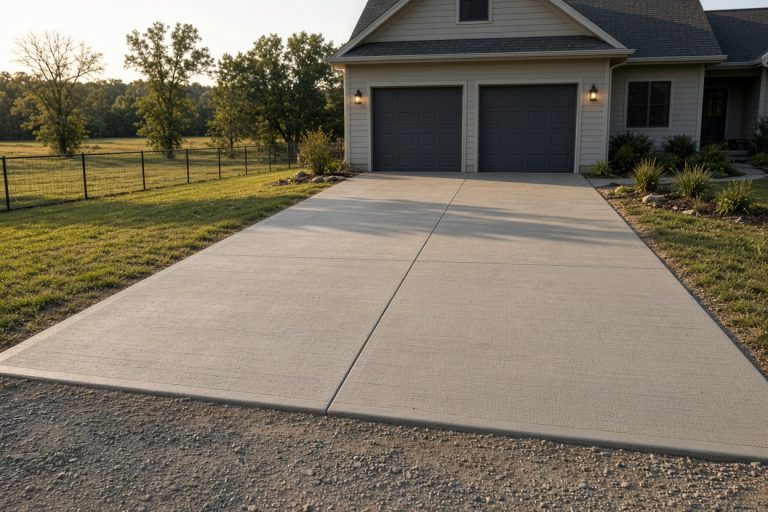
After salt from the county road rides in on the tires, it sits in those ruts. We see the surface go dusty there, then shed a thin layer. That’s scaling. It starts small. After a few winters the joint filler is gone. Then the edge chips when the plow catches it. People call us about that chip. So we walk the whole drive, because the same water usually reached more than one panel.
Deicer makes the scaling show up sooner. We’ve seen the surface turn to grit where salt sat all winter at the garage. We check whether the panel under that grit is still solid. But once the plow catches the high edge, the joint opens farther down the panel. Then we write a repair quote and a replacement quote, with the hours on each line.
A patch can hold a small chip for a while. When the panel rocks, or washout shows at the apron, that patch won’t stay. Concrete Driveways in Wheeler that have lost the base need a full replacement. We handle residential concrete on these lots too, including a service walk or garage floor at the drive. Concrete removal is part of that work when the old slab has to come out first.
Get A FREE Proposal Today!
Replacing Concrete Driveways in Wheeler After the Thaw
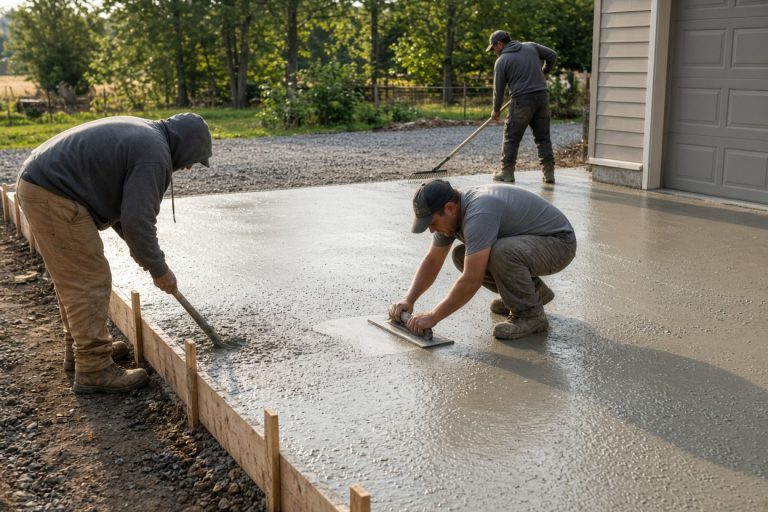
Rural drives around Wheeler take the plow and the work truck through freeze after freeze. That wear is what leads owners to replace the slab. We’ve torn out drives where the plow caught the same joint for years. The street-side panel had dropped. After the old concrete comes out, we check the base right away. Sand has moved. The stone is thin at the apron. So we rebuild that base before new concrete goes down. Concrete Driveways in Wheeler on a thin base get new stone before we set the forms.
We write the quote out line by line. The material price stays as it is, because we don’t inflate material to make a few extra dollars. When we lose a bid, we have valued our hours higher than the other bid. We still get in and get out so the drive isn’t open long. We are a family owned company, and we’ve poured in North West Indiana since 2006.
Tear out and replace is the usual path once the panels move. We cut the old slab out and haul it off. Then we pour back over the rebuilt base. You can see finished drives in our photo gallery. We include the apron in our concrete driveway work. We add a service walk if the blade keeps catching that edge. Concrete Driveways in Wheeler need joints that the plow can pass without grabbing.
We set control joints while the concrete is still workable. Some pours get saw cuts the next day instead, once the slab can take the saw. Where a Wheeler drive meets a gravel shoulder, we flare the apron to meet that edge. The flare has to sit flush with the gravel, or the blade will catch it on the next pass.