
How a New Walk Fits with Colored Concrete in Wheeler, Indiana
A lot of people think colored concrete means a loud patio color. For an older house, it usually means a muted tone in the mix. Colored Concrete in Wheeler is how we pour a new walk or patio. It sits with the house that’s already there. But the fresh gray from a standard mix stays light for years. So the match has to happen on pour day.
Wheeler has older houses with brick or painted siding. Stoops there have weathered in place. When we replace a walk, the new slab lands right against that older work. People call us because the last pour looks like a bright strip in the yard. After a winter of salt and foot traffic, that light slab still looks new. Because of that, we talk about color before we set the forms.
A Gray Slab Beside Colored Concrete in Wheeler
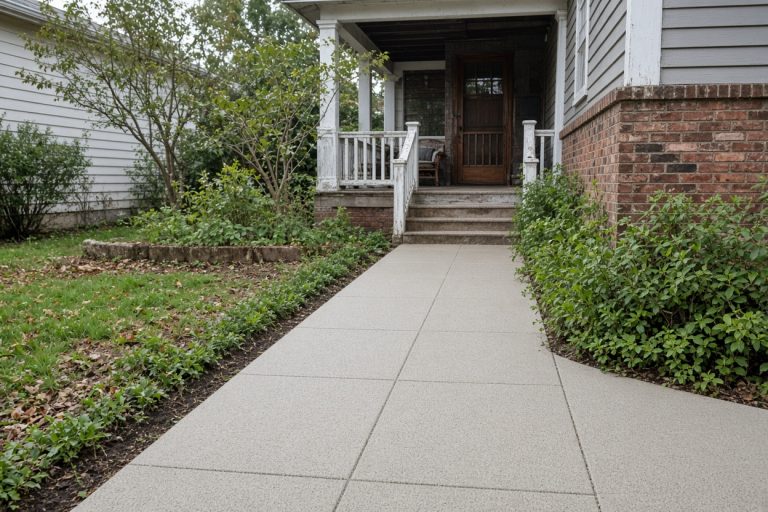
We’ve pulled up walks that were sound underneath and still looked wrong next to the house. The cement was fine. But the color was the problem. A standard gray mix comes out pale next to an older brick porch. Then people look at the new work first. Owners notice that on the front walk and on a patio off the kitchen.
Color in the mix is different from a stain brushed on later. We add pigment while the concrete is still in the truck, so the tone runs through the slab. Acid stains and overlays are tools we use on other jobs, when the old slab can stay. When winter has cracked or scaled the walk, we tear it out and pour back. On a tear-out, Colored Concrete in Wheeler goes into the mix. Then the replacement carries that tone through the slab.
Before we order pigment, we look at what the house already shows. We match the pigment to the brick first. Then we check the trim and any stone step. So we narrow the choice to a buff or a warm gray that can sit next to those materials. Because weather has already changed that surface, we skip copying the old slab color exactly. A new walk should use a tone taken from the house.
Wet concrete looks darker than the cured slab. So we judge the pigment against a cured sample. A walk that looks right while it’s wet can cure out lighter than the brick beside it. We account for that when we pick the dose. After the sample is set, the dose on pour day stays the same. It runs from the truck to the last wheelbarrow.
Get A FREE Proposal Today!
Pouring Colored Concrete in Wheeler for Older Houses
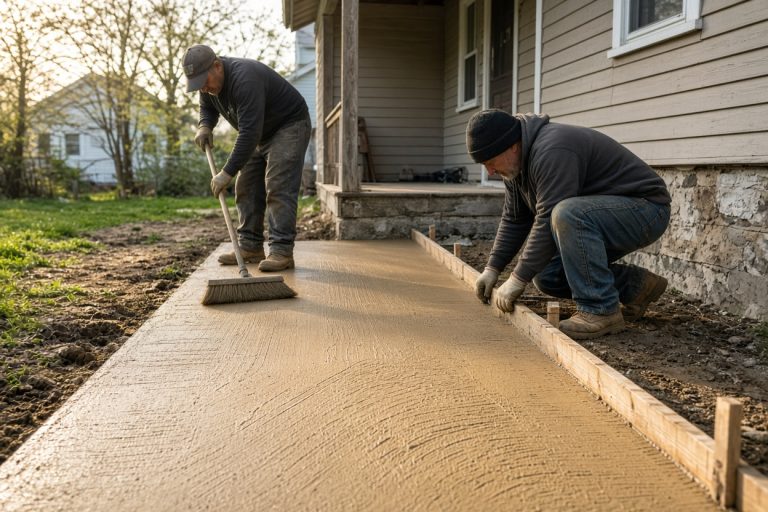
A bright gray slab next to an older Wheeler house stays obvious from the street. So we plan the color before the forms go in. We pour Colored Concrete in Wheeler so the new walk or patio sits with the house already there. We set the forms and place the mix with the pigment already in it. Then we finish the surface the same day. For most front walks we use a broom finish.
On a replacement, the job often covers more than the front walk. So a service walk or an upper walk can go in on the same visit. When the forms and the color are already on site, a small patio is easier to add too. We also handle concrete replacement when the old slab is past a patch. We list that flatwork with our colored concrete work.
Homeowners have asked whether a new slab can match the house without looking dyed. When we pick the pigment against the brick and the old stoop, we lock that tone in. Colored Concrete in Wheeler comes out close to the house. So we write the color and the square footage out line by line on the quote. We don’t inflate the price of material to make a few extra dollars. We’ve been family owned since 2006.
For example, we also pour stamped concrete when a patio calls for a pattern. You can see that range on our decorative concrete page. Beside an older house, a plain colored walk is usually what we pour. Finished walks and patios are in our photo gallery.
After the pour, we tell you when the walk can take foot traffic. In Wheeler, winter salt still wears on any walk. So we slope the slab and water runs off the surface. The pigment stays in the concrete as the top wears.