
Wheeler Indiana Retaining Walls – Wet Clay Behind
You have a short wall that tipped after the wet months. You need to decide what to do with it. Pushing it back by hand doesn’t hold. So the real choice is a rebuild that deals with the clay. Retaining Walls in Wheeler sit on the same heavy ground we see across Porter County. When that ground stays wet, even a knee-high wall can lean out of line.
After the lawn firmed up, owners called about a lean they could see. A gap opens behind the cap. Then the soil on the high side slumps. Water stands at the low edge for days. Because the wall is short, a lot of owners wait. After one more spring, the lean is worse and the joints have opened.
A Straight Face for Retaining Walls in Wheeler
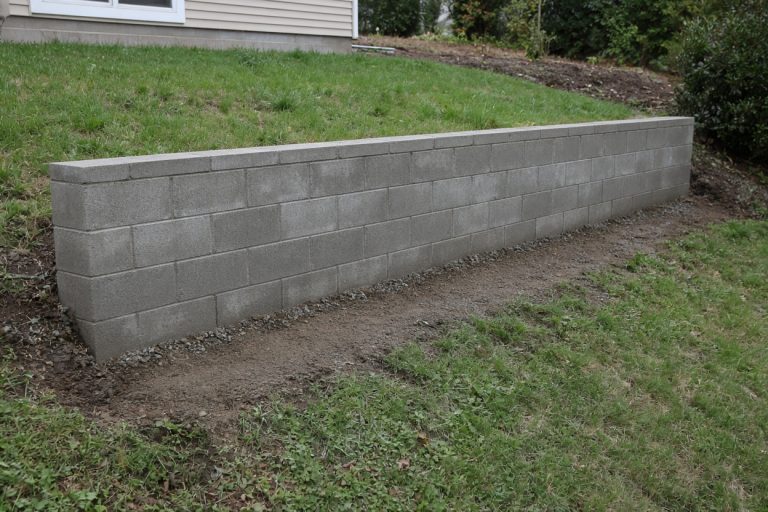
A wall that still looks straight in June has usually dried behind it. We check the top line and the ground at the toe. When the cap is level and the joints stay tight, we may only watch it. The next wet season shows whether the lean comes back. A bow in the middle shows the backfill has pushed the wall. You’ll see open joints at the top.
Short walls on Wheeler lots often hold a garden step or a driveway grade. They still take a sideways load. So we ask the same drainage questions we ask on a taller wall. For example, we ask where the roof water lands. A downspout on the high side keeps that clay wet for weeks. Finished walls in our photo gallery show the drained detail after a wet spring.
Wet Spring Clay Behind Retaining Walls in Wheeler
Clay in this part of northwest Indiana holds water. After the thaw, it can stay soft long after the surface looks dry. So the soil behind a short wall keeps its weight. That weight pushes sideways on the back of the wall. Clay that stays soaked through the spring thaw pushes on even low retaining walls. Wheeler owners have asked for a rebuild after that kind of push.
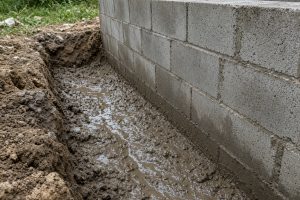
We’ve dug behind short walls and found clay packed against the block. We found no gravel and no pipe. Water had stained the face where it seeped through the joints. When the water has no way out, pressure on the wall stays high. A low wall still has a full face of wet soil against it. Because the clay drains slowly, that face stays loaded into late spring.
Then the wall leans toward the low side. We’ve pulled block on Retaining Walls in Wheeler that opened at the joints after a wet spring. The lean was small at first. After another season it was easy to see from the driveway.
Get A FREE Proposal Today!
Retaining Walls in Wheeler When the Wall Has to Come Out
Once the lean is set, we take the old wall out. Resetting the same block on the same clay leaves the wet soil against the wall again. So the job starts with concrete removal of the old wall. Then we do a tear out and replace if the walk along the toe has heaved. Residential concrete at the base often needs that same pass. We’ve seen patio edges lift where the wall shoved them.
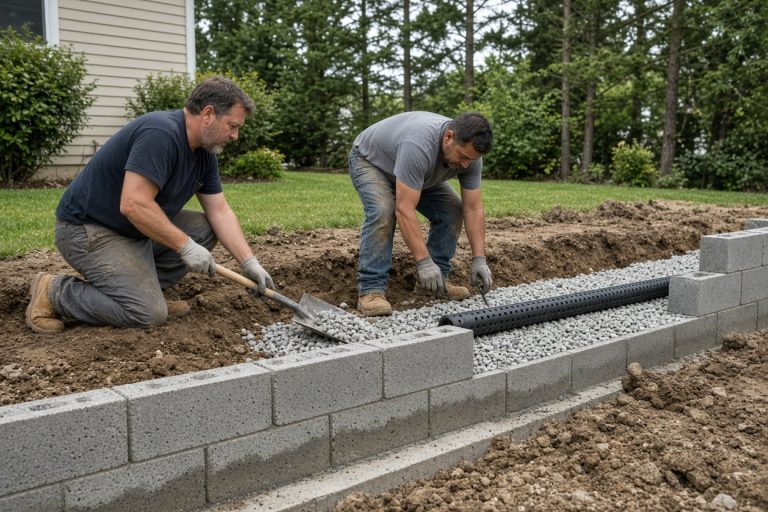
After the old material is gone, we cut a footing into firmer ground. Then we set the new wall and leave a gap behind it for gravel. A pipe at the bottom carries water to the low end. We run that pipe out to open ground, clear of the neighbor’s yard. Then we check the path before we backfill. For example, a downspout on the high side can feed that same pipe.
Retaining Walls in Wheeler need that gravel gap. So the next wet spring loads the new face the same way. Cabe’s Concrete is a family owned and operated company, and we’ve built this kind of wall since 2006. We talk through the block and the cap before we order material. You can see how we work on our about us page. Those steps are how we handle our retaining wall builds, from the dig through the gravel.
We backfill with gravel up to a layer of soil for grass or a bed. The pipe comes out at the low end. We confirm that outlet before we leave the grade. On a Wheeler lot we look for a short run to a swale or a lower lawn. We keep it off the walk.