
Highland Indiana Epoxy Flooring – How Road Salt Reaches
You are deciding whether the attached garage floor stays bare for another winter. The white film under the tires is back, and the concrete looks worn where the car parks. Epoxy Flooring in Highland is the coating we use when that salt has to stop soaking in. So the decision starts with what the brine has already done to the slab.
After a commute on salted pavement, meltwater rides home on the tires and the underbody. Highland commutes often use the Borman Expressway and Indianapolis Boulevard. When the weather turns, those roads get road salt. Then the car pulls into the attached garage and the brine drips as the vehicle warms. Because the garage shares heat with the house, that water often stays liquid under the tires. We’ve walked floors that stayed damp for days, with a white crust at the wet edge.
Because an attached garage gets no rain, nothing rinses that salt until someone hoses the floor. So the brine sits in the tire tracks, and the spot stays damp. We’ve seen rock-salt grains and a dried film on underbodies in Highland garages. Both of those end up on the concrete.
People have called us about attached garages on the side of the house in Highland. For example, a one-car bay right off the kitchen has come up more than once. After the car is in for the night, the meltwater has nowhere to go but the slab. People have asked us if a sweep will clear the film for good. Salt left in the pores shows on the surface again after the floor gets wet and dries.
Epoxy Flooring in Highland After the Winter Commute
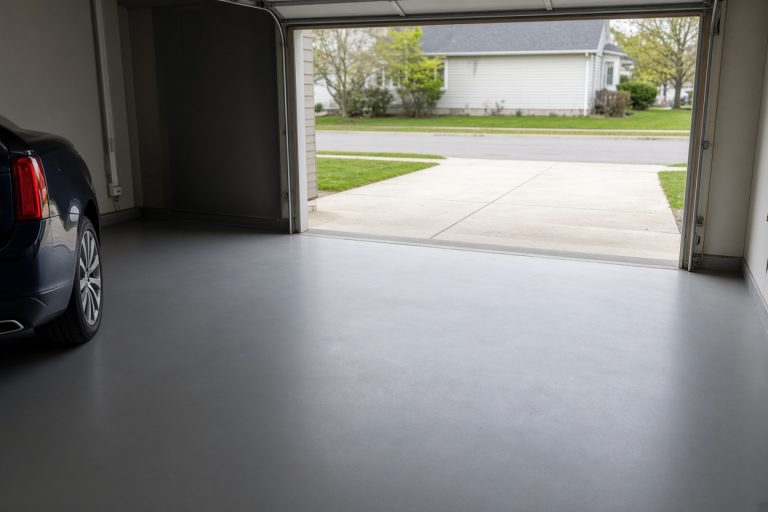
The salt leaves a white deposit as the water dries. Because concrete takes in liquid, the salt also moves into the pores. When that cycle runs through a Highland winter, the surface paste starts to pit where the tires sit. People have called us after they washed the film off and watched it return the next night. We’ve seen that damp crust on attached garage floors after a car sat overnight.
An epoxy coating closes those pores so the brine stays on the surface. Then you can rinse the salt or sweep it once it dries. Because the liquid has to stay out of the slab, we move to the coating next. Highland commuters bring that meltwater in all winter. We use the coating to keep the water out of the concrete.
Get A FREE Proposal Today!
Prep Steps for Epoxy Flooring in Highland
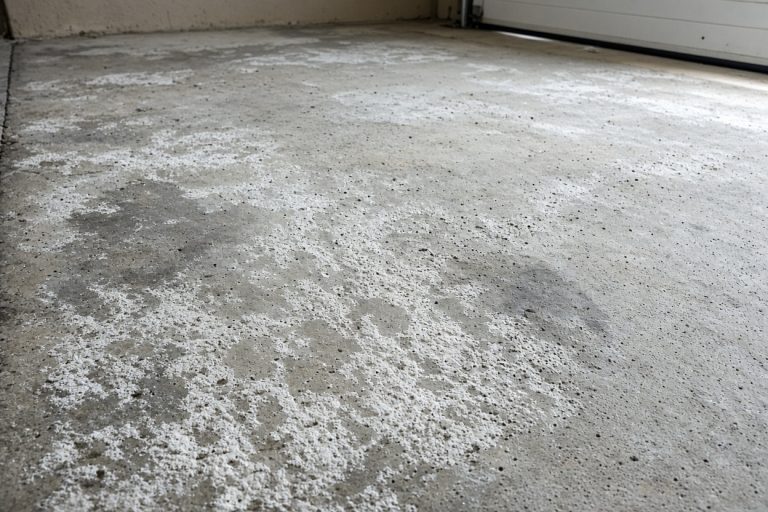
Before we coat a floor, we check how far the salt has worked into it. A light crust and some dark spots usually mean we can grind and wash it. When the top is flaking or it feels soft under a tool, we stop and talk about repair first. We handle patch work through concrete removal. On garage floors, a bad bay can need a tear out and replace. Epoxy Flooring in Highland goes on a sound slab, so we fix a soft surface before any coating.
Oil drips and old sealer sit in the same spots as the salt. So we grind off the weak paste and wash the chloride out until the concrete will hold a bond. After the slab is clean and dry, we lay the epoxy in the color you picked. We work with you on that look. You can see coated garage floors in our photo gallery.
Epoxy Flooring in Highland Along the Overhead Door
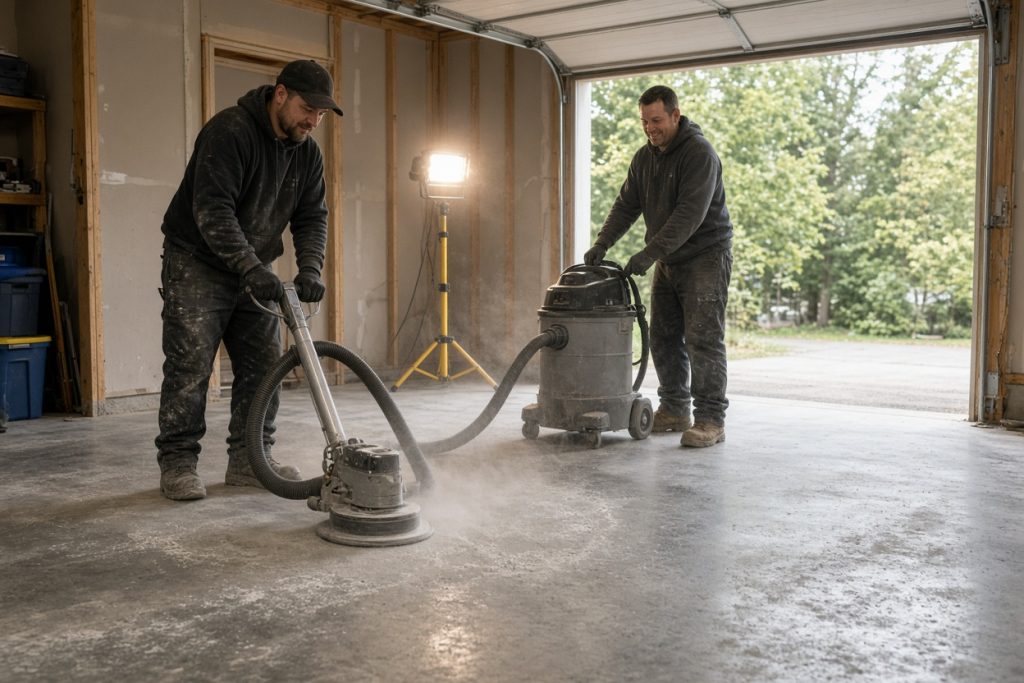
The strip by the overhead door takes boots and tire spray along with what the car drips. The coating has to cover that strip, because salt water soaks into bare concrete left open. We stop the coating at a clean line if the apron stays. When the apron shows scaling, we can pour that pad on the same visit as the garage floor.
We handle the coating as part of our epoxy flooring work. The same visit can cover garage floors. When the salt has gone deep, that visit can include concrete replacement. We’re family owned, and we’ve done this work in Northwest Indiana since 2006. About Us covers how long we’ve been at this work.
Epoxy Flooring in Highland waits until the slab is clean and dry enough to coat. We check moisture at the door strip before we mix, because that spot stays wet longer. After the coating cures, salt from the next commute stays on top, and a mop can pick it up.