
East Chicago Indiana Retaining Walls – Spring Thaw
When frost leaves the ground in East Chicago, Indiana, low lots by the lake stay soft for weeks. Meltwater sits on top because the soil below is still cold and tight. Then the surface softens. Soil crowds older foundation walls and slumps at the alley line. So that part of spring is when owners start asking about Retaining Walls in East Chicago.
We’ve walked yards in East Chicago where the grade used to fall away from the house. After a wet thaw, the soil sat pressed against the foundation block. Window wells held water. A service walk tipped toward the wall. Because the lot is flat, that soft ground settles toward the low edge. Often the low spot is the house or the alley.
East Chicago, Indiana sits on the lake plain, so a lot of yards are nearly flat. Older houses often sit close to the alley, and the foundation is the low line on the lot. When the top few inches thaw, water has nowhere to sink. It stands in the side yard. After a few warm days, the soil along the foundation has slid in. And the alley edge has broken down.
People have called us after they noticed the change. A basement wall that stayed dry all winter felt damp at the base. The soil line sat higher than it had in the fall. For example, we’ve pulled mulch off foundation walls where the yard crept in over a thaw. But you should also look under the walk and along the alley. That ground can drop in the same week.
Retaining Walls in East Chicago for Low Lots After Thaw
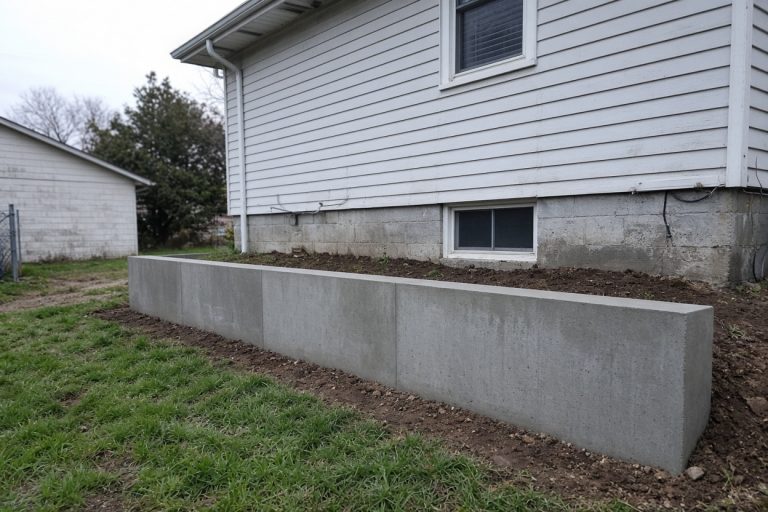
A short concrete wall is how those properties hold the ground in place. It gives the soft soil a hard line to stop against. We set that line between the yard and the foundation, or along the alley. When the ground thaws again the next year, the grade stays where we set it.
We build these walls short on purpose. On a flat lot in East Chicago, a short run of concrete is usually enough. It keeps thawed soil off the foundation and holds the alley edge where that edge is low. So we form it to the grade you want to keep. Then we pour it as one piece.
We dig past the soft top before we set the wall. The base goes down into firmer ground, under the mud a thaw leaves on top. But a wall that holds soil still has to let the lot drain. So we walk the yard with you and decide where the water should run before we form anything. After that, the same visit can cover a service walk or a curb. We do that when the thaw has tipped that edge and it is part of the same problem.
On these lots, Retaining Walls in East Chicago are usually a short pour along the foundation or the alley.
Get A FREE Proposal Today!
What the Pour Covers for Retaining Walls in East Chicago
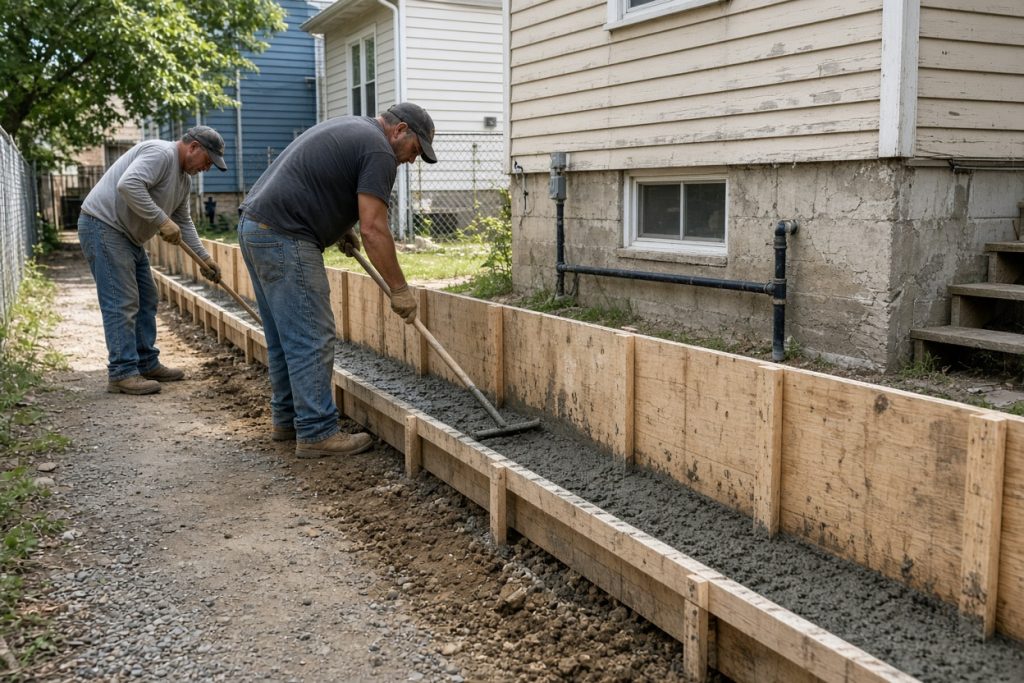
When we form Retaining Walls in East Chicago, we stay until we finish the pour. We leave the site clean. Our goal is to get in and out and leave a professional job. Because we take pride in the time a job takes, we don’t stretch a small wall out. The crew knows the work. They have poured concrete since we opened in 2006. They talk through the look you want before the forms go in.
Cabe’s Concrete is a family owned and operated company, and we’ve been at this since 2006. We work across Northwest Indiana and the Tri-State area. East Chicago is one of the towns we pour in. Our crew is used to low, wet ground. So we don’t show up and guess at the grade. We write the quote out line by line. We price the material as we buy it, and we set our hours out where you can see them.
We’ve poured Retaining Walls in East Chicago where the side walk had to come out too. So the visit can cover concrete replacement or a curb when those pieces cracked with the moving soil. The wall and the walk both fall under our retaining walls work when we price the visit. Past pours are in our photo gallery. Company background is on our about us page.
After the forms come off, we check the grade behind the wall again. Water should run off the foundation. On a low lot in East Chicago, the alley side gets a clean edge.