
Hammond Indiana Concrete Staining – Patio Updates
After the last hard freeze, you can see every winter mark on a plain patio. The yard starts to green up. Then the gray slab looks dull next to it. Owners of older houses in Hammond, Indiana start thinking about summer use around then. Concrete Staining in Hammond fits when that slab is still sound. So they want color on the pour they already have.
Hammond, Indiana has blocks of older houses. The patio out back started as a plain gray slab. It held the grill and the chairs. When a new owner moves in, that gray pad is the piece they notice. People have told us they tried a rug first. Others tried a paint coat, and it peeled. So they call about stain after those tries fail.
A lot of older Hammond houses still have the original patio out back. We’ve walked those slabs in spring and found them solid underfoot. The broom finish is still there. So is a film of winter grit, and the gray never took any color. Because those slabs can still last, people want to keep them. After the slab dries out, we can set a stain day.
Concrete Staining in Hammond After Winter Wear
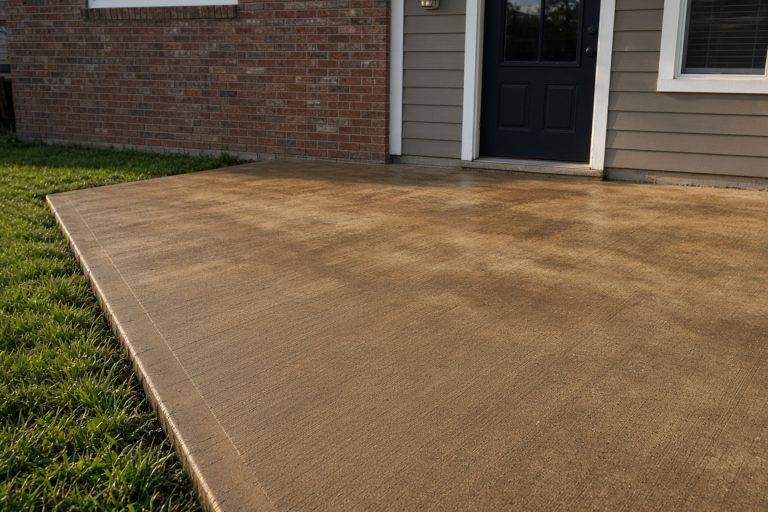
Open concrete in Hammond, Indiana shows winter wear. Snow sits on the patio for weeks. Then the melt soaks into the surface, and people track salt in from the walks. After a few seasons the top looks chalky in spots, even if the slab never cracked.
Because water should leave the slab, we check that the slope runs away from the house. We also look for a low spot that holds a puddle after rain. A puddle will mark a fresh stain. So we flag that before color goes down. A small low spot can take a patch. When the slab has heaved or broken through, we talk about concrete replacement.
We look at the surface up close before we talk color. When the concrete is tight and the cracks stay hairline, stain can still take. When the top flakes in sheets, we say so before anyone picks a color. For example, a patio that powders under a hand needs more than color. That visit may cover patch work, or a tear-out and a new pour if the slab is finished.
Get A FREE Proposal Today!
Concrete Staining in Hammond on a Sound Gray Patio
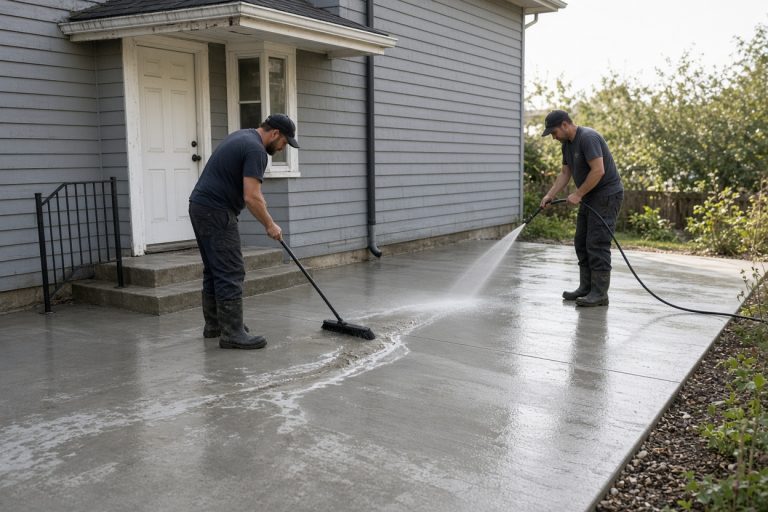
But a lot of older Hammond homes still have sound gray patios. Owners want those patios updated in place. That’s the work we do with concrete staining. We clean the slab and open the pores so color can sink in. Then we put stain on the concrete that is already there.
For example, acid stain is a decorative concrete finish we use on a sound pad. We also use colored products when acid stain won’t take evenly. Older patios sometimes carry a sealer or a lighter patch. We test a small spot first. Because the color has to live with the broom lines, we stop there. The owner sees that test before we cover the whole pad. After the test, you can look through our photo gallery to see finished color on real slabs.
Concrete Staining in Hammond needs a clean, open surface. That prep takes the time. Because stain on a dirty slab blotches, the wash comes before any color. We’ve come back to patios where someone skipped the wash. The color sat on the grit. So we don’t skip the wash to save an hour. Cabe’s Concrete is a family owned and operated company, and we’ve been doing this work since 2006. You can read more about our family company if you want that background. We source our products so we know they are the best available. Then we go over the color with you and lock it to the sample.
What Concrete Staining in Hammond Changes on the Slab
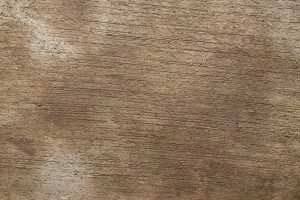
People have asked how Concrete Staining in Hammond holds up with wet springs and winter salt. We seal the stained patio after the color sets. So water and salt have a harder time sitting in the pores. The sealer goes on as part of the same job. A service walk that meets the patio can get the same treatment if that concrete is sound. When the walk breaks up, we fold removal and a new pour into the visit. Patio staining and other concrete work includes stain on a sound pad and replacement when a walk has failed.
On a Hammond patio the work sits close to the house. So overspray and rinse water matter. We mask the siding and the steps. We watch where the wash water runs. With an acid stain, we neutralize and rinse before the sealer. After the stain cures and the sealer is down, the broom texture stays underfoot. It helps on a wet slab.
We plan the day so the crew finishes and clears the pad. But the edges still need to look clean when we leave. Furniture stays off until we say the sealer can take weight. We set that timing from the weather. Cool days slow the cure.