
Hobart Indiana Concrete Foundations – Clay Soil
You have a decision in front of you before any truck shows up. Concrete Foundations in Hobart sit on heavy clay. That clay moves walls when a pour ignores it. So the first question is whether you’ll repair a cracked wall or pour a new one.
When the ground stays wet for weeks, that clay swells. After a dry stretch, it shrinks and leaves a gap under the footing. We’ve pulled up slabs that rocked because the soil had pulled away. People call us about stair-step cracks in basement walls and floors that no longer sit flat.
Concrete Foundations in Hobart After the Forms Come Off
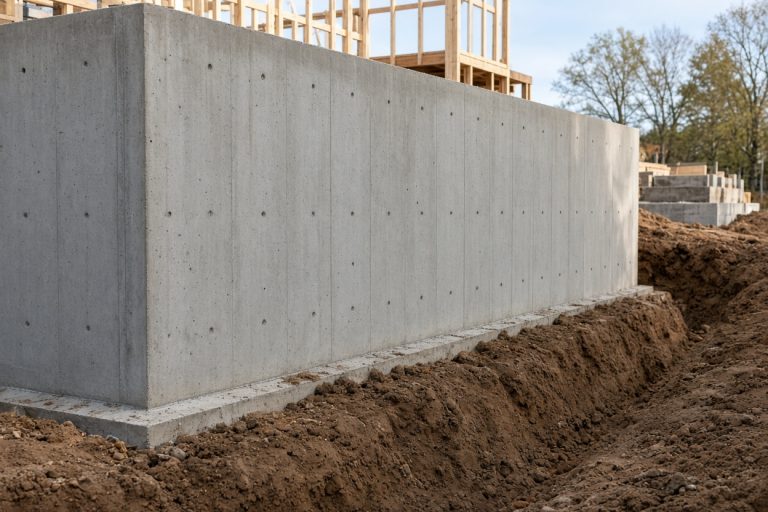
A sound wall stands plumb, and the grade falls away from the house. When those hold, wet clay puts less pressure on the wall. So we look at the wall and the soil line before we talk about a repair.
New construction in Hobart runs into the same clay as a repair on an older basement. We talk about footing width and wall height before we price the pour. A stoop that pulled away from the foundation often shows the same soil movement along the house.
How Wet Clay Pushes Concrete Foundations in Hobart
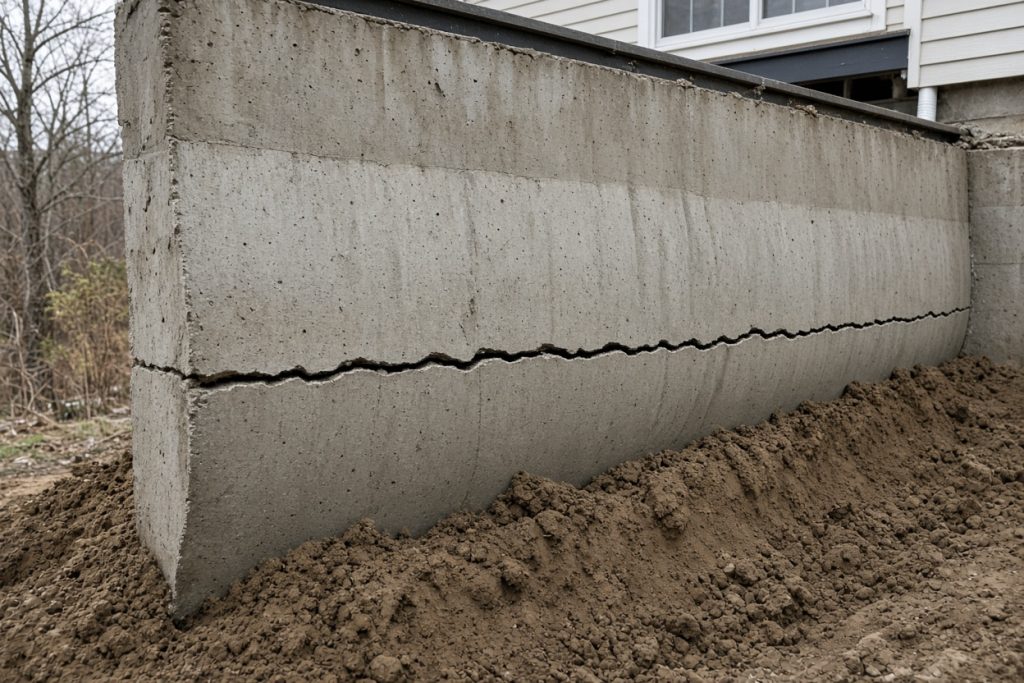
Heavy clay under Hobart takes on water and increases in volume. When that happens beside a basement wall, the soil presses inward and upward. A wall that was plumb in the fall can show a bow by spring. We’ve seen that push crack a cold joint where a new pour met an older footing.
Hobart winters freeze and thaw, and spring rain keeps the ground wet for long stretches. Because the soil stays wet, it keeps pressing on the concrete. A hairline crack takes on water, and the next freeze widens it. In later seasons, the crack is wide enough to see from the yard.
People ask us if a bow means the wall has to come out. When the bow is small and the wall still carries the house, we talk through a repair. After the floor joint has opened from the shift, we tell you a replacement is next. We’ve torn out sections like that and poured them back when the weather allowed.
Get A FREE Proposal Today!
Dry Spells Under Concrete Foundations in Hobart
When the clay dries, it shrinks and drops away from the concrete. A footing can lose support along one edge and start to settle. We’ve found slabs with a hollow sound under the middle after a dry late summer. Because the drop is uneven, doors stick and floors slope toward one wall.
Heavy clay under Hobart swells when it’s wet and shrinks when it dries, and that movement is what cracks slabs and basement walls. After the soil moves, a surface patch leaves the wall where the clay put it. But a close look at the footing and the grade tells you what the next pour has to handle. For example, a downspout that dumps at one corner keeps that clay wet all season.
How We Pour Concrete Foundations in Hobart
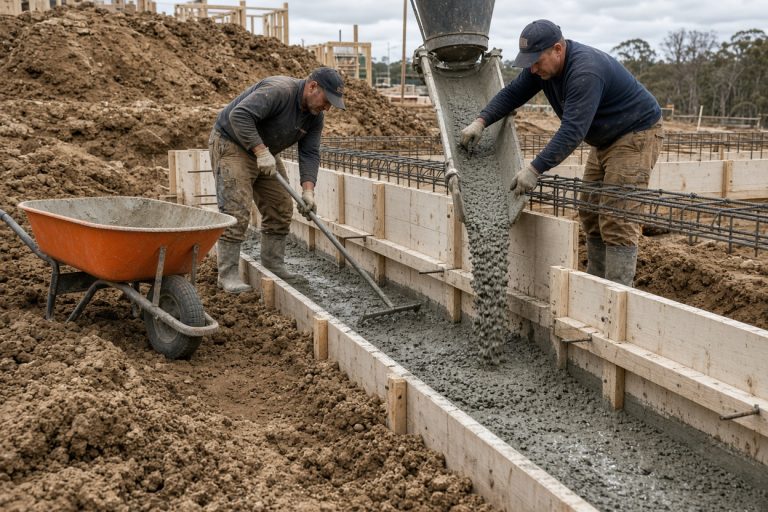
Once the clay is the reason the wall moved, the pour has to match that ground. We set the forms and the steel, then place the concrete so the wall stays in plane. Our concrete foundations work covers new builds and jobs where an old wall has to come out.
We check the base under Concrete Foundations in Hobart before we set a form. On a replacement we tear out the failed section and pour it back. We can pour a garage floor or a service walk that settled with the house on the same visit. Room additions need a new footing tied into the old wall, and we plan that joint first.
Cabe’s Concrete is family owned, and the About Us page covers the crew that has poured here since 2006. Because we write the quote out line by line, you can see the hours on one line and the material on the next. We source the mix we trust for footings and walls. You can look through finished walls in the Photo Gallery.
We also pour upper walks so runoff moves away from a new foundation in Hobart. After the forms come off, we check the wall for plumb before we backfill. Then we put the clay back in layers and let the wall take the load slowly.