
East Chicago Indiana Concrete Equipment Pads – Soft Ground
After the snow leaves, spring rain sits on flat lots in East Chicago, Indiana. Then you can see what the wet ground did to the pad under a condenser or a generator. A corner has dropped. The unit rocks when you lean on it. Lines that were straight in the fall now pull. So we get calls about Concrete Equipment Pads in East Chicago when a shim won’t hold.
East Chicago sits on flat ground beside Lake Michigan. Because lots here stay wet, a wet spring keeps the soil soft under thin pads. We’ve pulled up pads that cracked at one edge and left the condenser in a low spot. The same drop shows up under generators behind shops. When the pad tilts, fittings and lines take the stress.
The drop gets worse after freeze and thaw. Water sits under a thin pad. When it freezes, it lifts one side. After it thaws, that side settles lower than it started. We’ve seen generator pads with a gap on the low corner. Condenser pads end up out of level by the time the ground firms. For example, a pad on native soil with no stone base will move again the next wet spring.
The water table near the lake stays high on this flat ground. So a pad that looked fine in late summer can sink after a wet spring. People have called us about units that ran all winter and then sat crooked once the ground thawed. The settling started while the soil was soft. But a shim hides the lean for a while, and then the lines start to bind.
A New Pour for Concrete Equipment Pads in East Chicago
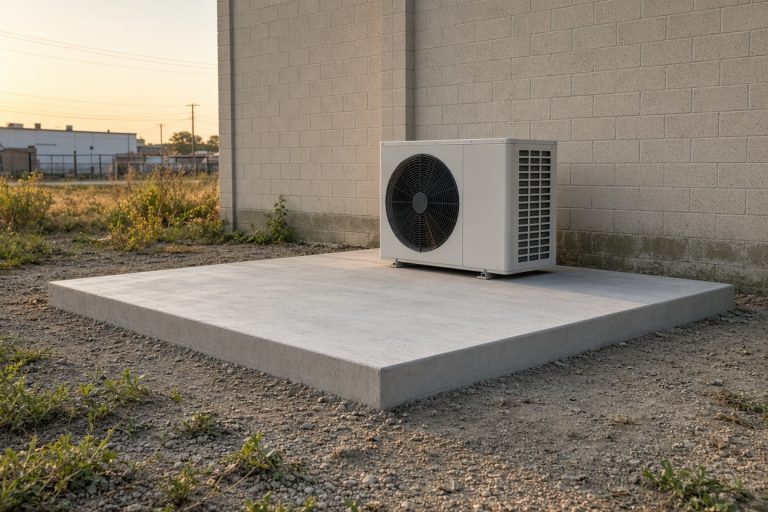
We build a new equipment-pad pour to stop that cycle. We dig out the soft soil under the old pad. Then we place a compacted stone base so the concrete doesn’t sit on mud. After that we form the pad to the size the unit needs, and we pour it level. Concrete Equipment Pads in East Chicago carry condensers and generators, plus smaller commercial units outside a shop. So they should stay put when the ground is wet.
We also tear out pads that have already failed. Concrete removal belongs in the same visit when the old pad has sunk past saving. A tear out and replace covers the cracked ones too. Because the unit has to go back in service, we treat a shop pad as commercial concrete. We are a family owned crew, and we’ve poured concrete since 2006. We set the forms, then we pour once the base is ready. That base is part of the pour for Concrete Equipment Pads in East Chicago.
Get A FREE Proposal Today!
Concrete Equipment Pads in East Chicago on Home and Shop Lots
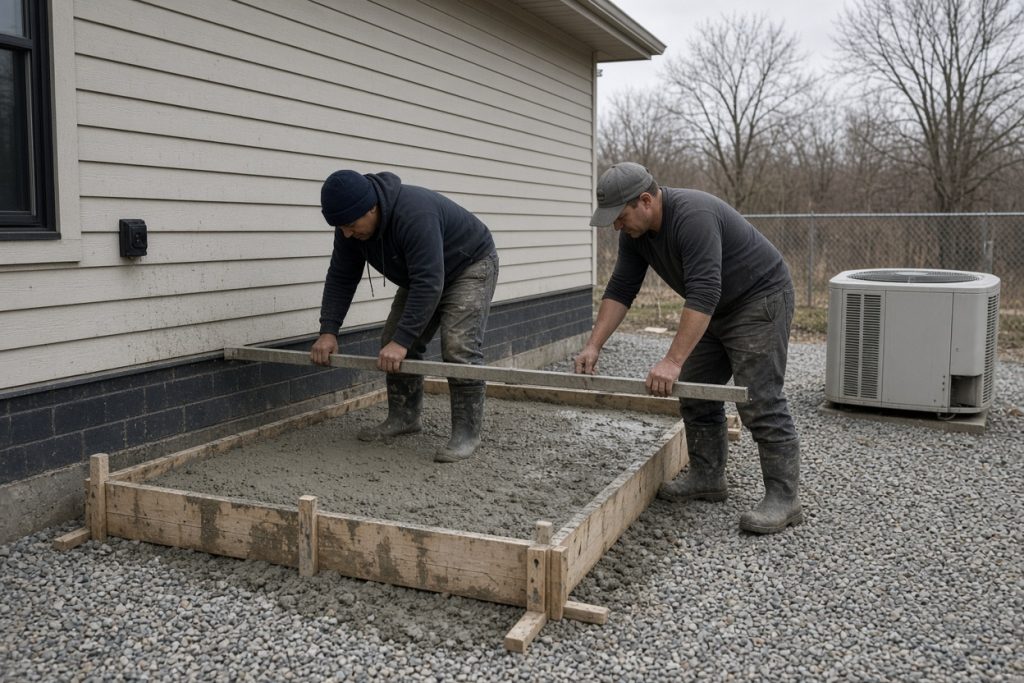
On a home lot the pad is usually under a condenser at the side of the house. On a shop lot in East Chicago, Indiana the pad may sit under a generator that can’t lean. We pour the top level so the unit sits square. Then we grade the soil around the pad so water runs off the edges. Because the ground is flat, that grade is what keeps water from sitting against the concrete.
A pad that has sunk on soft ground needs concrete replacement. A skim of new concrete on a moving base cracks once the soil shifts again. We’ve come back to jobs where a cap cracked over a sunken pad the next spring. So we lift the unit and remove the bad concrete. Then we pour a pad with a base under it. When the pad has not moved, patch work still fits a small chip.
Our page on our concrete equipment pads work lays out the pours we do for units like these. Finished edges show up in our photo gallery. You can check pad thickness there before we walk the lot. We source the mix ourselves, so we know what goes in the pad. Concrete Equipment Pads in East Chicago match the footprint of the unit we measure on site.
We size a generator pad for that unit. A condenser pad usually runs smaller, and the base changes with the weight. We measure the unit and we check how far the old pad has dropped. Then we write the quote out line by line. You can see the removal work and the concrete on separate lines. In East Chicago, Indiana the base has to deal with soft ground and a high water table.