
Cedar Lake Indiana Concrete Equipment Pads Poured
People think a box-store pad will hold a condenser on any lot here. When that pad starts to tip, we pour Concrete Equipment Pads in Cedar Lake for the unit. We have pulled those pads up and found soft ground under them. So the condenser was rocking on one corner.
The same thing shows up with generators and with small farm machines on the bigger lots. After a wet stretch, one corner of the block sits lower. Then the machine leans, and the lines take the strain. So folks who live here year-round call about it. Some have older houses near the water. Others have newer homes set back on the lot.
Cedar Lake, Indiana stays damp longer than people expect, especially on lots close to the lake. When we look at what the ground has done, we skip naming the soil. So blocks sink at a corner. Thin plastic pads follow them. The equipment goes with the low side.
A lot of households here leave for work in the morning. Then they get home to a unit that ran all day. When the pad under it is out of level, the condenser works harder. The housing can twist a little. So owners notice the noise first. They spot the lean after that.
Yard equipment sits outside all year on these lots. Condensers and generators need a flat place to stand. Implements on the bigger lots need one too. After a few wet months, we have seen gravel shift under the feet of a unit.
Damp Ground and Concrete Equipment Pads in Cedar Lake
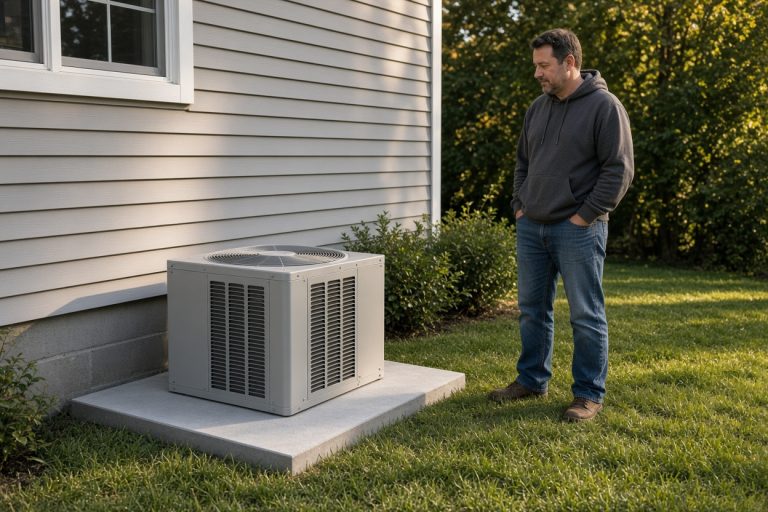
Damp ground near Cedar Lake can let a prefab block sink. So home condensers and farm machines need a poured pad that stays level. We have set pads for both, on house lots and out by pole barns. The pad has to carry the weight without rocking.
We form the pad a bit larger than the feet of the unit. Then we check it with a level before the concrete goes in. We check again while we finish the top. A condenser needs all four corners down. A small tractor or a generator does too. When one side is high, the frame twists a little each time the machine runs. We have seen that on condensers.
Get A FREE Proposal Today!
Pouring Concrete Equipment Pads in Cedar Lake
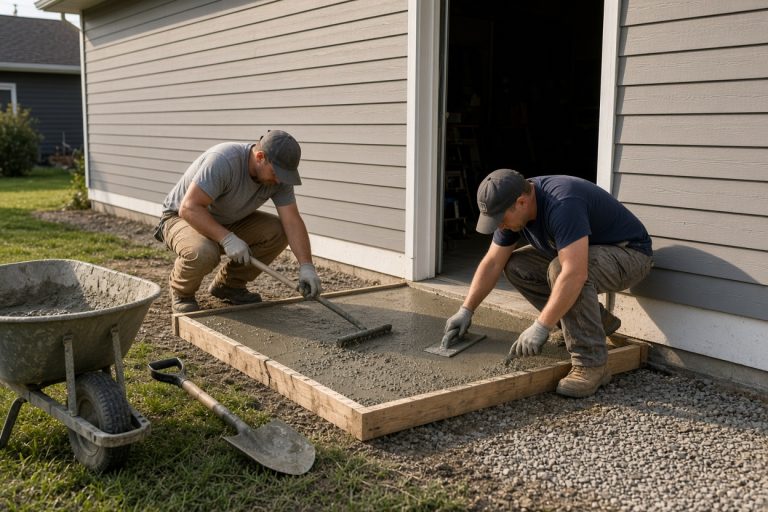
On a typical job we strip the soft top and set the forms. Then we pack a base before we pour. Because the pad is small, people give it less attention. It still has to come out square. The base under it has to hold when the yard is wet. We have redone pads where a thin corner broke off under a condenser.
Concrete Equipment Pads in Cedar Lake show up on new construction and on replacements. When an old pad has cracked or sunk, we start with concrete removal. Then we pour the new pad in the same visit. Our poured concrete equipment pads cover that work, along with residential concrete for the rest of the lot. A pole barn pad for a tractor can go in on the same trip if the forms are ready.
You can look at finished concrete in our photo gallery before we walk the lot. We’re a family owned and operated company. Our About Us page has the company background. The crew has a lot of time on the tools across northwest Indiana. So the person who measures the pad can talk through the pour with you.
We write quotes out line by line. We don’t inflate the price of the concrete to pick up a few extra dollars. If a bid comes in higher, it’s because we put more hours on the job. We also watch how long we are in your yard. We try to finish the pad and get off the lot.
Before we leave, we check drainage around Concrete Equipment Pads in Cedar Lake. We don’t want water ponding on the new edge. A low spot next to the pad can soften the base we just packed. So we grade that small area while the forms are still there. That step stays on the list, even for a small condenser pad.
A condenser pad is usually a small square set off the house wall, so a tech can walk around it. When the unit is a farm machine, we make the pad larger. We keep the edges sound where the tires climb on. After we pull the forms, the concrete needs time before the unit goes back. We tell you when it can take the load. A pad loaded too early can take a dent.