
Dolton Illinois Concrete Basements After the Thaw
Concrete Basements in Dolton leave you with a plain choice once the ground lets go. You can keep mopping the floor, or you can find out whether the slab is letting water through. After a long winter, that dark patch by the wall is hard to ignore. Because the water keeps coming back, a towel only buys a day or two.
We hear about this every spring. People call us when the floor stays wet and the yard looks dry on top. Then they notice a white crust along a crack, or a ring where a box sat all winter. So the concrete feels cold and slick even with the furnace running. When we walk those basements, damp usually sits along the outside walls and in the low spots.
Spring Floor Checks for Concrete Basements in Dolton
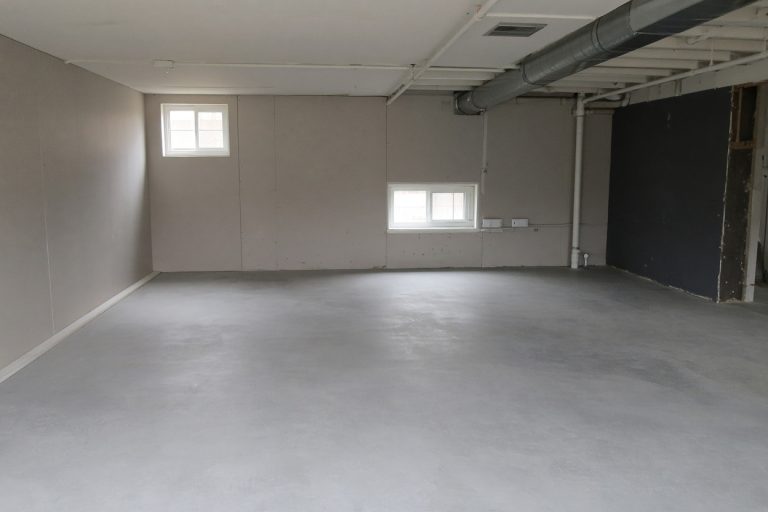
A sound basement floor looks even and feels firm underfoot, with no dark map along the wall. We use that mark when we check a house after the thaw. But a lot of floors in town miss it. For example, a tide line may show a few inches up the wall. Powder may return after you sweep.
Clay ground near the Little Calumet holds spring moisture against the concrete. The soil under the slab can stay wet after the yard on top has dried. So water sits there and moves into the pores of an older floor. After we’ve pulled up slabs in this ground, we’ve found wet clay underneath. On some of those jobs we found no plastic sheet under the pour. When that sheet is missing, ground moisture has an open path into the basement.
Older houses in Dolton, Illinois are where we see long-standing basement slabs. We’ve seen hairline cracks turn into damp lines once spring water reaches them. Because the concrete is porous, water can come through the slab body when the ground stays wet. Then the damp shows across a whole section of the floor.
We tell people to watch the floor after the yard dries. A band that returns in the same shape means water is still coming from under the floor.
This pattern is what we track on Concrete Basements in Dolton after the thaw. Fans change the feel for an afternoon. The dark area comes back when the clay below is still wet.
Get A FREE Proposal Today!
Floor Replacement for Concrete Basements in Dolton
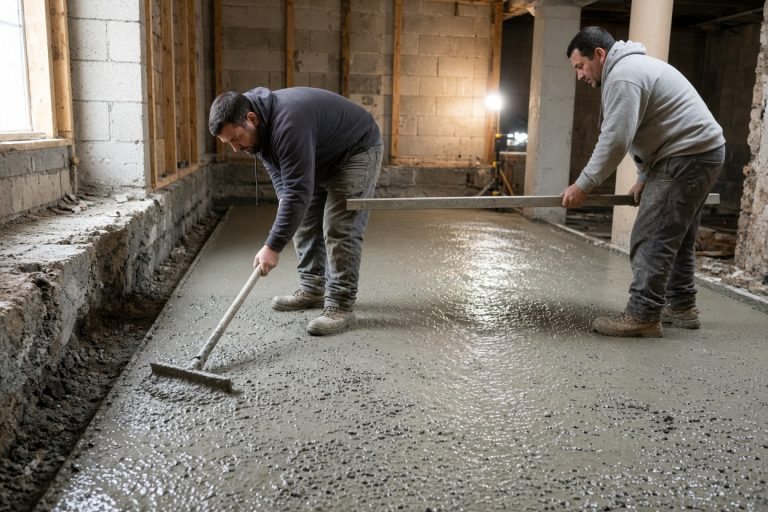
Owners ask us to fix the moisture the clay holds, and we see it on the floor. Because the water is still coming from below, wiping the slab doesn’t end it. So the next question is whether a patch will hold.
We patch a tight crack when the rest of the slab is dry. Wide damp, or concrete that feels soft, moves the job to tear out and replace. After the old floor is out, we check the base and deal with the wet clay. For a partial area, we use trench cutting and pour back on the bad section.
We sort the moisture on Concrete Basements in Dolton before any coating goes on. People have told us a floor coating peeled after they tried one. We do epoxy floors, but only when the slab can stay dry enough to hold them. Because a coating on a wet floor lifts, we handle the water first.
We mark the cut and haul the old concrete out. If the clay is soft, we dig out the worst and set a firm layer. A new slab in this ground needs a break between the clay and the concrete. We build that break into the prep and keep the finish flat.
Scope on Concrete Basements in Dolton depends on how wide the damp runs. We write the quote out line by line so removal hours sit apart from the material. That falls under our concrete basements work, from a patch to full concrete removal. The Photo Gallery shows finished floors from jobs we’ve done. About Us introduces the family owned crew at Cabe’s Concrete.
When roof water ponds against the foundation, the clay beside a new floor stays wet. So we flag a grade fix and a bad-pitched service walk in the notes.