
Cedar Lake Indiana Barn Concrete Slabs for Farms
A lot of people think a barn floor can stay gravel and still work. That plan fails once equipment sits in one spot all winter. We pour barn concrete slabs in Cedar Lake for farms tired of ruts and standing water. So the floor stays usable when the ground outside is soft.
Farms on the rural edge of Cedar Lake, Indiana still keep equipment and livestock under one roof. We have walked those barns when the lane is soft and the old floor holds water. Because a gravel pad packs down under tires, the same path gets deeper each season. The stall area stays damp long after the yard looks dry.
People have called us after a loader sank at the door. Others called because a stall stayed wet enough to bother the animals. When that happens, another load of stone only covers the low spot for a while. The same low spot shows up again after the next thaw.
Mud and Winter Wear on Barn Concrete Slabs in Cedar Lake
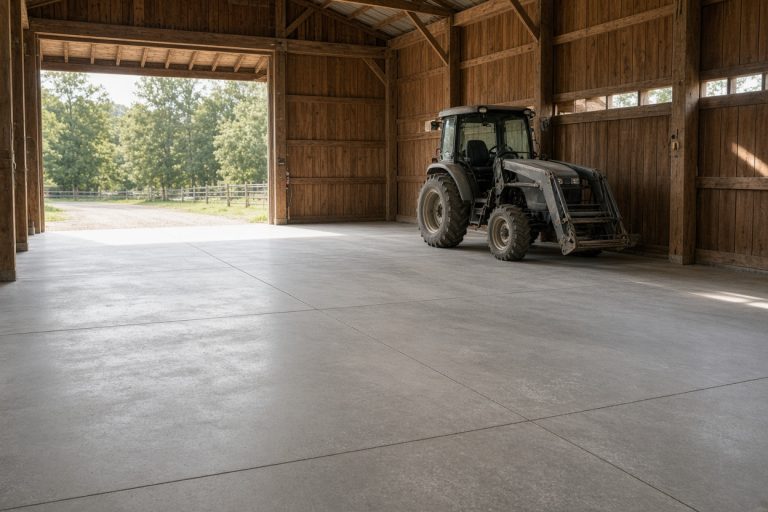
The ground freezes hard around Cedar Lake, and spring rain turns farm lanes to mud. But we see the same thing on barn floors nobody ever poured. So we start with the base, because a slab on soft fill will move. We strip the loose material, set a stone base, and compact it before concrete shows up. We slope the floor so wash water and meltwater run toward the door.
Control joints matter on a barn floor this size. We lay them out so a crack follows the cut, away from a stall wall. Because these barns often mix equipment storage with animal space, we ask how you use each bay first. After the pour, we keep traffic off until the slab can take a tire. For example, a loaded tractor should wait longer than a person checking stock.
We have replaced gravel with barn concrete slabs in Cedar Lake after a winter of heaving at the door. The old stone had settled, and the threshold sat higher than the floor inside. The door dragged, and meltwater pooled where people walk in.
Get A FREE Proposal Today!
How We Pour Barn Concrete Slabs in Cedar Lake
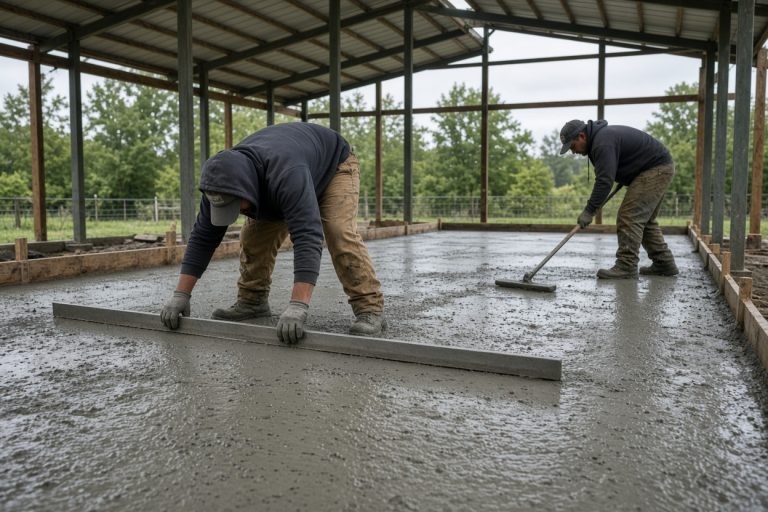
On pour day we set forms to the barn footprint and check the slope again. Then we place the concrete in sections we can finish before it stiffens. We run a bull float across the surface while it is still open. After that, a broom or a trowel sets the texture for hooves or tires.
So we broom the stall area, where a wet floor can get slick under hooves. When posts are already set, we form tight to the wood. That keeps manure and meltwater from sitting in a gap along the wall. We have chipped out a sloppy edge when the first pour left a trough there. A second pour fills that spot once the loose concrete is gone.
Some barns already have a broken pad that cracked across the door. But we have torn those out when a patch would not hold a loader. Concrete removal and a tear out and replace add steps before the new pour. Then the new floor is one piece. Pole barns are part of this work around Cedar Lake. New construction follows the same steps once the posts are set.
You can see how we handle barn concrete slabs on larger floors too. When you use the barn as a warehouse, the pour is a bigger version of the same floor. Scheduling barn concrete slabs in Cedar Lake around chores takes planning. Then we plan the day so the crew can get in and get out once we place the floor.
We are a family owned company and have been at this since 2006. You can read how we work on our About Us page.
Equipment Bays and Barn Concrete Slabs in Cedar Lake
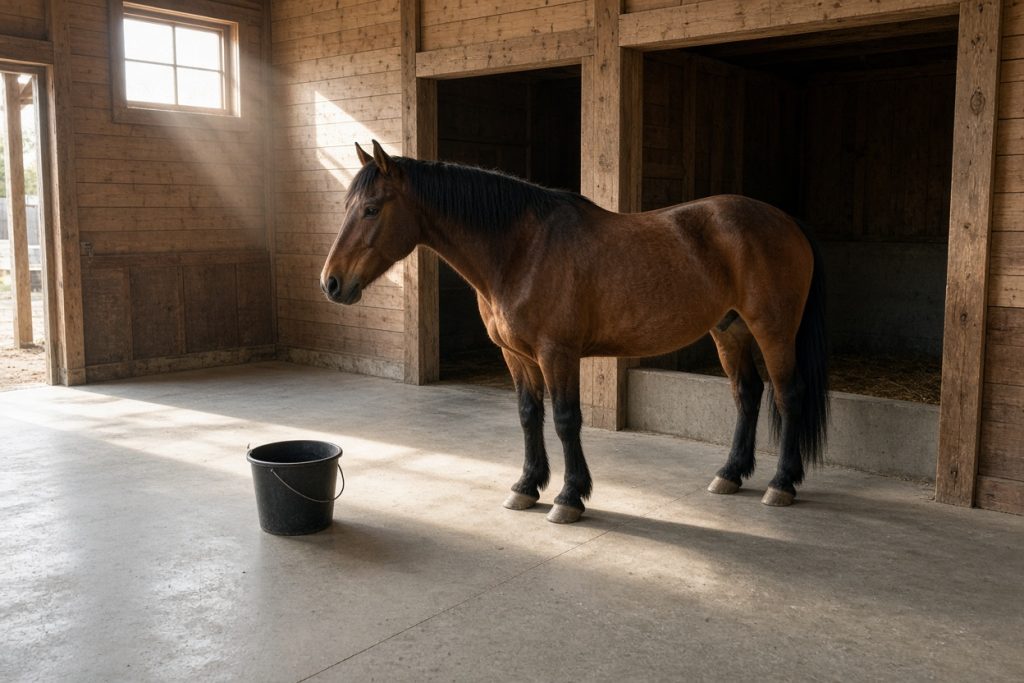
A barn that houses a tractor needs a floor that stays flat under the tires. Barn concrete slabs in Cedar Lake do that job when we have compacted the base. The slab needs to carry that load. We have pulled up thin pads that cracked at the doorway, where every machine turns. After we replace that section, the turn stays even and the door can close.
Livestock changes the finish we choose. When animals stand in one stall for hours, a slick trowel finish gets slippery once it is wet. So we pitch the floor, and cleaning water runs out of the stall. But people have asked us to pour only the pad inside the door. We have gone back later to pour the stall area once that dirt stayed wet.
Photos of finished floors sit in our photo gallery, including farm buildings around Cedar Lake. We also handle concrete replacement when an old floor has heaved at the posts. A service walk from the house can go in on the same visit.