
Dyer Indiana Concrete Basements – How Clay Soil Affects
That chalky line at the bottom of the wall usually shows up first. The damp smell follows next, even when the floor still looks dry. When a wet spring sits on the clay under Dyer, water stays against the foundation. So Concrete Basements in Dyer take on damp at the wall. A leaking pipe upstairs is a different problem.
We’ve walked into basements where the block felt cool and the paint had lifted at the first course. Because this ground is tight, melt and rain hang in the backfill. After the yard looks firm, the soil at the footing can still be wet. People call us about that band of damp along the wall.
Wet Clay and Concrete Basements in Dyer
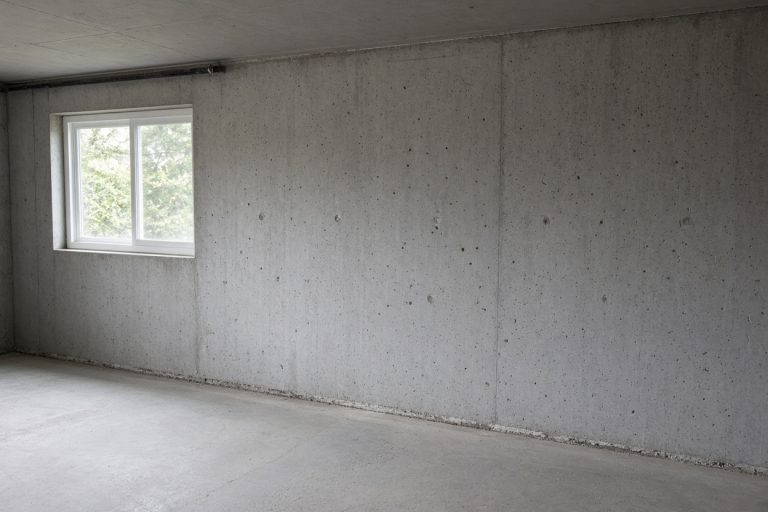
Clay particles pack close together, and water moves through them slowly. So a rainy stretch in spring leaves a wet band around the footing for days. We’ve pulled forms off older walls and found the outside face stained where the backfill stayed soaked. The inside face showed the same line, a course or two up from the floor.
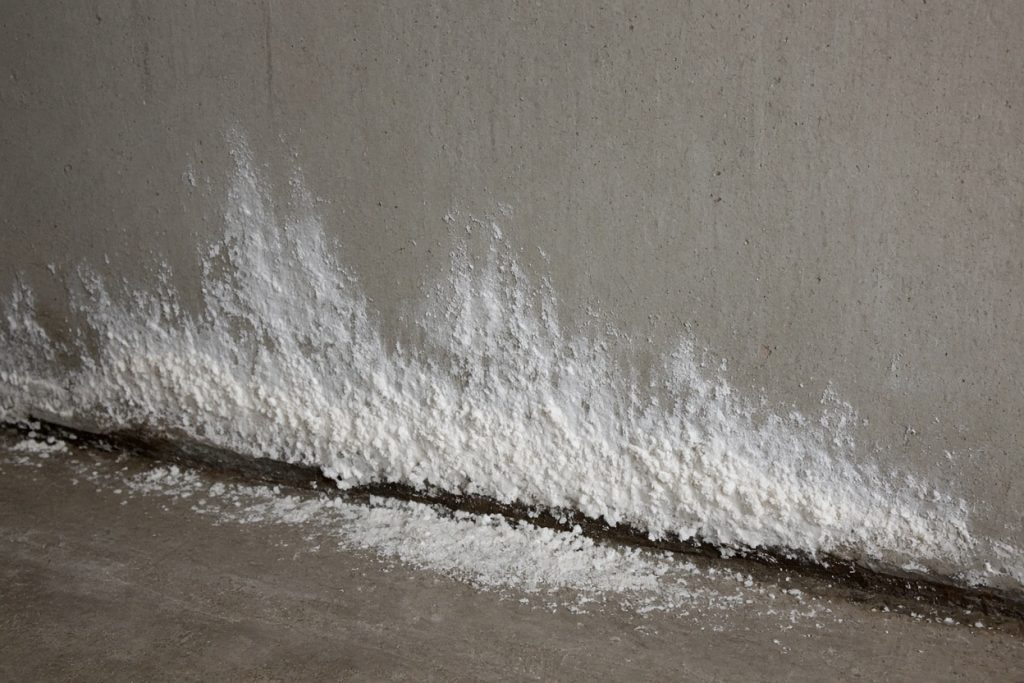
What you can see is a dark line at the cove, or a white crust above the floor. For example, a hairline at a cold joint will weep when the ground is full. It stays quiet once the soil dries. But the joint is still open, and water comes through it the next wet spring.
That pattern shows up on Concrete Basements in Dyer after a wet spring. The clay holds the melt against the wall. So the first look is the wall and the soil against it. Paint comes up after that.
Get A FREE Proposal Today!
Pouring Concrete Basements in Dyer
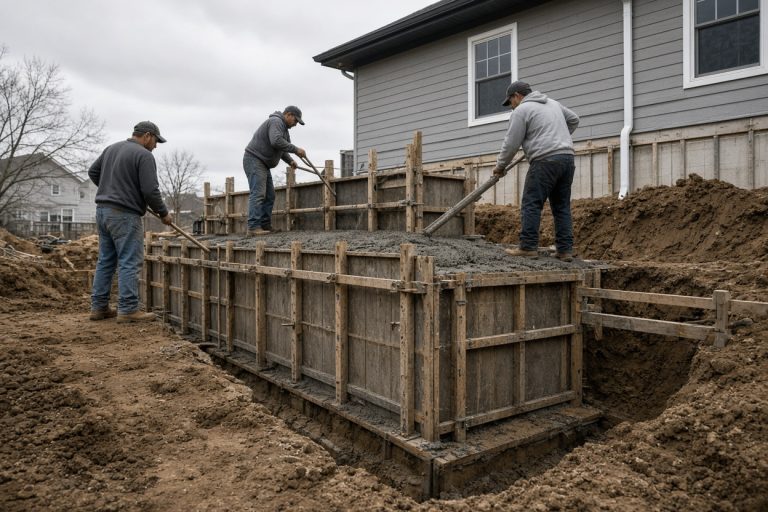
That damp is what sends owners to a crew that pours and rebuilds the concrete. When the wall is spalled, paint won’t stay put. A floor joint that keeps letting water in will lift the paint too. So we walk the basement and say what the pour has to cover. Then we write the scope out line by line, from the tear-out to the new wall.
We’re a family owned and operated crew, and we’ve poured in northwest Indiana since 2006. Because we work northwest Indiana and the Tri-State area, Dyer sits inside the area we already cover. We form the wall and place a mix we picked for a foundation. Then we strip the forms when the concrete can stand on its own. After that, we put the backfill back in lifts. We do that so a loose pocket doesn’t sit against the new face.
Patch work covers a cold joint that is still sound. A spalled section needs concrete removal first, and then we pour it back. That’s tear out and replace. New construction basements go up in an open excavation, before the house frame is there. We can replace a heaved basement floor on the same visit when the wall is open.
Finished pours sit in our photo gallery, with wall work after the forms come off. Our concrete basement pours cover a full rebuild, plus patch work when the wall can stay. We judge a failed wall while we stand in the basement and look at the damp line.
Repairs on Concrete Basements in Dyer
Our staff has spent years in forms and on pumps. So they already know a wall pour when they show up. The company background sits on our About Us page. We source the concrete ourselves. We want a mix that finishes clean in a wall form and holds up in this clay.
On Concrete Basements in Dyer, we try to finish the pour without leaving a job sitting for weeks. The goal is a straight wall and a tight floor joint. Then you can use the basement again once the concrete cures. We’ve worked from an owner’s layout when a room addition tied into the old foundation. The new wall has to meet the old one. We form and pour that joint with the rest of the wall.
We’ve opened walls where the old concrete was full of small voids behind a sound-looking paint job. Because the clay stayed wet, those voids let damp into the room. So we cut out the bad concrete and poured it back. When a floor drain sits higher than the wall joint, we flag that before the forms go up.
The Dyer houses we work in have the basement under the living space. Damp at the wall sits right below rooms people use. When a house goes up on clay, the backfill is often the soil that came out of the hole. After a wet spring, that fill can stay soft against the wall. We’ve also replaced service walks on the same visits, when the walk had cracked over that wet ground.
On a Dyer pour, we check the tie holes and the floor joint once the forms come off. We patch a small void at a tie the same day. We sight down the wall while we are still on site and mark any bow we see.