
Basements in Burns Harbor, Indiana Stay Damp After the Lake Thaw
That wet floor after the thaw usually means the slab held water, and now it is letting go. Basements in Burns Harbor take this on every spring. The town sits on sandy ground beside Lake Michigan, and the water table runs high. So we hear from people once the melt has had a few days to work down through the sand. The smell shows up first. Then the floor stays dark in the low spots, and the bottom of the wall looks stained.
People call us about floors that won’t stay dry overnight. Because the sand drains fast, rain and melt don’t pond on the lawn. So they drop down and meet water that is already close to the slab. When that happens, moisture finds a crack or the seam where the floor meets the wall. We’ve pulled up slab sections and found the concrete soft underneath.
In spring the water table can sit right under the floor. Then a low spot in the slab stays dark after the rest of the floor has dried. So we tell people what we can see in the concrete. We don’t guess at pipes or grading we haven’t looked at.
Floor and Wall Repairs for Basements in Burns Harbor
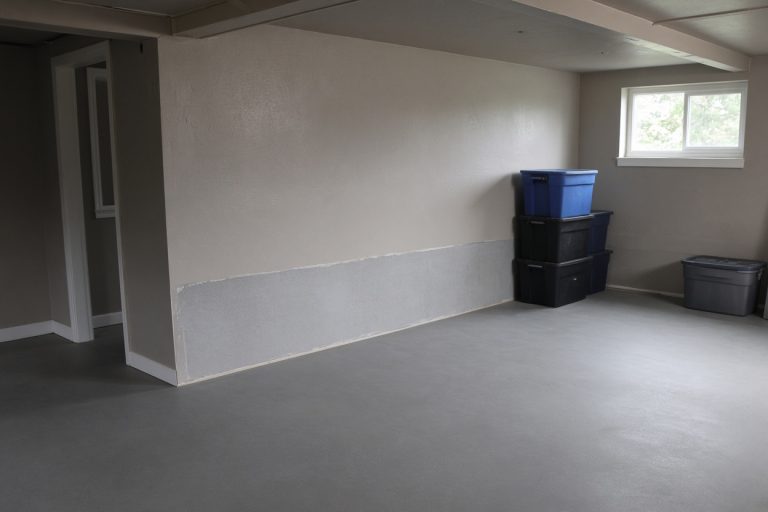
So that water through the slab is why people ask us to repair the floor and the lower wall. Most of the work is concrete repair on the floor and the lower wall. We patch cracks that are still tight. When a section of slab floor has heaved or gone soft, we cut it out. Then we do the concrete removal and pour back a new section. That’s tear-out and replace, the same kind of job we do on residential concrete above grade.
But wall repair is usually smaller. We chip out the loose face and fill the crack so water has a harder path. For example, a hairline that weeps in April can take a patch when the concrete around it is sound. If the block is crumbling, we cut that section out instead. Basements in Burns Harbor show this on houses closer to the lake.
Get A FREE Proposal Today!
Signs We Check in Basements in Burns Harbor
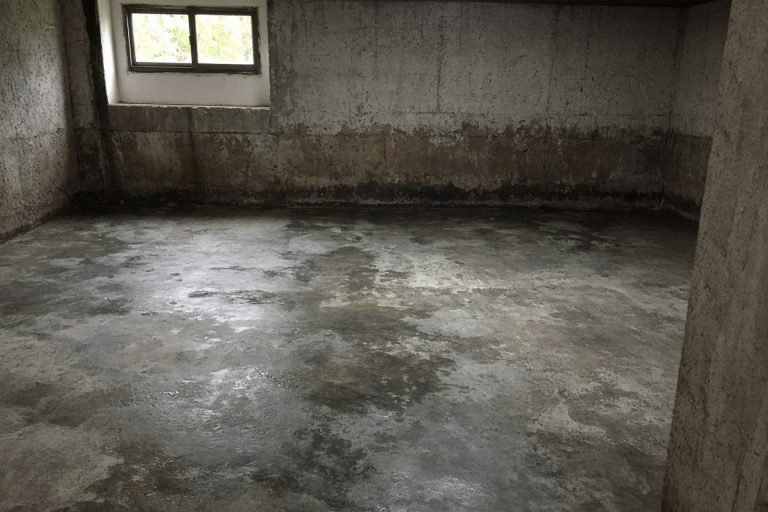
After the lake thaw, the air stays humid for weeks. Then cool walls collect moisture from that air. A wall can look wet from the air alone. So we check both things before we talk about a repair. A hand on the wall tells us if it’s surface moisture. A dark line that stays at the same height usually means water came through the concrete itself.
For example, white dust on the block is another sign we watch for. Water moves through the wall and leaves that powder when it dries. Because the powder comes back after you sweep it, paint over it doesn’t hold. We’ve seen basement walls in Burns Harbor, Indiana stay chalky into early summer. The floor joint was open, and the sand outside was still wet below the surface.
Other Work Around Basements in Burns Harbor
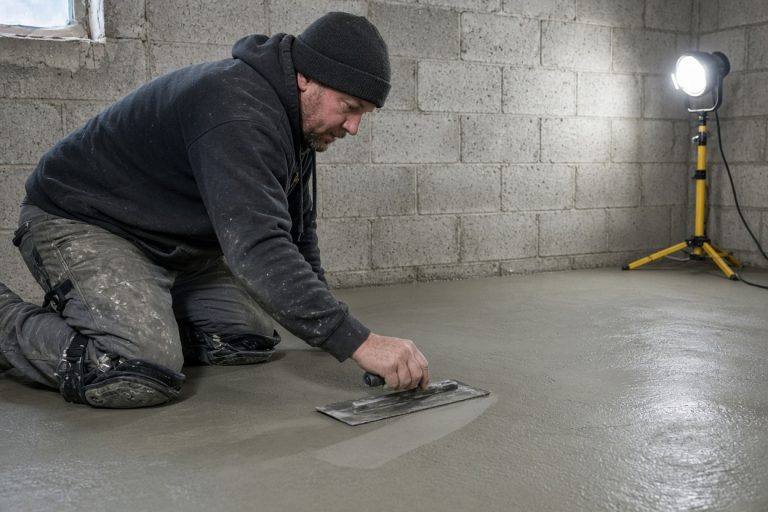
After a floor is dry and clean, some slabs are sound enough for an overlay. We do overlays on floors that have stopped taking on water, and we can stain or epoxy those too. A wet slab is a bad base for those finishes, so we say so before anyone picks a color. We save stamped concrete and acid stains for floors that stay dry. If the floor still weeps in May, the repair comes before any finish.
Cabe’s Concrete is family owned, and we’ve worked across northwest Indiana since 2006. Basements in Burns Harbor are part of that work, and the wider list is on our concrete services page. We write quotes out line by line, and we don’t mark up the material to pad the bill. When we lose a bid, we’ve usually put more hours into the job. Our goal is to finish the repair and leave a sound floor. You can see finished slabs and wall patches in our photo gallery.
Spring damp also shows up where the grade meets the foundation. But the inside floor is what people notice first. We can repair the interior slab and look at a cracked service walk on the same visit. We get those calls after the thaw. In Burns Harbor we wait on exterior flat work until the ground is firm enough to pour.